
About Vytautas Pranas Bičiūnas
Lived 1893 – 1945 (aged 52). Vytautas Pranas Bičiūnas was a Russian and Lithuanian painter, actor, literary critic and writer.
Vytautas Pranas Bičiūnas (20 August 1893 – 4 November 1942) was a Lithuanian artist, theatre actor, writer and art critic. As a member of the Lithuanian Christian Democratic Party, he was elected to the Constituent Assembly of Lithuania and the First Seimas.
As a gymnasium student in Šiauliai, Bičiūnas joined Varpas Society which organized Lithuanian cultural events and theater performances. He then chose to study at the Kazan Art School. He returned to Lithuania in May 1918 and worked for the Lithuanian government. He joined the Lithuanian Christian Democratic Party and helped organizing the Lithuanian Labour Federation. He was an active member of the Constituent Assembly and the First Seimas, speaking frequently on issues of the Lithuanian Land Reform of 1922 and other legislation. He was not reelected to the Second Seimas and withdrew from the party in 1926.
Bičiūnas worked as a drawing teacher at various schools in Kaunas. At the same time, he was active in public life. In 1922, he became secretary of the Gallery of Mikalojus Konstantinas Čiurlionis (predecessor of the M. K. Čiurlionis National Art Museum). In 1920–1923, he was actor, playwright, scenographer for the satirical Vilkolakis Theatre. He later founded and led two short-lived theatre troupes. He created graphic art (illustrations, posters, advertising) and tried to make it commercially viable.
After the Soviet occupation of Lithuania in June 1940, he was deported during the June deportation and imprisoned at . Accused of organizing a mutiny inside the gulag, Bičiūnas was executed by the NKVD in 1942.
Biography Early life and education Bičiūnas was born in Klovainiai to a family of Polish-speaking farmers and workers on 20 August 1893. In 1903, he enrolled at the Šiauliai Gymnasium where he was a classmate with the future poet . Bičiūnas became acquainted with Jonas Misius-Misevičius, Gabrielius Landsbergis-Žemkalnis, and other members of Varpas Society which organized Lithuanian cultural events and theater performances in Šiauliai. Under their influence, Bičiūnas joined the Lithuanian National Revival and began artistic endeavors. He painted theater decorations, wrote first theater plays and poems, and published his first article in the Lithuanian press in 1912.
He graduated from the gymnasium in 1912 and chose to study painting and architecture at the Kazan Art School. Despite the distance, he continued to be involved in Lithuanian cultural life. He published his first art in the Lithuanian literary journal and newspaper Vairas. He also illustrated poetry collection Tėvynės ašaros of Motiejus Gustaitis and started writing art criticism (first unpublished texts were about Mikalojus Konstantinas Čiurlionis).
In late 1917, Bičiūnas was drafted to the Imperial Russian Army but quickly left it to work at the short-lived Supreme Lithuanian Council in Russia.
Independent Lithuania Government service Bičiūnas returned to Lithuania in May 1918. He briefly worked as a teacher of drawing at Šiauliai Gymnasium before relocating to Vilnius and Kaunas to work for the Lithuanian government. He was director of the applied art section of the Art Department, director of the propaganda department of the Ministry of Defense, director of religion department of the Ministry of Internal Affairs, auditor for the State Control Institution.
In 1919, Bičiūnas joined the Lithuanian Christian Democratic Party and was later elected to its central committee. He also helped organizing the Lithuanian Labour Federation. In April 1920 election, he was elected to the Constituent Assembly of Lithuania. At the assembly, he was a member of several parliamentary committees. He chaired the committee on national reconstruction after the war. As a member of the committee on land reform, he frequently spoke on the issues and proposals concerning the Lithuanian Land Reform of 1922. In October 1920, he introduced law limiting the length of a workday. In January 1921, when discussing the establishment of a technical school in Kaunas (present-day Kaunas University of Applied Engineering Sciences), he proposed to make it more generalist than just a school of communication technology and suggested opening construction and chemistry departments. These proposals were adopted. Overall, Bičiūnas was an active member of the assembly. He spoke more than 60 times during the proceedings, introduced almost 30 amendments, and questioned government officials.
In October 1922, Bičiūnas was reelected to the First Seimas. He was a member of the parliamentary committees on land and forests as well as finance and budget. He actively worked on several finance related laws, including on pay for workers and members of the parliament, government stipends for singers, etc. The Seimas was deadlocked and could not form a stable government and new elections were called in March 1923. Bičiūnas ran in the elections to the Second Seimas but was not elected.
Bičiūnas left the Christian Democratic Party in 1926. In 1929, he joined the Lithuanian Riflemen's Union. In 1935–1936, he was a board member of the 1st Riflemen Regiment.
Teaching, theatre, art
From 1923 to 1940, Bičiūnas worked as an art teacher at various schools in Kaunas, including several gymnasiums, Simonas Daukantas Teachers' Seminary, and Kaunas Art School. Bičiūnas wanted to find a way to make a living from art. Therefore, together with and Juozas Levinsonas-Benari, he established a commercial art workshop named after St. Luke that offered commissioned art (paintings, posters, illustrations) for churches, theatres, home décor, etc. It was not were successful and closed down, but was reopened in 1928 when new artists, including Adolfas Valeška, Viktoras Vizgirda, , joined the workshop. Bičiūnas was also a member of cooperative Gairės established by . In 1923–1924, the cooperative published art magazine Gairės that was known for its graphic quality.
In 1920, Bičiūnas joined the and showcased his graphic art at its art exhibitions in Kaunas and Klaipėda. In 1922, he became secretary of the Gallery of Mikalojus Konstantinas Čiurlionis (predecessor of the M. K. Čiurlionis National Art Museum). In 1927, he led gallery's first expedition to collect examples of Lithuanian folk art from villages. In 1930s, he delivered lectures on modernist and avant-garde art movements on .
Bičiūnas was a theatre activist. In 1920–1923, he was actor, playwright, scenographer for the satirical Vilkolakis Theatre. He wrote a few plays specifically for this theatre, including Varnalėšos, Chlestakovas Lietuvoje, Velniava. He also worked with the more traditional Nation's Theatre . He later founded and led the short-lived theatre troupes Vytis (1927–1928) and Žvaigždikis (1931–1932). These troupes performed various plays, but mainly those written by Bičiūnas.
Soviet persecution
After the Soviet occupation of Lithuania in June 1940, he was dismissed from his teaching position. He was arrested and deported during the June deportation in 1941. He was formally accused of criticizing Soviet-style decorations for a school event.
He was imprisoned at . NKVD accused 15 Lithuanians (including Bičiūnas, Juozas Papečkys, Voldemaras Vytautas Čarneckis) of organizing a "counter-revolutionary" group that prepared for an armed mutiny inside the gulag. Bičiūnas was sentenced to death by the Special Council of the NKVD on 17 October 1942. Bičiūnas was executed by shooting on 30 October or 4 November together with the other accused Lithuanians. They were shot in an NKVD prison in Sverdlovsk (now Yekaterinburg) and were likely buried in a mass grave at the 12 kilometre marker on the highway to Moscow. In 1990s, was built at the site with more than 18,000 names of the people buried there.
Bičiūnas wife Natalija Namikaitė with two sons and daughter Jūratė were also arrested during the June deportation. They were deported to the shores of the Laptev Sea. The youngest son drowned in the sea. The other family members survived and were able to return to Lithuania in 1956. Jūratė Bičiūnaitė-Masiulienė published her memoirs about the deportation in 1990.
Works Publications Starting in 1911, Bičiūnas contributed articles and art to various Lithuanian periodicals, including Aušrinė, , Vairas, Nepriklausomoji Lietuva, Tiesos kardas, Draugija, Lietuvos aidas, Ateitis, Pavasaris. In 1917, he was secretary of published by the Lithuanian Society for the Relief of War Sufferers. Later he was a secretary of the official government daily Lietuva. In 1920, he was the editor and publisher of the daily .
Don’t just read it —
keep it.
Full-length biographies made to live with: read them, listen on the way to work, watch them tonight.
- E-book
- Audio
- Video
Instant download · yours to keep · every purchase keeps this site free
Important facts
People in Vytautas Pranas Bičiūnas's life
Named in this biography and alive at the same time
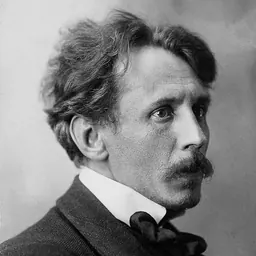



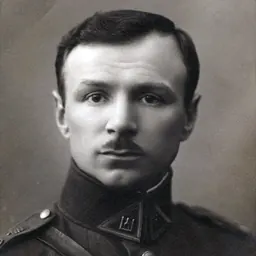

Related people
Same field, nearest in time
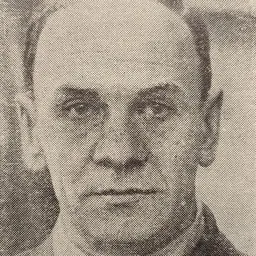

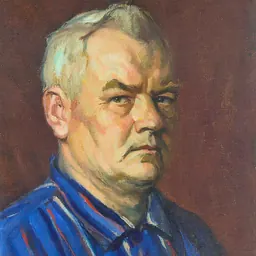
Contemporaries
People whose lives overlapped Vytautas Pranas Bičiūnas's


Frequently asked questions
Who was Vytautas Pranas Bičiūnas?
Lithuanian artist (1893-1945)
When was Vytautas Pranas Bičiūnas born?
Vytautas Pranas Bičiūnas was born on 20 August 1893 in Klovainiai.
When did Vytautas Pranas Bičiūnas die?
Vytautas Pranas Bičiūnas died on 18 November 1945 in Yekaterinburg.
What was Vytautas Pranas Bičiūnas's occupation?
Vytautas Pranas Bičiūnas was a painter, actor, literary critic and writer.
What nationality was Vytautas Pranas Bičiūnas?
Vytautas Pranas Bičiūnas was Russian and Lithuanian.
Sources & further reading
· Wikipedia: Vytautas Pranas Bičiūnas
· DBpedia: Vytautas Pranas Bičiūnas
Cite this page
APA: Biography.guide. (2026). Vytautas Pranas Bičiūnas. https://biography.guide/vytautas-pranas-biciunas/
MLA: "Vytautas Pranas Bičiūnas." Biography.guide, https://biography.guide/vytautas-pranas-biciunas/.
Chicago: "Vytautas Pranas Bičiūnas." Biography.guide. https://biography.guide/vytautas-pranas-biciunas/.
Data last updated: 2026-09-22 · Spot an error? Report a correction.
Page generated 2026-09-27 05:23 UTC