
About Võ Tánh
Lived 1768 – 1801 (aged 32–33). Võ Tánh was a military personnel.
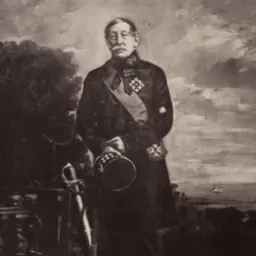
Võ Tánh (武 性, 1768—1801) was an 18th-century Vietnamese military commander, best known for his role as a general of Nguyễn Ánh, who unified modern-day Vietnam and ruled as Emperor Gia Long.
Early life Võ Tánh was born in Phước Tinh Village, in what was then Bà Rịa (present day Biên Hòa and Đồng Nai). Tanh's elder brother, Võ Nhàn, was a follower and a general of Đỗ Thanh Nhơn, an officer in the Nguyễn army.
Kiến Hòa army In 1781, when Đỗ Thanh Nhơn was assassinated by his own leader, Nguyễn Ánh, Võ Tánh and his brother, Võ Nhàn, revolted and occupied Hóc Môn, a village on the northern outskirts of Saigon. Afterwards, the rebels moved to Gò Công and built their base there. At that time, Võ Tánh's army, called the Kiến Hòa army, grew to a force of 10,000 men.
General for Nguyễn Ánh The next year, in 1788, Võ Tánh decided to join Nguyễn Ánh's side and integrated his entire army into the Nguyễn army. Later, Nguyễn Ánh bestowed Võ Tánh the position of Khâm sai Chưởng Cơ Tiên Phong Doanh(欽差掌奇先鋒營 - Imperial Commissioner, Vanguard Regiment Commander) and married off his sister, princess Ngọc Du, to the commander.
In 1789, Tánh forced the Tây Sơn general Pham Van Tham, who was the general-in-chief of the Tây Sơn garrison in southern Vietnam, to surrender to the Nguyễn army, which marked the end of Tây Sơn rule in Gia Định. Later in 1790, Võ Tánh led an army that captured the citadel of Diên Khánh.
In 1799, Nguyễn Ánh launched the third expedition to Quy Nhơn. The expedition was successful, and Nguyễn Ánh captured the Citadel of Quy Nhơn and renamed the fortress town Bình Định (lit., "Pacified"). Afterwards, Nguyễn Ánh appointed Võ Tánh as the new governor of the city and withdrew his main forces to Saigon.
The Siege of Quy Nhơn
In early 1800, two senior Tây Sơn generals, Tran Quang Dieu and Vu Van Dung, led a large force consisting of army and naval units toward Quy Nhơn with a view to recapturing it.
The Tây Sơn swiftly occupied the territory surrounding the Citadel of Quy Nhơn, including the vital Thị Nại Port. Then, they set up a solid defensive system and besieged the citadel. Besides the military tactics, Tây Sơn commanders applied a psychological tactic that made the former Tây Sơn soldiers who were now serving in Nguyễn forces to defect and return to the Tây Sơn army.
Although Nguyễn Ánh immediately led a force northwards to Quy Nhơn in order to relieve Võ Tánh's besieged forces, the Nguyễn reinforcements could not break the Tây Sơn encirclement and a long battle resulted. Acknowledging the poor situation, Nguyễn Ánh ordered Võ Tánh to abandon the citadel, but Võ Tánh rejected and suggested that he would pin the main Tây Sơn force down there so that Nguyễn Ánh could attack their Citadel of Phú Xuân. Nguyễn Ánh agreed and then he attacked and captured Phú Xuân, forcing Tây Sơn emperor Quang Toan to flee to northern Vietnam. This victory was a turning point of the war, from which the Tây Sơn became very weak and never posed any other significant threat to Nguyễn Ánh. The siege of Quy Nhơn continued for over a year to June 1801, when the citadel's food provisions were exhausted.
In popular culture Võ Tánh, along with Đỗ Thanh Nhơn and Châu Văn Tiếp, was called Gia Định Tam Hùng ("Three Heroes of Gia Định") in Vietnamese folk culture. The spirit of Võ Tánh is honoured in festivals and temples - including those where the general speaks through a medium. Pigs sacrificed at the đình festival honouring Võ Tánh are not offered roasted since the general died in a burning fort.
Don’t just read it —
keep it.
Full-length biographies made to live with: read them, listen on the way to work, watch them tonight.
- E-book
- Audio
- Video
Instant download · yours to keep · every purchase keeps this site free
Important facts
People in Võ Tánh's life
Named in this biography and alive at the same time
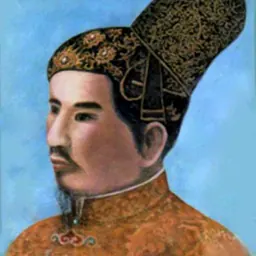
Related people
Same field, nearest in time


Contemporaries
People whose lives overlapped Võ Tánh's





Frequently asked questions
Who was Võ Tánh?
Vietnamese military commander
When was Võ Tánh born?
Võ Tánh was born in 1768 in Biên Hòa.
When did Võ Tánh die?
Võ Tánh died in 1801 in Bình Định.
What was Võ Tánh's occupation?
Võ Tánh was a military personnel.
What nationality was Võ Tánh?
Võ Tánh's recorded nationality: Dai Viet.
Sources & further reading
Cite this page
APA: Biography.guide. (2026). Võ Tánh. https://biography.guide/vo-tanh/
MLA: "Võ Tánh." Biography.guide, https://biography.guide/vo-tanh/.
Chicago: "Võ Tánh." Biography.guide. https://biography.guide/vo-tanh/.
Data last updated: 2026-09-20 · Spot an error? Report a correction.
Page generated 2026-09-27 05:04 UTC