
Violette Nozière
French convicted murderer
About Violette Nozière
Lived 1915 – 1966 (aged 51). Violette Nozière was a French shopkeeper.
Violette Nozière (11 January 1915 – 26 November 1966) was a French woman convicted in 1934 of poisoning her parents, killing her father and seriously injuring her mother, in their Paris apartment in August 1933. The case became one of the most closely followed criminal trials of interwar France. Violette, then eighteen, claimed she had acted to free herself from years of sexual abuse by her father, an allegation the prosecution rejected and that has never been independently confirmed. The "Nozière affair" divided public opinion along political lines, drew the support of the Surrealist movement, and remains a recurring subject of French historical and cultural commentary, notably through Claude Chabrol's 1978 film, Violette Nozière.
Sentenced to death, Violette was reprieved by presidential pardon, had her sentence progressively reduced, and was released in 1945. She later married, raised five children under a changed name, and in 1963 was granted a judicial "réhabilitation"—a rare restoration of civil standing for someone convicted of a capital crime. She died of cancer in 1966.
Early life Violette Nozière was born in Neuvy-sur-Loire, in the Nièvre department, the only child of Jean-Baptiste "Baptiste" Nozière, a locomotive engine driver for the Paris–Lyon–Méditerranée railway company, and Germaine Hézard. Given her father’s position in the railroad company, Violette's family would be considered to be solidly middle class. :13-15
Her parents married shortly before her birth. Germaine was already several months pregnant. The family settled in Paris's 12th arrondissement, near the Gare de Lyon, living in a small two-room apartment at 9 rue de Madagascar that afforded the family little privacy. She was frequently ill during her teenage years. A school report described her in unflattering terms, citing laziness, deceitfulness, and a poor influence on classmates.
By her mid-teens she had begun a pattern of lying about her family's social position—describing her father as a senior railway engineer and her mother as a fashion-house "première"—and had taken several lovers, including a fellow student. She also began stealing money from her parents and from shopkeepers, and supplemented her income through occasional prostitution, euphemistically referring to these encounters in her own writings. She persuaded a complicit doctor to issue a false certificate implying the disease was hereditary, in order to convince her parents—falsely—that they themselves were responsible for her infection. This triggered a serious family confrontation. The previous winter, after being caught shoplifting, she had left her parents a note threatening suicide, but was found safe near the Seine. On 23 March 1933, Nozière gave her parents doses of the sedative Somnifène, telling them it was medicine prescribed by their doctor. Violette took the same dose as her parents at the same time. That night a fire broke out in the apartment; her parents were treated for smoke inhalation, and the incident was not linked to poisoning at the time.
On 21 August 1933, she administered a much larger dose of the same drug, again disguised as medicine. Her father died; her mother survived because she discarded half of the dose.
Flight, arrest, and confession Brought to the hospital where her mother was recovering, Nozière fled when she realized her mother might identify her, an act treated by police as effective self-incrimination. She spent roughly a week as a fugitive in Paris before being arrested in the 7th arrondissement on 28 August, after being denounced to police by an acquaintance.
Under questioning by Commissioner Marcel Guillaume, a senior detective who had previously worked the Bonnot Gang and Landru cases, Nozière confessed to the poisoning. She told police and the examining magistrate, Edmond Lanoire, that her father had sexually abused her for roughly six years, beginning when she was twelve. She claimed that did not tell her mother because her father had told her that she was as guilty as he was and that he would kill her and himself if she did. She said that she had decided to kill him to escape this abuse.
Nozière also insisted that she had not tried to kill her mother and that she had acted alone. Investigators also recovered pornographic materials and a cloth allegedly used by her father for ejaculation in order to prevent pregnancy, which Nozière cited as supporting evidence for the accusation of incest. Her mother offered an alternative explanation for the same object, and the dispute was never resolved.
Inspector Guillaume later wrote that he found Violette's account credible and believed she deserved a degree of leniency, though he was never called to testify to this effect at trial. Two acquaintances of Nozière (Pierre Camus and Jean Leblanc) also reported that she had confided to them about incest; Pierre Camus quoted her as saying "my father occasionally forgot I was his daughter". Violette's mother, Germaine, adamantly denied her daughter's allegations.
Historians have noted that, through the press coverage, the case became a vehicle for broader anxieties in early-1930s France. It raised issues of sexual mores, the female role in intrafamily violence and the younger versus the older generations.
Trial Germaine Nozière and her lawyer M.Hézard giving evidence in 1934The trial opened before the Cour d'assises of the Seine in Paris on 12 October 1934, the day after the assassination of King Alexander I of Yugoslavia in Marseille had dominated headlines. —was commuted to forced labour for life by President Albert Lebrun in December 1934, following an appeal for clemency by her lawyers and a public campaign that included an open plea from the writer Marcel Aymé. She was transferred to the Centrale de Haguenau in Alsace, where she turned to Catholicism, attracting praise for her conduct from the prison authorities and the Dominican sisters who worked there.
In October 1937, Violette Nozière recanted her accusations against her father. This belated retraction, in a letter from Violette to her mother, was published in the press through her lawyer, René de Vésinne-Larue In exchange for publishing the main excerpts from this open letter, the major newspapers paid Germaine Nozière financial compensation. This material reward relieved Ms. Nozière of the legal costs of the case, which she had previously borne. This letter contributed to a reconciliation between mother and daughter.
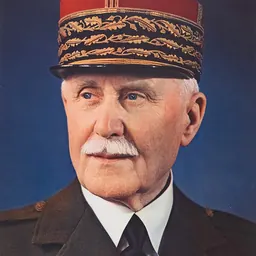
With the German invasion in 1940, Nozière was transferred to the women's central prison at Rennes. Under the Vichy regime, in August 1942, Marshal Philippe Pétain reduced her sentence to 12 years of forced labour,
Pierre Coquelet was seriously injured in a road accident in 1950 and died from injuries sustained in a second car accident in 1961. Nozière, by then in her mid-forties, raised their five children alone, with help from her mother, Germaine, who lived with the family until her death in 1968.
In a 2017 book, Violette Nozière, la fleur du mal, Demartini argues that the case's popular resonance resides in the collision of the two taboos it embodied—parricide and incest—within a press culture eager to sensationalize both. The book positions the ongoing public and intellectual fascination with this case as stemming from the light it sheds on "the relationships between fathers and daughters, between parents and children, between men and women. Violette becomes the ‘flower of evil,' a dark icon of female emancipation and generational conflict in a France in crisis."
Cultural legacy For André Breton, Violette Nozière became a living legend : she was "mythological to the tips of her nails" Colette did not believe in the possibility of Violette Nozière's redemption: "I thought of the wicked, criminal child, of the atmosphere of base lies she had created." The case remains prominent in French culture. In December 1933, while the investigation was still under way, a group of Surrealists published a small illustrated volume titled Violette Nozières through a Brussels press, thereby avoiding the risk of prosecution in France. It included poems by André Breton, Paul Éluard, René Char, Benjamin Péret, and others, alongside artwork by Salvador Dalí, Max Ernst, René Magritte, Alberto Giacometti, and Yves Tanguy, with a cover by Hans Bellmer and a photograph by Man Ray. The Surrealists denounced the male cohort of policemen, investigators, journalists and judges that ran the case. They presented Nozière as a victim of patriarchal and bourgeois hypocrisy.
The case has been revisited in French popular culture and scholarship. In 1978, film director Claude Chabrol made a film based on this case. The film Violette Nozière, based on a novel by Jean-Marie Fitère and starring Isabelle Huppert in the title role alongside Stéphane Audran and Jean Carmet, dramatizes the case while preserving much of its ambiguity. Huppert won the Best Actress award at the 1978 Cannes Film Festival for the role, and Audran received a César Award for Best Supporting Actress.
Don’t just read it —
keep it.
Full-length biographies made to live with: read them, listen on the way to work, watch them tonight.
- E-book
- Audio
- Video
Instant download · yours to keep · every purchase keeps this site free
Important facts
People in Violette Nozière's life
Named in this biography and alive at the same time




Related people
Same field, nearest in time


Contemporaries
People whose lives overlapped Violette Nozière's





Frequently asked questions
Who was Violette Nozière?
French convicted murderer (1915–1966)
When was Violette Nozière born?
Violette Nozière was born on 11 January 1915 in Neuvy-sur-Loire.
When did Violette Nozière die?
Violette Nozière died on 26 November 1966 in Le Petit-Quevilly.
What was Violette Nozière's occupation?
Violette Nozière was a shopkeeper.
What nationality was Violette Nozière?
Violette Nozière was French.
Sources & further reading
· DBpedia: Violette Nozière (murderer)
Cite this page
APA: Biography.guide. (2026). Violette Nozière. https://biography.guide/violette-noziere/
MLA: "Violette Nozière." Biography.guide, https://biography.guide/violette-noziere/.
Chicago: "Violette Nozière." Biography.guide. https://biography.guide/violette-noziere/.
Data last updated: 2026-09-20 · Spot an error? Report a correction.
Page generated 2026-09-27 05:30 UTC