
Albert Lebrun
15th President of the French Republic
About Albert Lebrun
Lived 1871 – 1950 (aged 78). Albert Lebrun was a French politician, entomologist and mining engineer.
Albert François Lebrun (; 29 August 1871 – 6 March 1950) was a French politician who served as President of France from 1932 to 1940. He was the last president of the Third Republic before its dissolution into the rump state of Vichy France in the early days of the Second World War. He was a member of the centre-right Democratic Republican Alliance (ARD).
Early life Born to a farming family in Mercy-le-Haut, Meurthe-et-Moselle, he attended the École Polytechnique and the École des Mines de Paris, graduating from both at the top of his class. He then became a mining engineer in Vesoul and Nancy, but left that profession at the age of 29 to enter politics.
Career in politics
Lebrun won a seat in the Chamber of Deputies in 1900 as a member of the Left Republican Party, later serving on the cabinet as Minister for the Colonies from 1912 to 1914, Minister of War in 1913 and Minister for Liberated Regions from 1917 to 1919. Joining the Democratic Alliance, he was elected to the French senate from Meurthe-et-Moselle in 1920, and served as Vice President of the Senate from 1925 through 1929. He was president of that body from 1931 to 1932.
President of France (1932-1940) Lebrun was elected President of France by the newly elected Chamber of Deputies following the assassination of President Paul Doumer by Paul Gorguloff on 6 May 1932. Re-elected in 1939, largely because of his record of accommodating all political sides, he exercised little power as president.
In June 1940, with the military collapse of France imminent, Lebrun wrote "the uselessness of the struggle was demonstrated. An end must be made." With the Cabinet wanting to ask for an armistice, on 17 June 1940 Prime Minister Paul Reynaud resigned, recommending to President Lebrun that he appoint Marechal Philippe Pétain in his place, which he did that day. British General Sir Edward Spears, who was present with the French cabinet during this crisis wrote "it is clear that the President had made up his mind that France was free of her obligations to Britain, and was at liberty to ask for an armistice [with Germany] if she deemed it to be in her interests to do so."
On 10 July 1940, Lebrun enacted the Constitutional Law of 10 July 1940, which the National Assembly had voted for by 569 votes to 80, allowing Prime Minister Philippe Pétain to promulgate a new constitution. On 11 July, Lebrun was replaced by Pétain as head of state.
After dissolution Lebrun fled to Vizille (Isère) on 15 July, but was captured on 27 August 1943, when the Germans moved into the region. He was then sent into captivity at the Itter Castle in Tyrol. On 10 October 1943 he was allowed to return to Vizille due to illness, but was kept under constant surveillance.
On 15 August 1944, Operation Dragoon began. One week later, Grenoble, Vizille and other cities were freed. The German 19th Army withdrew quickly.
On 11 October 1944, Lebrun met with Charles de Gaulle and acknowledged the General's leadership. Conveniently forgetting the new Constitutional Law he had enacted in 1940, Lebrun said that he had not formally resigned as president because the dissolution of the National Assembly had left nobody to accept his resignation. Whether or not de Gaulle accepted this lie is unknown. During the post-war Pétain trial "all the available celebrities of the Third Republic testified, including Lebrun, all whitewashing themselves". Lebrun argued again that he had never officially resigned. De Gaulle made no mystery of his low opinion of Lebrun, and wrote of him in his memoirs: "As a head of state he lacked two things: there was no state, and he wasn't a head."
After the war, Lebrun lived in retirement. He died of pneumonia in Paris on 6 March 1950 after a protracted illness.
Personal life Lebrun was married to Marguerite Lebrun (née Nivoit). Together they had two children: a son, Jean, and a daughter, Marie.
Don’t just read it —
keep it.
Full-length biographies made to live with: read them, listen on the way to work, watch them tonight.
- E-book
- Audio
- Video
Instant download · yours to keep · every purchase keeps this site free
Important facts
Family & relationships
People in Albert Lebrun's life
Named in this biography and alive at the same time
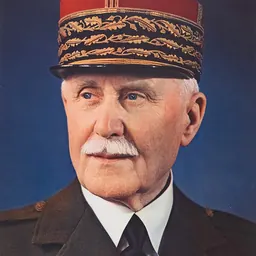

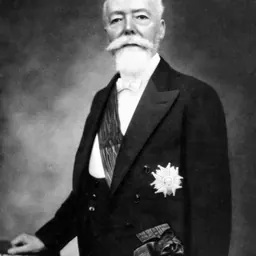
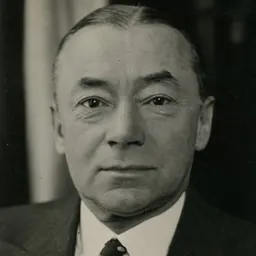


Related people
Same field, nearest in time





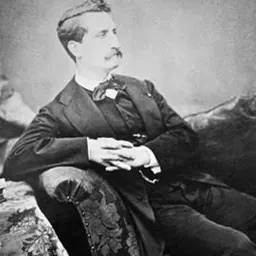
Contemporaries
People whose lives overlapped Albert Lebrun's


Frequently asked questions
Who was Albert Lebrun?
15th President of the French Republic (1871–1950)
When was Albert Lebrun born?
Albert Lebrun was born on 29 August 1871 in Mercy-le-Haut.
When did Albert Lebrun die?
Albert Lebrun died on 6 March 1950 in 16th arrondissement of Paris, Paris.
What was Albert Lebrun's occupation?
Albert Lebrun was a politician, entomologist and mining engineer.
What nationality was Albert Lebrun?
Albert Lebrun was French.
Sources & further reading
Cite this page
APA: Biography.guide. (2026). Albert Lebrun. https://biography.guide/albert-lebrun/
MLA: "Albert Lebrun." Biography.guide, https://biography.guide/albert-lebrun/.
Chicago: "Albert Lebrun." Biography.guide. https://biography.guide/albert-lebrun/.
Data last updated: 2026-09-20 · Spot an error? Report a correction.
Page generated 2026-09-27 05:33 UTC