
About Paul Doumer
Lived 1857 – 1932 (aged 75). Paul Doumer was a French statesperson and politician.
Joseph Athanase Doumer, commonly known as Paul Doumer (; 22 March 18577 May 1932), was a French politician who served as the President of France from June 1931 until his assassination in May 1932. He is described as "the Father of French Indochina", and was seen as one of the most active and effective governors general of Indochina.
Early life Joseph Athanase Doumer was born in Aurillac, in the Cantal département, in France on 22 March 1857, into a family of modest means. Alumnus of the , he became a professor of mathematics at Mende in 1877.
In 1878, Doumer married Blanche Richel, whom he had met at college. They had eight children, four of whom were killed in the First World War (including the French air ace René Doumer).
Career From 1879 until 1883 Doumer was professor at Remiremont, before leaving on health grounds. He then became chief editor of Courrier de l'Aisne, a French regional newspaper. Initiated into Freemasonry in 1879, at "L'Union Fraternelle" lodge, he became Grand Secretary of Grand Orient de France in 1892.
He made his debut in politics in 1885 as chef de cabinet to Charles Floquet, then president of the Chamber of Deputies (a post equivalent to the speaker of the House of Commons). In 1888, Doumer was elected Radical deputy for the department of Aisne. Defeated in the general elections of September 1889, he was elected again in 1890 by the arrondissement of Auxerre. He was briefly Minister of Finance of France (1895–1896) when he tried without success to introduce an income tax.
Doumer was Governor-General of French Indochina from 1897 to 1902. Upon his arrival the colonies were losing millions of francs annually. Determined to put them on a paying basis, he levied taxes on opium, wine and the salt trade. The Vietnamese, Cambodians and Laotians who could not or would not pay these taxes, lost their houses and land, and often became day laborers. He established Indochina as a market for French products and a source of profitable investment by French businessmen. Doumer set about improving Indochina, especially Hanoi, the capital, with modern infrastructure befitting property of France. Tree-lined avenues and a large number of French colonial buildings were constructed in Hanoi during his governance. The Long Bien Bridge and the Grand Palais in Hanoi were among large-scale projects built during his term; the bridge was originally named after him. The palace was destroyed by airstrikes toward the end of World War II. The bridge survived, and became a well-known landmark and target for US pilots during the Vietnam War.
With a view to annexing south Yunnan to French Indochina, Doumer successfully lobbied the French government to approve construction of the Indochina-Yunnan railway in 1898.
After returning to France, Doumer was elected by Laon to the Chamber of Deputies as a Radical. He refused to support the ministry of Émile Combes, and formed a Radical dissident group, which grew in strength and eventually caused the fall of the ministry. He then served as President of the French Senate from 1927 until the 1931 presidential election. He was elected President of the French Republic on 13 May 1931, defeating the better known Aristide Briand, and replacing Gaston Doumergue.
Assassination On 6 May 1932, Paul Doumer was in Paris at the opening of a book fair at the Hôtel Salomon de Rothschild, talking to author Claude Farrère. Suddenly several shots were fired by Paul Gorguloff, a Russian émigré. Two of the shots hit Doumer, at the base of the skull and in the right armpit, and he fell to the ground. Claude Farrère wrestled with the assassin before the police arrived. Doumer was rushed to the hospital in Paris, where he died at 04:37 on 7 May. He was the second French president to be assassinated but the first to be shot.
While in custody, Gorguloff wrote a confession letter on 9 May 1932, stating that the assassination was a form of protest against the difficulties faced by self-exiled White Russians in Europe and the United States, and against France's positive relationship with other Western nations and the Soviet Union.
Gorguloff was indicted for murder and executed by the guillotine four months later.
Aftermath André Maurois was an eyewitness to the assassination, having come to the book fair to autograph copies of his book. He later described the scene in his autobiography, Call No Man Happy. As Maurois notes, because the President was assassinated at a meeting of writers, it was decided that writers - Maurois among them - should stand guard over the body while he lay in state at the Élysée.
Writings As an author he is known by his L'Indo-Chine française (1904), and Le Livre de mes fils (1906). List of heads of state and government who were assassinated or executed
Don’t just read it —
keep it.
Full-length biographies made to live with: read them, listen on the way to work, watch them tonight.
- E-book
- Audio
- Video
Instant download · yours to keep · every purchase keeps this site free
Important facts
People in Paul Doumer's life
Named in this biography and alive at the same time
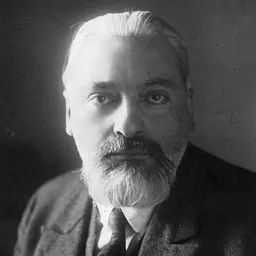
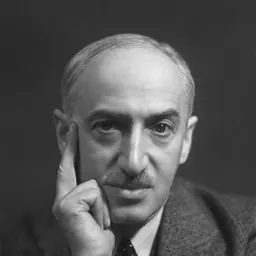

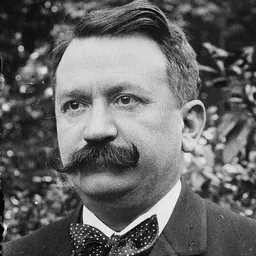


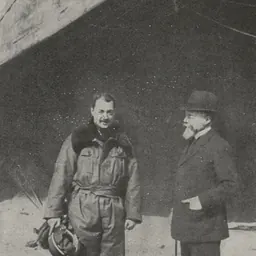

Related people
Same field, nearest in time


Contemporaries
People whose lives overlapped Paul Doumer's




Frequently asked questions
Who was Paul Doumer?
French statesman (1857–1932)
When was Paul Doumer born?
Paul Doumer was born on 22 March 1857 in Aurillac.
When did Paul Doumer die?
Paul Doumer died on 7 May 1932 in Paris.
What was Paul Doumer's occupation?
Paul Doumer was a statesperson and politician.
What nationality was Paul Doumer?
Paul Doumer was French.
Sources & further reading
Cite this page
APA: Biography.guide. (2026). Paul Doumer. https://biography.guide/paul-doumer/
MLA: "Paul Doumer." Biography.guide, https://biography.guide/paul-doumer/.
Chicago: "Paul Doumer." Biography.guide. https://biography.guide/paul-doumer/.
Data last updated: 2026-09-25 · Spot an error? Report a correction.
Page generated 2026-09-27 05:11 UTC