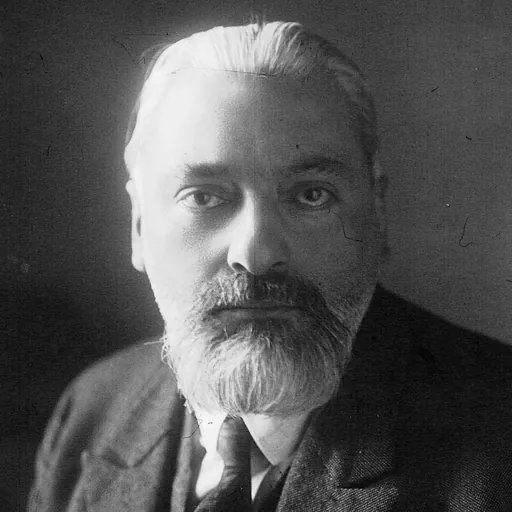
About Claude Farrère
Lived 1876 – 1957 (aged 81). Claude Farrère was a French writer, screenwriter, journalist and officer of the French Navy.
Claude Farrère , pseudonym of Frédéric-Charles Bargone (; 27 April 1876, in Lyon – 21 June 1957, in Paris), was a French Navy officer and writer. Many of his novels are based in exotic locations such as Istanbul, Saigon, or Nagasaki.
One of his novels, Les Civilisés, about life in French colonial Indochina, won the third Prix Goncourt for 1905. He was elected to a chair at the Académie Française on 26 March 1935, in competition with Paul Claudel, partly thanks to lobbying efforts by Pierre Benoit.
Biography Initially, Claude Farrère had followed his father, an infantry colonel who served in the French colonies: He was admitted to the French Naval Academy in 1894; was made lieutenant in 1906; and was promoted to captain in 1918. He resigned the next year to concentrate on his writing career.
Claude Farrère was a friend and was partly mentored by two other famous French writers of this period, i.e. Pierre Louÿs and Pierre Loti, the latter having been as well a former Navy officer and a writer of books based in overseas countries and cultures. Farrère was a prolific writer, and many of his books are based on his overseas travels and on exotic cultures, especially in Asia, the Orient and North Africa, partly based on his travels when he was an officer with the French Navy. His works have now largely fallen from favour, even among French readers, although some of his most famous books, such as Fumée d'opium, Les Civilisés, La Bataille or Les hommes nouveaux have been republished in France at the end of the 20th century and the early 21st century.
One anecdotal and indirect reference to Claude Farrère is the perfume "Mitsouko" created by the long-lived perfumer Jacques Guerlain, with whom Claude Farrère was a friend. Mitsouko's story is found in Farrère's novel La Bataille (The Battle, 1909), which is a romance based upon Japan's modernization and westernization during the Meiji period and upon the 1905 naval Battle of Tsushima when the Imperial Japanese Navy defeated the Russian Imperial Navy. Mitsouko was a beautiful Japanese woman whose name meant both 'honeycomb' and 'mystery', who was married to a noble Japanese Navy officer and had an ill-fated love affair with an English officer. La Bataille was translated in several foreign languages, including Serbian by Veljko M. Milićević under the title Boj (The Battle), published in Sarajevo in 1912. Another Serbian author, Jelena Skerlić translated Farrère's Dix-sept histoires de marins (1914) under the title Iz mornarskog života: priče also published in Sarajevo in 1920.
Farrère's name has also been given to "Klod Farer Caddesi" (as spelled in Turkish), a street in Sultanahmet, Istanbul for his favourable description of Turkish culture and Turks. Orhan Pamuk's publisher, İletişim Publishing, is situated on this street
A number of Farrère's novels were translated and published under his real name, Frédéric-Charles Bargone.
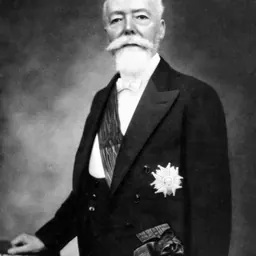
On 6 May 1932, at the opening of a Paris book fair at the Hôtel Salomon de Rothschild, Farrère was in conversation with French President Paul Doumer when several shots were fired by Paul Gorguloff, a Russian émigré. Doumer was fatally wounded. Farrère wrestled with the assassin until the police arrived.
As a traditionalist conservative intellectual, he sympathized with the Rebel faction and the Francoist dictatorship in Spain, and he also was one of the French Academy members that actively supported the collaborationist Vichy Regime, helping to legitimize Marshal Pétain's authority. Farrère denounced the “bad shepherds” that, according to him, led prewar French society to “decadence”.
Don’t just read it —
keep it.
Full-length biographies made to live with: read them, listen on the way to work, watch them tonight.
- E-book
- Audio
- Video
Instant download · yours to keep · every purchase keeps this site free
Important facts
People in Claude Farrère's life
Named in this biography and alive at the same time



Related people
Same field, nearest in time



Contemporaries
People whose lives overlapped Claude Farrère's

Frequently asked questions
Who was Claude Farrère?
French writer and French navy officer (1876-1957)
When was Claude Farrère born?
Claude Farrère was born on 27 April 1876 in Lyon, 6th arrondissement of Lyon.
When did Claude Farrère die?
Claude Farrère died on 21 June 1957 in Paris, 5th arrondissement of Paris.
What was Claude Farrère's occupation?
Claude Farrère was a writer, screenwriter, journalist and officer of the French Navy.
What nationality was Claude Farrère?
Claude Farrère was French.
Sources & further reading
Cite this page
APA: Biography.guide. (2026). Claude Farrère. https://biography.guide/claude-farrere/
MLA: "Claude Farrère." Biography.guide, https://biography.guide/claude-farrere/.
Chicago: "Claude Farrère." Biography.guide. https://biography.guide/claude-farrere/.
Data last updated: 2026-09-24 · Spot an error? Report a correction.
Portrait: Wikimedia Commons · author & licence
Page generated 2026-09-27 05:09 UTC