
Violette Morris
French athlete
About Violette Morris
Lived 1893 – 1944 (aged 51). Violette Morris was a French association football player, athletics competitor, racing automobile driver, boxer and javelin thrower.
Motor racing Morris had her breasts removed by a mastectomy, which she claimed was in order to fit into racing cars more easily. She mainly competed in cyclecar endurance races and used a Benjamin cyclecar. She won the 1927 Bol d'Or 24-hour car race at the wheel of a B.N.C.
Lifestyle Morris's lifestyle in the 1920s was quite different from the traditional role of women. In addition to her wide-ranging athletic activities, Morris was outside traditional behaviours of the time in several other ways. She was homosexual, dressed in men's attire, was a heavy smoker
In 1930, Morris unsuccessfully sued the FFSF, claiming damages, as she could no longer earn wages competing as an athlete. During the trial, an obscure ordinance from 1800 forbidding women to wear trousers was used against her. Historian Marie-Jo Bonnet claimed that although Morris's homosexuality was not directly targeted in the trial, it was made an issue throughout. One of the lawyers representing the FFSF was Yvonne Netter, a noted campaigner for French women's rights.
A quote attributed to Morris after the trial was censored:
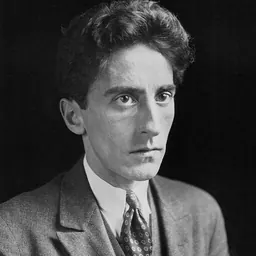
During her athletic career in the 1920s, Morris became friends and associates with many of France's artists and intellectuals. She had longstanding friendships with American-born entertainer Josephine Baker, actor Jean Marais, and poet, author, and filmmaker Jean Cocteau. In 1939, Morris and her partner, actress Yvonne de Bray, invited Cocteau to stay with them at their houseboat docked at Pont de Neuilly. There he wrote the three-act play .
Arrest and acquittal for homicide In January 1933, Morris moved into a houseboat, , with her partner, Yvonne de Bray, which was moored on the Seine at Pont de Neuilly in northwest Paris near the Bois de Boulogne. Living off inheritance annuities, she took up lyrical singing and was successful enough in the hobby to be broadcast performing on the wireless.
On Christmas Eve 1937, while having dinner with friends and neighbors Robert and Simone de Trobriand at a restaurant in Neuilly, the trio encountered a drunk and aggressive young man named Joseph Le Cam. The unemployed ex-Legionnaire became embroiled in a heated argument with Simone de Trobriand. Morris was able to calm the man after some time. The following evening, after more drinking in Montmartre, Le Cam arrived at Morris' houseboat and another argument took place, this time between Morris and Le Cam. Le Cam left the houseboat, but soon returned after seeing Simone de Trobriand boarding . They had argued the night before and Le Cam rushed back to the houseboat, brandishing a knife, and threatened both Morris and de Trobriand. Morris pushed Le Cam several times before he lunged at her and she produced a 7.65mm revolver. Morris fired four shots, the first two into the air, the following two at Le Cam.
During World War II and the German occupation of France, Morris served as a collaborator for the Nazis and Vichy France. The nature of her collaboration is disputed. Some, such as writer Raymond Ruffin, claim that one of her main responsibilities during the war was to foil the operation of the Special Operations Executive, a British-run organisation that helped the Resistance. He also suggested that, in addition to being a spy for the Nazis, she would have been involved in the torture of suspects during interrogation. Morris is the title character in Gérard de Cortanze's Femme qui court, which won the 2019 for best historical novel.
Don’t just read it —
keep it.
Full-length biographies made to live with: read them, listen on the way to work, watch them tonight.
- E-book
- Audio
- Video
Instant download · yours to keep · every purchase keeps this site free
Important facts
People in Violette Morris's life
Named in this biography and alive at the same time



Related people
Same field, nearest in time



Contemporaries
People whose lives overlapped Violette Morris's

Frequently asked questions
Who was Violette Morris?
French athlete (1893–1944)
When was Violette Morris born?
Violette Morris was born on 18 April 1893 in 6th arrondissement of Paris.
When did Violette Morris die?
Violette Morris died on 26 April 1944 in Eure.
What was Violette Morris's occupation?
Violette Morris was an association football player, athletics competitor, racing automobile driver, boxer and javelin thrower.
What nationality was Violette Morris?
Violette Morris was French.
Sources & further reading
Cite this page
APA: Biography.guide. (2026). Violette Morris. https://biography.guide/violette-morris/
MLA: "Violette Morris." Biography.guide, https://biography.guide/violette-morris/.
Chicago: "Violette Morris." Biography.guide. https://biography.guide/violette-morris/.
Data last updated: 2026-09-26 · Spot an error? Report a correction.
Page generated 2026-09-27 05:15 UTC