
About Vincenzo Colli
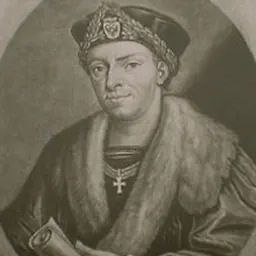
Lived 1460 – 1508 (aged 47–48). Vincenzo Colli was a poet, literary critic, secretary and writer.
Vincenzo Colli (c. 1460 – August 1508), known as il Calmeta, was an Italian poet and literary critic. He served various lords during his restless travels across Italy and France. He was initially secretary to Beatrice d'Este, Duchess of Milan, whom he celebrated in his Triumphi. He later served as commissioner for Cesare Borgia and was also a favored poet of Elisabetta Gonzaga, Duchess of Urbino, to whom he dedicated the now-lost Nove libri della volgar poesia. However, he suffered persecution from her brother, Francesco II Gonzaga, Marquess of Mantua, who bore him a fierce hatred.
Biography Vincenzo's life remains largely obscure, and it is possible to reconstruct it only through brief allusions and what he relates about himself in his surviving works and letters.
Origins The copyist of a manuscript containing some of his works provides some biographical details, based on what Vincenzo himself had written in his lost work Amorosa Peregrinazione: his ancestors were Insubri and he belonged to a noble family from Vigevano. His father was a great traveler and, having arrived in Chios, then under Genoese jurisdiction, he was entrusted with the administration of justice there. He married a noblewoman from the island, with whom he had Vincenzo and, it seems, another son. At the age of two, the child was taken by his parents to Castel Nuovo Scrivia, where he completed his early studies.
Vincenzo declares in his prose written after 1500 that he is forty years old, so his date of birth is fixed around 1460 or shortly after. The prose cannot be dated before 1500, as they contain numerous references to the fall of Ludovico il Moro and to his service with Cesare Borgia, which Vincenzo speaks of as events now past.
In the two-year period 1490–1491, he was in Rome, where he studied at the Academy of Paolo Cortese and became friends with the wandering poet Serafino Aquilano. It is presumed that it was during these years that he adopted the nickname Calmeta, influenced by the homonymous character in Boccaccio's Filocolo.
Secretary to Beatrice d'Este The court of Ludovico il Moro by Eleanor Fortescue-Brickdale. On the left is Duchess Beatrice d'Este, to whom a courtier, perhaps her secretary, whispers something. After completing his studies, and still being young, he went to Milan at an unspecified date, but certainly before 1494, to the court of Ludovico il Moro, where he became secretary to Duchess Beatrice d'Este. It should be noted, however, that it is Vincenzo himself who uses this term in his works, while there is no concrete evidence of his actual activities during his stay in Milan, as if he had never been there. According to Claudia Berra, Vincenzo's feeling always remains more on the path of devotion than of true love. Passionate love would be absent, "replaced by the secretary's veneration for his lady".
On the other hand, some verses of an epicedium by the humanist Pier Francesco Giustolo, perhaps composed in 1501 and dedicated to Vincenzo Calmeta, seem to lead to a different interpretation, as well as demonstrate the central role Beatrice had in the life and poetry of her secretary:
It is the lament for a young poet recently deceased, who was a pupil of Vincenzo. The scene takes place in the otherworldly wood, where the boy delights the souls of the dead with the songs Vincenzo taught him, and where Beatrice appears unexpectedly, who can be none other than the Duchess Beatrice d'Este herself, already dead for years. From this, it is understood that Vincenzo had continued to write poems in her memory, which he taught to his pupil. Recognizing them, Beatrice takes the deceased boy by the hand and asks him about Vincenzo's well-being, saying she forgives him for his "curis secundis", plausibly translatable as "subsequent loves", entertained after the duchess's death. Subsequently, in a later edition of the epicedium, Vincenzo's name was removed, while Beatrice's underwent various substitutions: first, an attempt was made to transform it into that of an anonymous Lycore; after this attempt failed, the name Beatrix was changed to Hermosine, a mysterious woman loved by Angelo Colocci. It was a veritable "literary theft" perpetrated by Colocci against Calmeta, substituting his own name as the fictitious dedicatee in Giustolo's epicedium, probably after his death in 1508. This was the version that went to print. It was presumably composed by Giustolo in Fano in 1501 and sent to Naples to Calmeta, who was then in the service of the Valentino. The true names of the protagonists were only rediscovered in the second half of the 20th century by Augusto Campana. and others to the early years of the following century. The love sonnets all speak of an unhappy love, unrequited and unattainable. For example, sonnet VII contained in manuscript Par. It. 1543, where he laments not being able to vent "el martir mio tanto atroce" (my so atrocious martyrdom) by revealing his desire to everyone, as it would be a serious threat to the honour of the dedicatee (kept anonymous), the reason why he chose to suffer and keep his love silent: "cussì l'un via a me, l'altra ad te noce, unde pel meglio mi consumo e taccio, e cerco cun mio damno conservarte, perché in te sta de me la meglior parte".
He does nothing but rail against cruel Fate and weave praises for the deceased, who is the "bright light to my dark intellect" and the "true phoenix of my ardent heart", and even invokes Death to make him die as soon as possible and grant him rest beside her "chaste bones":
It is not at all clear when exactly he went to Rome or why, a reason he deliberately omits to explain. Simone Albonico, however, expresses surprise that Vincenzo had left the court at such a delicate moment in his lady's life as her third pregnancy, whose tragic outcome indeed caused her death.
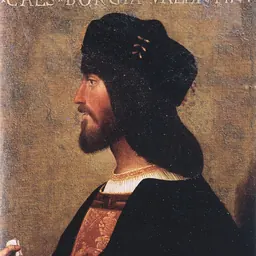
Commissioner for Cesare Borgia Perhaps he had already met Duke Cesare Borgia at that time, but he did not immediately enter his service. It is assumed there was a temporary return to Milan because he himself, in his "Vita di Serafino Aquilano", taking further occasion to remember his duchess, wrote that due to her death, "everything went to ruin and precipice, and the court turned from a happy Paradise into a dark Hell, so that every virtuous person was forced to take another path, and I among others, seeing such high hope interrupted, and having also other new opportunities, I returned to Rome." thumb Certosa di Pavia: the tombstone of Beatrice d'Este in a woodcut by Giuseppe Barberis.He is recorded in Mantua with the Gonzaga from May to September 1498. Around that time, he left for France in the retinue of Cesare Borgia as his secretary and returned to Italy with the French troops between August and September 1499. However, Borgia's political projects were distasteful to him, which explains his intervention with Louis XII in favour of Caterina Sforza. Vincenzo showed sincere concern for the woman's fate and wrote to her with advice on how to prevent the papal plan, also promising to come to her aid. He nonetheless followed Cesare in his expedition to Forlì and then to Rome. Here he was a witness to the first attempted assassination of Alfonso of Bisceglie, which he reported to Duchess Elisabetta Gonzaga.
There is no further news of him until 1502, but it is presumed that he continued to follow Borgia in all his travels, thus in Romagna and Naples. He was certainly in Imola in October–December 1502. He probably also witnessed the dramatic massacre of Senigallia. In January 1503, Borgia sent him as commissioner to Fermo, but he held this post for only a few months, as he was replaced by Giacomo Nardino in May. Vincenzo must have seized the opportunity to separate himself from Borgia's service, whose star was now in decline, and whose favour he no longer enjoyed as before. Already in September 1503, he is found in the service of Ercole Pio Carpi, in Ferrara, where he met Pietro Bembo.
Protégé of Elisabetta Gonzaga
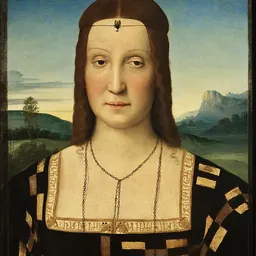
At the beginning of 1504, he settled at the court of Urbino, where he remained, it seems, almost until his death. In March 1507, he appears in the company of the gentlemen of the prefect of Rome, Francesco Maria della Rovere. Despite continuing his correspondence with Isabella d'Este, to whom he sent an epistle on vernacular elegies in 1504, he was never able to return to Mantua due to the fierce hatred borne by the Marquess Francesco II Gonzaga, for reasons unknown. The latter begged his sister Elisabetta not to mention Vincenzo to him even by mistake, saying: "I could not feel nor receive greater displeasure than seeing myself asked by Your Lordship in favour of Vincentio Calmetta, whom I cannot hear named without great distress and much annoyance, for reasons I do not wish to love him [...] and be certain that to your first [letter] I did not respond solely because of the hatred I bear that Vincentio." He schemed to make him lose the favour of his brother, Cardinal Sigismondo Gonzaga, who, although wishing to keep him in his service, was forced to renounce it. To him, Francesco wrote, as he had for his sister, a harsh reproach: "Concerning Calmetta, I cannot but feel somewhat resentful, that a person so hated by us as Calmetta is, should be caressed and well-regarded by those who should love me and hate those I hate, and not hold them in such high account." Moreover, it would be inexplicable how, despite her brother's hatred, Elisabetta Gonzaga always reserved her most sincere and passionate friendship for Vincenzo, According to Cecil Grayson, however, the marquess became angry not because of the alleged offences to his wife, but because of those directed at his mistress Teodora Suardi, perhaps also by highlighting the contrast between the first and the second.
Certainly, from this, one can understand "how much interest Elisabetta must have had in him", In fact, "the relationship between Calmeta and Elisabetta lasted unchanged for several years", until his death.
In a scene narrated in Baldassarre Castiglione's The Book of the Courtier (set in 1507 but written several years later), "the irreproachable Elisabetta, who chose to be a widow in life to the impotent Guidobaldo", appears in public with an S letter on her forehead, the meaning of which her courtiers question: "perhaps she hides in the emblem that adorns her forehead a secret desire regarding the long-awaited, impossible motherhood. Or perhaps a secret bond of love." In the work, it is said that Unico Aretino responds to the challenge with the impromptu composition of a sonnet, Per segno del mio amor nel fronte porto, which indicates the mainly amorous meaning of that S on the forehead, which then varies according to different situations. In fact, this sonnet, attributed by Castiglione to Aretino, was already printed in 1502 under the name of Vincenzo Calmeta. "A striking feature of his life was the great favour he enjoyed with the leading women of the time: Beatrice, Elisabetta, and along with them also the sister of one and sister-in-law of the other, Isabella Gonzaga; noble countenances, among which it produces a singular effect to see the grim face of Cesare Borgia protrude."
Enmity with Pietro Bembo During this period, Vincenzo intensively devoted himself to deepening his studies on the courtly language, elaborating his theory and proving himself, in the now-lost Nove libri della volgare poesia, in the "Annotazioni e iudìci", and in the well-known "Vita di Serafino Aquilano" published in Bologna in 1504, to be one of the most valid critics of the time. These books caused him the aversion and enmity of Pietro Bembo, with whom he was initially on good terms, and who disparaged him in his Prose della volgar lingua. "Probably Bembo, who made no secret of his intentions to deal organically with the vernacular language, must have felt a piqued spite in knowing that Calmeta was treading the same path that he alone and first wanted to tread." It seems that Bembo accused Vincenzo of having taken advantage of his good faith to steal the idea, and perhaps also part of the content, of his Prose, although it is impossible to say to what extent the accusation was founded. In a composition bearing his name, but of uncertain attribution, he describes himself as an army captain, who, for love, does not dedicate himself to dances and games but to jousts and tournaments, and who even in battle draws courage from the thought of his beloved woman.
On the other hand, in contemporary criticism, Vincenzo's verses were generally highly esteemed and he was considered an excellent poet: Cassio da Narni says "crowned here too was Calmetta | and his sweet style delighted all". Galeotto del Carretto calls him "Calmeta the distinguished, among all the good laureate poets"; Burchiello calls him "eloquent Calmetta" and "Calmetta with his ready rhymes". Giovanni Filoteo Achillini names him, in some verses, "[...] the excellent Calmeta, who greatly disturbs the misguided Filefo". Gaspare Visconti regretted with a friend not having received Vincenzo's poems, as he had hoped, telling him: "I am more grieved for having been deprived of that sweetness which is always tasted in his most delicate style."
Among the detractors, Lelio Manfredi calls him an enemy of Burchiello and "full of smoke and pomp" ("nor could this windbag be better defined," the editor Francesco Flamini disdainfully comments), and perhaps a verse by Pistoia, which reads: "Vincenzo has a style appreciated only by himself," refers to him, while the poet Filippo Oriolo left us this memory:
Literary works
Surviving Compendio dell'Ars Amandi: vernacular translation in terza rima of Ovid's work, composed between 1494 and 1497, almost reluctantly, at the request of Ludovico il Moro. In it, Vincenzo seems to want to emulate Dante in the Vita Nuova when he announces the intention to compose the Divine Comedy for his beloved, as he writes: "Elsewhere I hope to show my intellect, raising to flight an immortal phoenix that will be a high subject for my low style." This is certainly Duchess Beatrice. S'egli è possibile essere buon poeta volgare senza aver lettere latine: poetry is an innate gift, infused by "divine fury", which therefore does not depend on man's intellect, but which must nevertheless be aided by study and letters. "I do not deny that the poet must first have the vein from his mother's womb [...] but I say, if he is not aided by accident, he will be like a robe of richest brocade made by an inept tailor, in which the artifice will be more blamed than the material praised." Therefore, anyone who wants to be an elegant poet must not be completely ignorant of Latin. "And so you others who have elevated intellects, and who desire to produce some fruit in the poetic faculty, be willing to sweat over learning, fleeing the bestial persuasion of some ignoramuses, who, for knowing how to match four rhymes together, dressed in a bestial smoke, having recited their trifles to some barbarian or woman, would not exchange their ignorance for Petrarch's excellence." Dell'antichità del buccolico verso e che circonstanze all'egloga si convengono; La poesia del Tebaldeo: judgment on the poetics of Antonio Tebaldeo; Qual stile tra' volgari poeti sia da imitare; Cecilia Gallerani e Giulia Farnese: biography, comparison, and judgment (favourable to both) on the two famous mistresses of Ludovico il Moro and Rodrigo Borgia, among the most beautiful women in Italy. Per molti essempi che cosa sia servare il decoro; Della ostentazione; Littera di Vincenzo Calmeta scritta all'Illustrissima Madama Marchesa nostra: epistle on chapters, epistles, and elegies addressed to Isabella d'Este;
Lost Nove libri della volgare poesia: dedicated to Elisabetta Gonzaga, A comedy composed in Urbino in 1504, on an unknown theme. A commentary on Petrarch's canzone "Mai non vo' più cantar". Modo di aver cognizione quali arme dimostrino antica nobiltà e quali no. Come nel crescer gli anni e nelle mutazioni dell'età degli uomini si mutano gli stili. Epistola delle perturbazioni d'Italia.
Don’t just read it —
keep it.
Full-length biographies made to live with: read them, listen on the way to work, watch them tonight.
- E-book
- Audio
- Video
Instant download · yours to keep · every purchase keeps this site free
Important facts
People in Vincenzo Colli's life
Named in this biography and alive at the same time



Related people
Same field, nearest in time

Contemporaries
People whose lives overlapped Vincenzo Colli's


Frequently asked questions
Who was Vincenzo Colli?
Italian poet and literary critic
When was Vincenzo Colli born?
Vincenzo Colli was born in 1460 in Chios.
When did Vincenzo Colli die?
Vincenzo Colli died in 1508 in Rome.
What was Vincenzo Colli's occupation?
Vincenzo Colli was a poet, literary critic, secretary and writer.
Sources & further reading
Cite this page
APA: Biography.guide. (2026). Vincenzo Colli. https://biography.guide/vincenzo-colli/
MLA: "Vincenzo Colli." Biography.guide, https://biography.guide/vincenzo-colli/.
Chicago: "Vincenzo Colli." Biography.guide. https://biography.guide/vincenzo-colli/.
Data last updated: 2026-09-20 · Spot an error? Report a correction.
Page generated 2026-09-27 05:28 UTC