
About John Skelton
Lived 1460 – 1529 (aged 68–69). John Skelton was an English poet, writer, tutor, priest and humanist.
John Skelton, also known as John Shelton (c. 1463 – 21 June 1529) was an English poet, playwright, priest, and tutor to King Henry VIII. Writing in a period of linguistic transition between Middle English and Early Modern English, Skelton is one of the most important poets of the early Tudor period. As a poet, Skelton is mostly remembered for his invectives and satires, often written in a highly irregular metre now called Skeltonics. However, Skelton's poetic oeuvre (which survives only in part) encompasses a wide range of genres, including dream vision, parody, ballad, panegyric, and Latin elegiac. He also wrote the first secular morality play in English, Magnyfycence, an important landmark in the development of English Renaissance theatre.
Skelton served as a tutor to the young Henry VIII, and lived in his court for much of his adult life. He took up the style of poet laureate, possibly after appointment by Henry, and was rector of Diss for nearly 30 years. Skelton was involved in the Grammarians' War, and, in his last years, came into conflict with Thomas Wolsey. Fearing for his life, he took sanctuary in Westminster, where he died in 1529. He was buried in St. Margaret's Church, although no trace of the tomb remains.
As a poet, Skelton's reputation has been mixed. Though very popular in the decades after his death, by the late 16th century his reputation had declined. Derided by Alexander Pope as "beastly", it was only in the 20th century that his work began to be seen more favorably, where his exponents include W. H. Auden and C. S. Lewis.
Education Skelton is said to have been educated at Oxford, though it is documented that he studied at Cambridge. He could be the "one Scheklton" mentioned by William Cole as taking his M.A. degree at Cambridge in 1484, but this is unconfirmed. In 1490, William Caxton, in the preface to The Boke of Eneydos compyled by Vyrgyle, refers to him as though Skelton already had a scholarly reputation when the book was published. "But I pray mayster John Skelton," he says, "late created poete laureate in the unyversite of Oxenforde, to oversee and correct this sayd booke ... for him I know for suffycyent to expowne and englysshe every dyffyculte that is therin. For he hath late translated the epystlys of Tulle, and the boke of dyodorus siculus, and diverse other works... in polysshed and ornate termes craftely... suppose he hath drunken of Elycons well."
The laureateship referred to was a degree in rhetoric. As well as Oxford, in 1493 Skelton received the same honour at Cambridge, and also at Leuven. An elegy (1489) on the death of Henry Percy, fourth earl of Northumberland, is among his earliest poems, as may be another (Of the death of the noble prince Kynge Edwarde the forth), though this latter is now usually thought not to be by Skelton.
Poet laureate In the last decade of the 15th century he was appointed tutor to Prince Henry (afterwards King Henry VIII). more fit for the stage than the pew or the pulpit. He was rumoured to be secretly married to a woman who lived in his house, and earned the hatred of the Dominican friars by his fierce satire. He consequently came under the formal censure of Richard Nix, the bishop of the diocese, and appears to have been temporarily suspended. After his death a collection of farcical tales, no doubt chiefly, if not entirely, apocryphal, gathered round his name—The Merie Tales of Skelton.
During the rest of the century he figured in the popular imagination as an incorrigible practical joker. His sarcastic wit made him enemies, among them: Sir Christopher Garnesche or Garneys, Alexander Barclay, William Lilly and the French scholar Robert Gaguin (c. 1425–1502). With Garneys he engaged in a regular "flyting", undertaken, he says, at the king's command, but Skelton's four poems read as if the abuse in them were dictated by genuine anger. Earlier in his career he found a friend and patron in Cardinal Wolsey, and the dedication to the cardinal of his Replycacion is couched in the most flattering terms. But in 1522, when Wolsey in his capacity of Papal legate dissolved convocation at St Paul's, Skelton put in circulation the couplet: Gentle Paul, laie doune thy sweard For Peter of Westminster hath shaven thy beard. In Colyn Cloute he incidentally attacked Wolsey in a general satire on the clergy. Speke, Parrot and Why Come Ye nat to Courte? are direct and fierce invectives against the cardinal. To avoid another arrest Skelton took sanctuary in Westminster Abbey. He was kindly received by the abbot, John Islip, who continued to protect him until his death. According to his biographer, Edward Braynewood, Skelton was buried before the high altar of Saint Margaret's Church with this inscription on alabaster: Joannes Skeltonus vates pierius hic situs est (Here lies John Skelton, Pierian bard). He exposes their greed and ignorance, the ostentation of the bishops and the common practice of simony, taking care to explain the accusations do not include all and that he writes in defence of the church. He repeatedly, indirectly hits at Wolsey in this satire. Speke, Parrot has only been preserved in a fragmentary form, and is very obscure. It was apparently composed at different times, but in the latter part of the composition he openly attacks Wolsey. In Why Come Ye nat to Courte? there is no attempt at disguise. The wonder is not that Skelton had to seek sanctuary, but that he had any opportunity of doing so. He rails at Wolsey's ostentation, at his almost royal authority, his overbearing manner to suitors high and low, and taunts him with his mean extraction. This scathing invective was not allowed to be printed in the cardinal's lifetime, but no doubt widely circulated in manuscript and by repetition. The charge of coarseness regularly brought against Skelton is based chiefly on The Tunnynge of Elynoare Rummynge, a realistic description in the same metre of the drunken women who gathered at a well-known ale-house kept by Elynour Rummynge at Leatherhead, not far from the royal palace of Nonsuch.
"Skelton Laureate against the Scottes" is a fierce song of triumph celebrating the victory of Flodden. "Jemmy is ded And closed in led, That was theyr owne Kynge", says the poem; but there was an earlier version written before the news of James IV's death had reached London. This, the earliest singly printed ballad in the language, was entitled A Ballade of the Scottysshe Kynge, and was rescued in 1878 from the wooden covers of a copy of Huon de Bordeaux. "Howe the douty Duke of Albany, lyke a cowarde knight" deals with the Campaign of 1523, and contains a panegyric of Henry VIII. To this is attached an envoi to Wolsey, but it surely was misplaced, for both satires on the cardinal are of earlier date. has found that several pieces which Dyce considered Skelton's are almost certainly not by him, and new (authentic) works have since been found. As of 2025, John Scattergood's The Complete English Poems of John Kelton (1983, revised 2015) and David R. Carlson's The Latin Writings of John Skelton (1991) form the standard editions of his work.
Family John Skelton's lineage is difficult to prove. Some scholars have thought he may have been related to Sir John Shelton and his children, who also came from Norfolk. Sir John's daughter, Mary Shelton, was a mistress of Henry VIII's during the tenure of her cousin, Anne Boleyn. Mary Shelton was the main editor and contributor to the Devonshire MS, a collection of poems written by various members of the court.
It is said that several of Skelton's works were inspired by women who were to become mothers to two of Henry VIII's six wives. Elizabeth Boleyn (Howard), Countess of Wiltshire and Ormonde, was said to be so beautiful that Skelton compared her to Cressida. This comparison may have been a double entendre, because Cressida, as depicted by Chaucer in his work Troilus and Criseyde, was notable as a symbol of female inconstancy. A popular but unverifiable legend suggests several poems were inspired by Margery Wentworth; she is noted as one of the women portrayed in Skelton's Garland of Laurel. She also is reported as having an eponymous poem written in her honour by Skelton. Elizabeth was the mother of Anne Boleyn, Henry's second wife; Margery was the mother of his third, Jane Seymour.
Don’t just read it —
keep it.
Full-length biographies made to live with: read them, listen on the way to work, watch them tonight.
- E-book
- Audio
- Video
Instant download · yours to keep · every purchase keeps this site free
Important facts
People in John Skelton's life
Named in this biography and alive at the same time






Related people
Same field, nearest in time

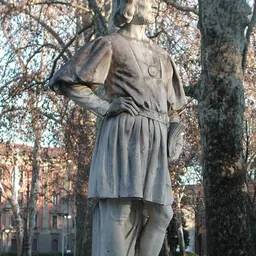
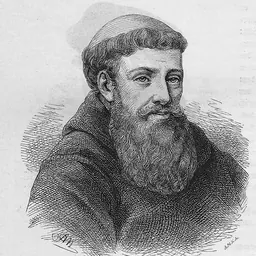
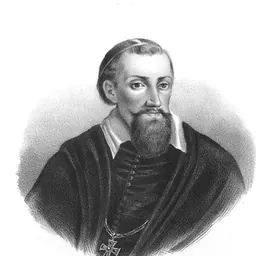
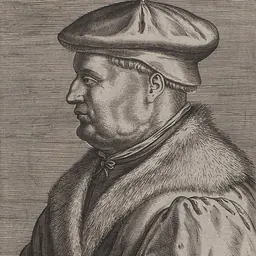
Contemporaries
People whose lives overlapped John Skelton's



Frequently asked questions
Who was John Skelton?
English poet and tutor (1463-1529)
When was John Skelton born?
John Skelton was born in 1460 in Kingdom of England.
When did John Skelton die?
John Skelton died on 21 June 1529 in Westminster.
What was John Skelton's occupation?
John Skelton was a poet, writer, tutor, priest and humanist.
What nationality was John Skelton?
John Skelton was English.
Sources & further reading
· DBpedia: John Skelton (poet)
Cite this page
APA: Biography.guide. (2026). John Skelton. https://biography.guide/john-skelton-poet/
MLA: "John Skelton." Biography.guide, https://biography.guide/john-skelton-poet/.
Chicago: "John Skelton." Biography.guide. https://biography.guide/john-skelton-poet/.
Data last updated: 2026-09-20 · Spot an error? Report a correction.
Page generated 2026-09-27 05:30 UTC