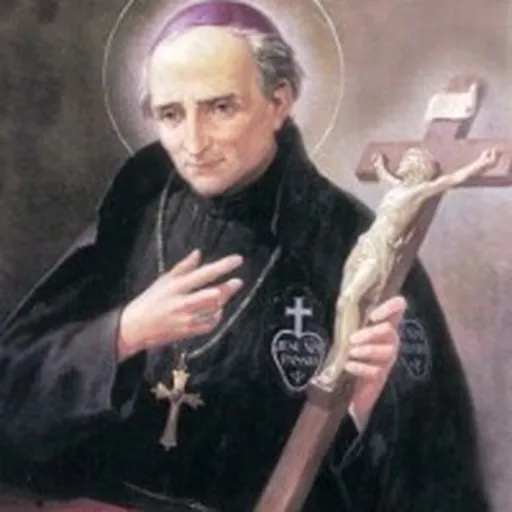
About Vincent Strambi
Lived 1745 – 1824 (aged 79). Vincent Strambi was an Italian catholic priest, catholic bishop, christian minister and missionary.
Vincenzo Strambi, religious name Vincenzo Maria di San Paolo; 1 January 1745 — 1 January 1824) was an Italian Passionist. He was appointed prelate and served as the Bishop of Macerata-Tolentino from 1801 until his resignation in 1823.
Strambi entered at the Passionists despite the congregation's founder, Paul of the Cross, refusing him several times due to Strambi's frail constitution. He practiced Passionist austerities, which continued after his appointment as a bishop, including him favoring his habit rather than the usual episcopal garb. Strambi was known for his charitable projects that included the care of the poor and the reduction of diocesan expenditures in order to provide for them; he took special interests in the education and ongoing formation of priests.
Strambi was exiled from his diocese 1808 after he refused to take an oath of allegiance to the First French Empire under Napoleon, who had annexed Macerata. Strambi spent that time in Novara and Milan before he managed to return to his see in 1814. He served as bishop for the remainder of the pontificate of Pope Pius VII before his successor Pope Leo XII accepted Strambi's resignation and summoned him to Rome as his advisor. A sudden illness of the pope—which seemed to be mortal—prompted Strambi to offer his own life to God so that the pope could live. Leo XII rallied to great surprise but Strambi died of a stroke within the week.
Strambi's beatification cause was opened after his death on 25 June 1845 and he was named venerable on 1 April 1894. Pope Pius XI beatified Strambi in 1925 and Pope Pius XII canonized him a couple of decades later, in 1950. as the last of four children to Giuseppe Strambi and Eleonora Gori; his three elder siblings all died in childhood. His father served as a pharmacist known for his charitable works and his mother was noted for her piety.
He was often a troublesome child who excelled in athletics and became more devout in his adolescence. The Friars Minor oversaw his education and he taught his fellow students the catechism. His desire to become a priest was met with encouragement from his parents and he commenced his ecclesial studies in November 1762. It was at this time that he became quite attracted to the notion of the religious life though his frail health saw him refused admission into the Order of Friars Minor Capuchin and the Vincentians. Strambi was noted for his oratorical gifts and so was sent to Rome for studies in Sacred Eloquence and thereafter continued his theological studies with the Dominicans at Viterbo. While still a student he was appointed prefect of the seminarians in Montefiascone and thereafter acting-rector of seminarians at Bagnorea.
Before his ordination to the priesthood he made a retreat at the convent in Vetralla which belonged to the Passionists; it was here that he met the founder St Paul of the Cross. Strambi became impressed and enthralled with what he had seen and admired their ardent devotion. This made him ask the founder to be admitted into the order. But he was refused since Paul of the Cross believed that Strambi did not have the stamina for the Passionist life. Strambi left the convent on 18 December 1767 since he was to be ordained. The invaders had left much damage in their wake — not just destruction to infrastructure — but a lax sense of morals and values which Strambi worked hard to rebuild. He instituted strict reforms that ended corruption to the point where he received some death threats. Strambi was also the spiritual director of Anna Maria Taigi, a friend, as well as Ss. Gaspare del Bufalo and Vincent Pallotti.
But the French returned to Macerata in 1817, to set up their headquarters aiming to use that location to attack the Austrian forces. The people turned to Bishop Strambi for fear of what the French would do. His response was to gather priests and seminarians in his private chapel to beg for God's intercession and after one and a half hours he rose and declared that Macerata would be saved through the intercession of the Mother of God. The French were indeed defeated though the local people feared what would happen during their retreat. Strambi met with the leader of the French forces and begged him not to enter the town to which General Murat agreed. Strambi then secured the assurances of the Austrian generals that the French soldiers would not be slaughtered.
He was a close friend of Carlo Odescalchi and was pleased to learn that the pope named him as a cardinal on 10 March 1823. Strambi tried several times to secure his resignation from Pius VII but on one occasion the pope reprimanded him for using ill health as a vain excuse and dismissed him. Strambi tried once again in 1823 in a letter to Cardinal Ercole Consalvi to the pope but the letter arrived in Rome when the pontiff broke his thigh in a fall and died soon after.
Declining health and death In 1823 his health started to decline and Pope Leo XII gave him his permission to retire. He was then appointed as Leo XII's personal advisor and took up residence at the Quirinal Palace in Rome. It was during his time in this office that Napoleon's sister Pauline returned to the faith with Strambi's guidance. Strambi's last private aide around this stage was Monsignor Catervo Serrani. When the pope fell ill he asked God that his life should be taken rather than that of the pope. The pope recovered on 24 December 1823 and Strambi died in 1824 within the week due to a stroke he had suffered on the previous 27 December. His remains were placed at the Quirinal Palace for mourners to see and was then buried in the Santi Giovanni e Paolo church. Mourners who viewed his mortal remains included Cardinal Bartolomeo Alberto Cappellari — future pope Gregory XVI — who took Strambi's right hand in his own and formed it with the greatest of ease into the sign of the cross. His remains were later transferred on 12 November 1957 to the Chiesa di San Filippo in Macerata.
Veneration The cause for Strambi's beatification opened on a diocesan level for the collection of testimonies and documents in relation to his life and his episcopal works. The formal introduction did not come until 25 June 1845 when he was named as a Servant of God. The recognition of his life of heroic virtue led Pope Leo XIII to name him as venerable on 1 April 1894.
Pope Pius XI presided over the beatification rites on 26 April 1925 and signed a decree on 25 November that allowed the cause to continue. Pope Pius XII canonized Strambi in Saint Peter's Basilica on 11 June 1950.
Don’t just read it —
keep it.
Full-length biographies made to live with: read them, listen on the way to work, watch them tonight.
- E-book
- Audio
- Video
Instant download · yours to keep · every purchase keeps this site free
Important facts
People in Vincent Strambi's life
Named in this biography and alive at the same time


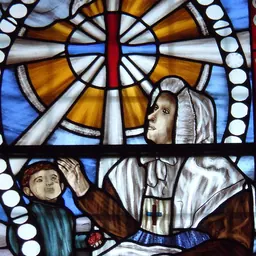
Related people
Same field, nearest in time


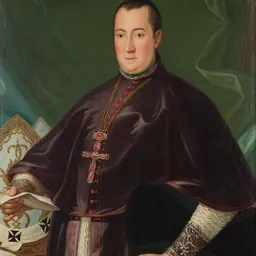
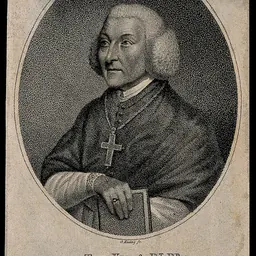
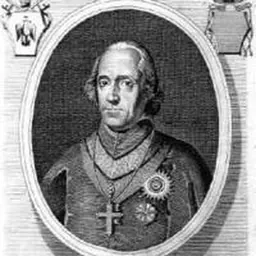
Contemporaries
People whose lives overlapped Vincent Strambi's




Frequently asked questions
Who was Vincent Strambi?
Roman Catholic Bishop
When was Vincent Strambi born?
Vincent Strambi was born on 1 January 1745 in Civitavecchia.
When did Vincent Strambi die?
Vincent Strambi died on 1 January 1824 in Rome.
What was Vincent Strambi's occupation?
Vincent Strambi was a catholic priest, catholic bishop, christian minister and missionary.
What nationality was Vincent Strambi?
Vincent Strambi was Italian.
Sources & further reading
Cite this page
APA: Biography.guide. (2026). Vincent Strambi. https://biography.guide/vincent-strambi/
MLA: "Vincent Strambi." Biography.guide, https://biography.guide/vincent-strambi/.
Chicago: "Vincent Strambi." Biography.guide. https://biography.guide/vincent-strambi/.
Data last updated: 2026-09-21 · Spot an error? Report a correction.
Portrait: Wikimedia Commons · author & licence
Page generated 2026-09-27 04:58 UTC