
About Ercole Consalvi
Lived 1757 – 1824 (aged 66). Ercole Consalvi was an Italian politician, diplomat, catholic priest, catholic deacon and catholic bishop.
Ercole Consalvi (8 June 1757 – 24 January 1824) was a deacon and cardinal of the Catholic Church, who served twice as Cardinal Secretary of State for the Papal States and who played a crucial role in the post-Napoleonic reassertion of the legitimist principle of the divine right of kings, of which he was a constant supporter.
Biography Early life Consalvi was born in Rome, a descendant of the ancient noble family of the Brunacci of Pisa. The cardinal's grandfather, Gregorio Brunacci, had taken the name and arms of the late Marquess Ercole Consalvi of Rome, as was required in order to inherit the large fortune the original Consalvi had left.
Ercole was the son of Mario Giuseppe Consalvi, the Marquess of Toscanella, and Countess Claudia Carandini of Modena. At the death of his father in 1763, Ercole was entrusted to the care of Cardinal Andrea Negroni. He was educated at the college of the Piarists from 1771 to 1776. He then entered the seminary founded in Frascati by the English Cardinal Henry Benedict Stuart, who was also called Duke of York by Jacobites, thus often referred to as "Cardinal York", and who was the Stuart pretender to the throne of Great Britain. He became a favorite of the Cardinal's and was helped by him to obtain high office in the Roman Curia while still a young man.
At the completion of his seminary studies in 1776, Consalvi took minor orders, and was named a member of a congregation charged with the direction of municipal affairs. The years from 1776 to 1782 were devoted to the studies of jurisprudence and ecclesiastical history in the Pontifical Academy for Noble Ecclesiastics in Rome, which trained students for the diplomatic corps of the Holy See.
On 20 October 1800, he was assigned the titular church of Sant'Agata dei Goti (later transferred to that of the Basilica of Santa Maria ad Martyres (Our Lady of the Martyrs), better known as the Pantheon, on 28 July 1817). In his new position of Secretary of State, he immediately left Rome for Paris in June 1801 to negotiate an understanding with the French, that resulted in the Catholic Church's Concordat of 1801 with Napoleon. He was never elevated to the sacramental offices of priest or bishop. But he acted as virtual sovereign in Rome during the absence of Pius VII in Paris for the coronation of Napoleon as emperor.
Due to his firm stance against the Napoleonic government and his opposition to the participation of the Papal States in France's Continental System, he was required to resign in June 1806 as Cardinal Secretary of State, from which he went on to serve in various functions of the Curia.
When the French entered Rome in 1808 and formally abolished the temporal power of the pope, Consalvi broke off all relations with the French. When France annexed the Papal States in 1809 and took the pope into exile in Savona, Cardinal Consalvi was forcibly taken to Paris. There he was met by Napoleon himself, who offered him an annual pension of 30,000 francs. This he refused. When he and twelve other cardinals refused to attend Napoleon's marriage to Archduchess Marie Louise in 1810, they were stripped of their property and ecclesiastical status, becoming known as the black cardinals. Consalvi and the others were also forced to reside in various cities in France, in his case, Reims.
Cardinal Bartolomeo Pacca, who was kidnapped along with Pope Pius VII, took the office of Pro-Secretary of State in 1808 and maintained his memoirs during his exile. His memoirs, written originally in Italian, have been translated into English (two volumes) and describe the ups and down of their exile and the triumphant return to Rome in 1814.
Policy of Papal Neutrality After the fall of Napoleon, he was papal plenipotentiary at the Congress of Vienna and was able to convince the victorious powers to restore the Papal States almost entirely (although the Papacy had been forced to accept the French annexation of the Comtat Venaissin). Pius VII and Consalvi realized that in the face of Metternich's new international system, a neutral position for the pope might be a way for the increasingly marginalized Papal States to "find relevance in a new system of bloc state power relationships". This position was first articulated by Consalvi at the time of the 1821 Neapolitan revolt. Consalvi wrote, "The Holy Father, because of his position as Visible head of the Church, and as an essentially peaceful sovereign, will continue to maintain ...a perfect neutrality toward all nations".
For the remainder of the pontificate of Pius VII, Consalvi was the virtual ruler of Rome. Consalvi went on to reform the administration of Rome and to some extent modernized the city. He was said to be so much in control of the pope that Pius would have to wait at the gates of paradise until the cardinal came from purgatory with the keys. He concluded another Concordat with France in 1817 and in 1818 was instrumental in the re-establishment of the English College. He retired when Pius died in 1823. At the time of his own death the following year, he headed the Sacred Congregation for the Propagation of the Faith to which he had just been appointed a few days prior. Although a consummate diplomat and man of the world, Consalvi has been called "one of the purest glories of the Church of Rome".
He secured the Protestant artist Thorvaldsen's right to create the burial monument for Pope Pius VII in St. Peter's Basilica in Rome.
Consalvi died in 1824 and is buried in the Church of San Marcello al Corso.
Works Decisiones Sacrae Romanae Rotae coram R.P.D. Hercule Consalvi, ejusdem Sacrae Rotae auditore, nunc S.R.E. Diacono Cardinali tituli S. Mariae ad Martyres, S[anctis]smi D.N. Papae Pii VII. Status, Breviumque a secretis by Ercole Consalvi; Alexander Spetia; Catholic Church. Rota Romana. Romae : Typis Bernardini Olivieri typographi Archigymnasii Romani, 1822. Mémoires Paris : Henri Plon, 1864 Mémoires Paris : Second Edition with considerable augmentation and notes by Jacques Crétineau-Joly, 1866 Memorie del Cardinale Ercole Consalvi, Mario Nasalli Rocca, Roma : A. Signorelli 1950 Memoiren des Cardinals Hercules Consalvi, Staatssecretair Sr. Heiligkeit Pius VII Paderborn : Dr. u. V. der Junfermann'schen Buchh. (J. C. Page, Wittwe), 1870
Biography Cenni biografici sul cardinale Ercole Consalvi Venezia, 1824
Don’t just read it —
keep it.
Full-length biographies made to live with: read them, listen on the way to work, watch them tonight.
- E-book
- Audio
- Video
Instant download · yours to keep · every purchase keeps this site free
Important facts
People in Ercole Consalvi's life
Named in this biography and alive at the same time
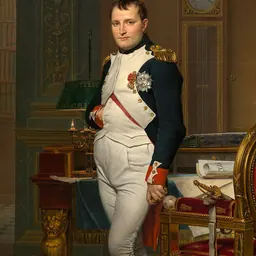
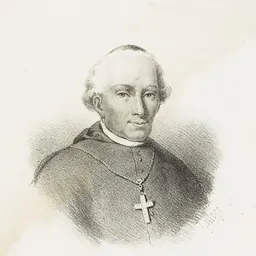


Related people
Same field, nearest in time

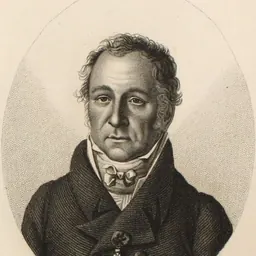


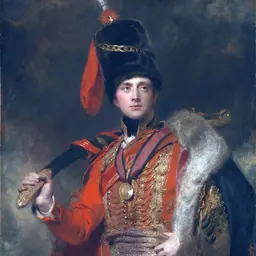
Contemporaries
People whose lives overlapped Ercole Consalvi's




Frequently asked questions
Who was Ercole Consalvi?
Catholic cardinal (1757-1824)
When was Ercole Consalvi born?
Ercole Consalvi was born on 8 June 1757 in Rome.
When did Ercole Consalvi die?
Ercole Consalvi died on 24 January 1824 in Rome.
What was Ercole Consalvi's occupation?
Ercole Consalvi was a politician, diplomat, catholic priest, catholic deacon and catholic bishop.
What nationality was Ercole Consalvi?
Ercole Consalvi was Italian.
Sources & further reading
Cite this page
APA: Biography.guide. (2026). Ercole Consalvi. https://biography.guide/ercole-consalvi/
MLA: "Ercole Consalvi." Biography.guide, https://biography.guide/ercole-consalvi/.
Chicago: "Ercole Consalvi." Biography.guide. https://biography.guide/ercole-consalvi/.
Data last updated: 2026-09-20 · Spot an error? Report a correction.
Page generated 2026-09-27 05:29 UTC