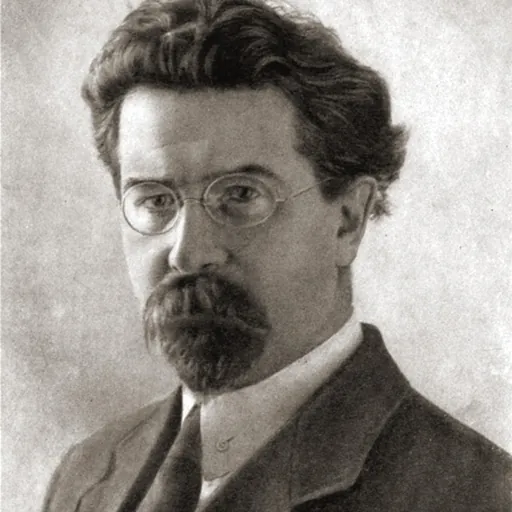
About Viktor Nogin
Lived 1878 – 1924 (aged 46). Viktor Nogin was a Russian politician, revolutionary and entrepreneur.
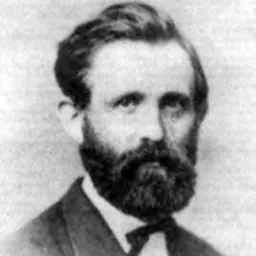
Viktor Pavlovich Nogin (; 14 February [ O.S. 2 February] 1878 – 22 May 1924) was a Russian Bolshevik revolutionary, Soviet politician, and statesman in Moscow, holding many high positions in the party and in government, including Chairman of the Moscow Military Revolutionary Committee and Chairman of the Presidium of the Executive Committee of Moscow Council of Workers' Deputies (Mayor of Moscow). He was a member of first the Council of People's Commissars, i.e., the first Government of Soviet Russia, as People's Commissar for Commerce and Industry.
Biography Viktor Nogin, born in Moscow, then part of the Russian Empire, was the son of a clerk. He left school at 14, and worked in a textile factory in St Petersburg. In 1898, he joined the Russian Social Democratic Labour Party (RSDLP). He was arrested that same year and exiled to Poltava. In 1900, he emigrated. He returned to Russia, having agreed to act as a distributor of Iskra, the newspaper founded abroad by Vladimir Lenin and Julius Martov. When the RSDLP split into factions in 1903, Nogin joined the Bolsheviks. In 1907, he was a delegate to the RSDLP congress in London, where he was elected to the Central Committee. During his years as a revolutionary, operating illegally in Russia, he was arrested eight times, and escaped six times.
Within the Bolshevik faction, Nogin was a 'conciliator' who wanted to reunite the RSDLP. In January 1910, he was one of the organisers of a three-week conference in Paris, called by the Central Committee. As part of the preparations, he travelled to Baku, hoping to enlist Joseph Stalin, then known as 'Koba' but failed to make contact with him. At the conference, Lenin was repeatedly outvoted, as the delegates decided in favour of reuniting the Bolsheviks and Mensheviks. According to Nadezhda Krupskaya, Lenin's widow, Nogin wanted to "unite everybody", including those who wanted to abandon illegal activity, but when he returned to Russia to try to put this into effect, he was rebuffed by the Bolsheviks there. He was arrested in April 1911, for the last time, and spent five years in prison.
By 1917, Nogin was one of the leaders of the Moscow branch of Bolsheviks. In April, he was chaired the party conference convened while Lenin was still absent abroad, and when a lone delegate raised the possibility of a second, Bolshevik revolution (democratic February Revolution occurred earlier that year), Nogin ruled him out of order. The conference elected him to the Central Committee.
After Lenin had returned and was calling for a second revolution, Nogin was one of the leading Bolsheviks who argued against him. At the Sixth Party Congress, in August, he warned: "Is it possible, comrades, that our country has made such a leap in two months that it is already prepared for socialism? Where are our allies? So far, we have only the platonic sympathy of the Western European proletariat ... We will find active support only in the “rotten” Soviets". Despite being in what soon became the minority, he was re-elected to the Central Committee in August, with the fifth highest vote (behind Lenin, Grigory Zinoviev, Lev Kamenev and Leon Trotsky. He was a member of the Provisional Committee during the struggle against General Lavr Kornilov's affair in Petrograd. Before a session of the RSDLP Central Committee on 1 November 1917, he joined in advocating the creation of a coalition government involving all of the socialist parties, claiming that a Bolshevik-only government could only be sustained through terror. This was rebuffed by other Bolsheviks and not realized.
Nogin was appointed People's Commissar for Commerce and Industry after the October Revolution but resigned on 17 November, along with Kamenev, Zinoviev, Rykov, Milyutin and others, – after he had presented a declaration repudiating "the preservation of power of a purely Bolshevik government by means of terror." While there, he helped the Coolidge administration communicate with Moscow using the code of the Soviet government, in an attempt to establish relations between the two countries. He died soon after he had returned to Moscow.
Viktor Nogin is buried in the Grave No. 6 of the Kremlin Wall Necropolis on the Red Square, Moscow.
Family
He married Olga Pavlovna Ermakova, (1885–1977) with whom he had two children. His brother in law, Viktor Radus-Zenkovich, was Chairmen of the Council of People's Commissars, Kyrgyz ASSR, Russian SFSR, from 12 October 1920 to 1921.
Personality Arthur Ransome described Nogin as "an extremely capable, energetic Russian, so capable, indeed, that I found it hard to believe he could really be a Russian."
Positions held Some of the Bolshevik party and government positions held by Viktor Nogin are listed below: A station in the Moscow Metro Kitay-Gorod was called Ploshchad Nogina until 1990, after a square in central Moscow that was renamed after Viktor Nogin in 1924 (now also reverted to the old name of Slavyanskaya Square). Streets named after Nogin still exist in many Russia cities, such as in Saint Petersburg, Nizhniy Novgorod, Volgograd, Novosibirsk, Pavlovskiy Posad, Samara, and Serpukhov.
Don’t just read it —
keep it.
Full-length biographies made to live with: read them, listen on the way to work, watch them tonight.
- E-book
- Audio
- Video
Instant download · yours to keep · every purchase keeps this site free
Important facts
People in Viktor Nogin's life
Named in this biography and alive at the same time





Related people
Same field, nearest in time




Contemporaries
People whose lives overlapped Viktor Nogin's



Frequently asked questions
Who was Viktor Nogin?
Prominent Bolshevik, Mayor of Moscow (1878-1924)
When was Viktor Nogin born?
Viktor Nogin was born on 14 February 1878 in Moscow.
When did Viktor Nogin die?
Viktor Nogin died on 22 May 1924 in Moscow.
What was Viktor Nogin's occupation?
Viktor Nogin was a politician, revolutionary and entrepreneur.
What nationality was Viktor Nogin?
Viktor Nogin was Russian.
Sources & further reading
Cite this page
APA: Biography.guide. (2026). Viktor Nogin. https://biography.guide/viktor-nogin/
MLA: "Viktor Nogin." Biography.guide, https://biography.guide/viktor-nogin/.
Chicago: "Viktor Nogin." Biography.guide. https://biography.guide/viktor-nogin/.
Data last updated: 2026-09-24 · Spot an error? Report a correction.
Portrait: Wikimedia Commons · author & licence
Page generated 2026-09-27 05:08 UTC