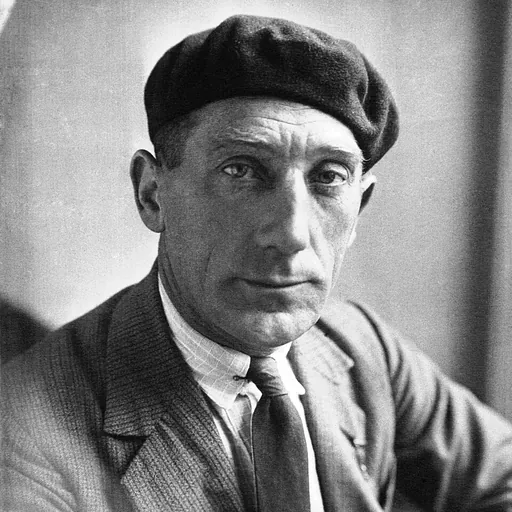
About Victor Fontan
Lived 1892 – 1982 (aged 89). Victor Fontan was a French sport cyclist.
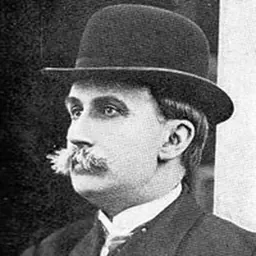
Victor Fontan (born Pau, France, 18 June 1892, died Saint-Vincent 2 January 1982 ) was a French cyclist who led the 1929 Tour de France but dropped out after knocking at doors at night to ask for another bicycle. His plight led to a change of rules to prevent its happening again. He was also one of three riders who all wore the yellow jersey of leadership on the same day, the only time it has happened.
Background Victor Fontan was born in Pau but moved to the neighbouring commune of Nay, Pyrénées-Atlantiques when young. His father was a clog-maker. Fontan married a local girl, Jeanne Larquey, but couldn't go out with her without a chaperone, the mother of Marcel Triep-Capdeville, later mayor of Nay. He raced from 1910, became a professional in 1913, On demobilisation in 1920 he started racing again and became the best rider in the south-west. He was reluctant to race far from home, which made him unattractive to national sponsors.
Tour de France
1924: an individual entrant Fontan rode the 1924 Tour de France as an individual entrant, but he did not finish. He was assumed to already be too old for such intense competition, plus being handicapped by being less known outside the south-west.
1928: a win in the mountains
He rode the 1928 race for a local sponsor, the Elvish bicycle company. His team was so poor that he lost time looking after the others. He could not leave them to themselves because the seven flat stages were run as team time trials, the organiser, Henri Desgrange still trying to find a way to stop riders taking much of each day steadily and racing only as they neared the finish. The American historian Bill McGann wrote:
Desgrange... wanted the Tour de France to be a contest where unrelenting individual effort in the cauldron of intense competition resulted in the supreme test of both the body and will of the athlete. Desgrange was convinced that the teams were combining to fix the outcome of the race. At the very best, even if they were honest, they helped a weaker rider do well. He also felt that on the flat stages the riders did not push themselves, saving their energy for the mountains.
The rule not only separated weak teams from the strong. It favoured weak riders who could be pulled along by stronger team-mates and handicapped strong riders, like Fontan, slowed by having too few good riders to share the pace-making. Only when individual racing was allowed as the Tour approached the mountains could Fontan ride at his own level. He won the stage from Les Sables d'Olonne that took the field within distance of the Pyrenees at Bordeaux.
1929: distress of the yellow jersey The 1929 Tour de France had 22 stages, the longest over 366 km, and lasted 5,257 km. Team time-trials were dropped for all but three stages, except as a threat should any stage be ridden at less than 30 km/h.
The novelty lasted only a day. Gaston Rebry escaped next day with two others and took the lead, although the three previous leaders were now equal second. When a villager obliged, Fontan set off through the Pyrenees with his broken bicycle on his back. Eventually it became too much and he gave up at 6am. He sat by a village fountain at Saint-Gaudens and sobbed. It was the first Tour to be covered by radio and he was found there by Jean Antoine and Alex Virot of L'Intransigeant, who were broadcasting for Radio Cité. The recording of Fontan's sobbing was broadcast a little less than two hours after it had happened and led Louis Delblat of Les Echos des Sports to write:
How can a man lose the Tour de France because of an accident to his bike? I can't understand it. The rule should be changed so that a rider with no chance of winning can give his bike to his leader, or there should be a car with several spare bicycles. You lose the Tour de France when you find someone better than you are. You don't lose it through a stupid accident to your machine. Next year Desgrange modified the rules.
Retirement and memorial Fontan rode the Tour in the French national team in 1930, after Desgrange had done away with sponsored teams (see note below). He was too old to make a difference and he retired to run a transport business. He is commemorated by a plaque on his house in the place de la République, at Nay, close to La Maison Carree. He is buried with his son Francis in the cemetery across the river Gave. The former mayor, Maurice Triep-Capdeville, said the region turned out climbers, like Fontan and Raymond Mastrotto, rather than sprinters. You have to acknowledge that the sprints are dangerous. You have to have vista, be crafty. But the mountains, they're the big face-to-face. They put the finish at the top of mountains because, up there, there is no pity. Without them, it would be a Flemish kermesse!
Major results
1926 1st, Overall, Volta a Catalunya 1st, Stages 2, 4 and 5 1927 1st, Overall, Volta a Catalunya 1st, Stages 3 and 8 1st, Overall, Tour of the Basque Country 1st, Stage 3 1928 4th, Overall, Giro d'Italia 7th, Overall, Tour de France 1st, Stages 7 & 9 1929 Did not finish, Tour de France
Don’t just read it —
keep it.
Full-length biographies made to live with: read them, listen on the way to work, watch them tonight.
- E-book
- Audio
- Video
Instant download · yours to keep · every purchase keeps this site free
Important facts
People in Victor Fontan's life
Named in this biography and alive at the same time



Related people
Same field, nearest in time




Contemporaries
People whose lives overlapped Victor Fontan's

Frequently asked questions
Who was Victor Fontan?
French road bicycle racer (1892–1982)
When was Victor Fontan born?
Victor Fontan was born on 18 June 1892 in Pau.
When did Victor Fontan die?
Victor Fontan died on 2 January 1982 in Pessac.
What was Victor Fontan's occupation?
Victor Fontan was a sport cyclist.
What nationality was Victor Fontan?
Victor Fontan was French.
Sources & further reading
Cite this page
APA: Biography.guide. (2026). Victor Fontan. https://biography.guide/victor-fontan/
MLA: "Victor Fontan." Biography.guide, https://biography.guide/victor-fontan/.
Chicago: "Victor Fontan." Biography.guide. https://biography.guide/victor-fontan/.
Data last updated: 2026-09-20 · Spot an error? Report a correction.
Portrait: Wikimedia Commons · author & licence
Page generated 2026-09-27 04:57 UTC