
About Victor De Buck
Lived 1817 – 1876 (aged 59). Victor De Buck was a Belgian historian, hagiographer, writer, ecumenist, catholic priest and catholic theologian.
Victor de Buck ( de "book"), (21 April 1817, Oudenaarde, Belgium – 23 May 1876, Brussels) De Buck wrote with ease in Flemish, French, and Latin. Naturally it raised lively protestations, particularly on the part of those who were responsible for distributing the relics of the saints, the more so, as the cardinal vicar of Rome in 1861 strictly forbade any further transportation of these relics.
De Buck had only a few copies of his work printed, these being intended for the cardinals and prelates particularly interested in the question. As none were put on the market, it was rumored that de Buck's superiors had suppressed the publication of the book and that all the copies printed, save five or six, had been destroyed. This was untrue; no copy had been destroyed and his superiors had laid no blame upon the author. Then, in 1863, a decree was obtained from the Congregation of Rites, renewing an older decree, whereby it was declared that a vial of blood placed outside of a sepulchral niche in the catacombs was an unmistakable sign by which the tomb of a martyr might be known, and it was proclaimed that Victor de Buck's opinion was formally disapproved and condemned by Rome. This too was false, as de Buck had never intimated that the placing of the vial of blood did not indicate the resting-place of a martyr, when it could be proved that the vial contained genuine blood, such as was supposed by the decree of the congregation.
Finally, there appeared in Paris a large quarto volume written by the Roman prelate, Archangeli Sconamiglio. It was filled with caustic criticisms of the author of and relegated him to the rank of notorious heretics who had combated devotion to the saints and the veneration of their relics. In response, de Buck published a protest, in which he argued that neither the decree of 1863 nor any other decision emanating from ecclesiastical authority had affected his thesis.
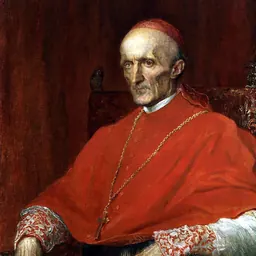
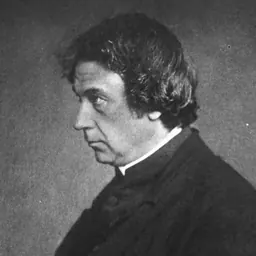
Ecumenism Opinions were attributed to de Buck which, if not formally heretical, at least openly defied ideas generally accepted by Catholics. What apparently gave rise to these accusations were the amicable relations established, principally through correspondence, between Victor de Buck and such men as the celebrated Edward Pusey in England, and Montalembert, in France. Through contacts with foreign hagiographers and the English Jesuits in Louvain, de Buck developed an interest in a possible reunification of the churches. During the 1850s he expressed this interest in a number of publications, including the and The Rambler. De Buck's opinion regarding the views of Pusey were closer to those of Newman than Henry Edward Manning.
A shared interest in the lives of the saints brought him in contact with Alexander Forbes, the Anglican bishop, with whom he corresponded at length. De Buck was also a friend of Bishop Félix Dupanloup. These relations were brought about by the reputation for deep learning, integrity, and scientific independence that de Buck's works had earned for him, by his readiness to oblige those who addressed questions to him, and by his earnestness and skill in elucidating the most difficult questions. Grave and direct accusations were made against de Buck and reported to the Pope.
In a Latin letter addressed to Cardinal Patrizzi, and intended to come to the notice of the Pope, de Buck protested the accusations, supported by the testimony of four of his principal superiors, former provincials, and rectors. With the consent of his superiors he published this letter in order to communicate with those of his friends who might have been disturbed by these accusations.
De Buck had hoped for an Anglican presence at the First Vatican Council as a step toward rapprochement, but doctrinal differences proved an impediment; the doctrine of infallibility.
Peter Jan Beckx, Father General of the Society, summoned him to Rome to act as official theologian at the First Vatican Council. On his return, de Buck showed the first symptoms of arteriosclerosis, which finally ended his life. Toward the end of his life, de Buck lost his sight, but dictated from memory, material previously compiled regarding saints of the early Celtic Church in Ireland, to his brother Remi.
Works (1855) (1863) (1871)
Don’t just read it —
keep it.
Full-length biographies made to live with: read them, listen on the way to work, watch them tonight.
- E-book
- Audio
- Video
Instant download · yours to keep · every purchase keeps this site free
Important facts
People in Victor De Buck's life
Named in this biography and alive at the same time

Related people
Same field, nearest in time




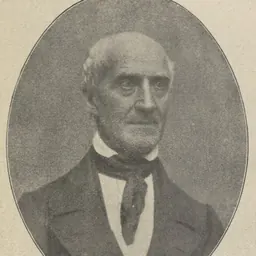
Contemporaries
People whose lives overlapped Victor De Buck's


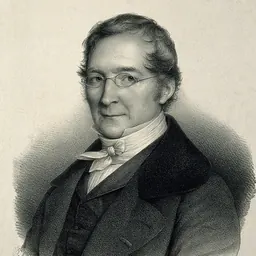

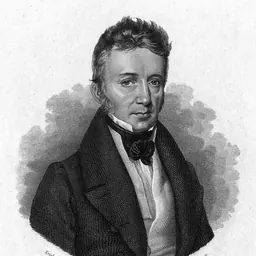
Frequently asked questions
Who was Victor De Buck?
Jesuit theologian, Bollandist hagiographer (1817–1876)
When was Victor De Buck born?
Victor De Buck was born on 21 April 1817 in Oudenaarde.
When did Victor De Buck die?
Victor De Buck died on 28 June 1876 in Brussels.
What was Victor De Buck's occupation?
Victor De Buck was a historian, hagiographer, writer, ecumenist, catholic priest and catholic theologian.
What nationality was Victor De Buck?
Victor De Buck was Belgian.
Sources & further reading
Cite this page
APA: Biography.guide. (2026). Victor De Buck. https://biography.guide/victor-de-buck/
MLA: "Victor De Buck." Biography.guide, https://biography.guide/victor-de-buck/.
Chicago: "Victor De Buck." Biography.guide. https://biography.guide/victor-de-buck/.
Data last updated: 2026-09-20 · Spot an error? Report a correction.
Page generated 2026-09-27 05:29 UTC