
About Vicente Rovea
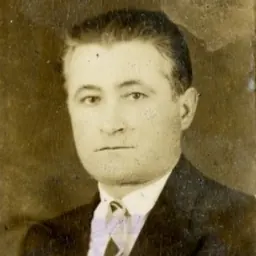
Lived 1861 – 1941 (aged 80). Vicente Rovea was a Brazilian politician.
Vincenzo Rovea, known in Brazil as Vicente Rovea (Voghera, February 25, 1861 - Caxias do Sul, November 20, 1941) was an Italian-Brazilian merchant and politician.
Biography Vicente, son of Italians Remigio Rovea and Rosa Fiori, arrived in Caxias do Sul in the 1880s, and in 1890 established a commercial house. Located at one of the entrances to the village, the store soon became an important trading and supply center. It worked with grains, farm items, and haberdashery supplies, besides being an obligatory stop for the muleteers who came to negotiate their products, providing a farmyard for the animals to rest.
While conducting his business, he became actively involved in the political life of the village. When Caxias was emancipated in 1890, from the condition of district of São Sebastião do Caí to autonomous town, a Government Board was installed, which had to start the structuring of the new municipality amidst a turbulent scenario, reflecting both the recent proclamation of the Republic and the dispute for power between federalists and republicans. In addition, the settler population was massively Catholic and a large part followed a conservative and radical current, the ultramontanism, which fiercely resisted the Freemasons, the positivists and the liberals, who dominated the main public offices. In this turbulent environment, Rovea became the leader of the Federalists, as well as a Freemason. Soon, part of the population, in disagreement with the orientation of the newly appointed Board, rose up in the two Revolts of the Settlers, in which Rovea took part as one of the leaders. The main reasons for dissatisfaction were the late taxes charged with fines and interest, and the poor condition of the roads and transportation. The rebels deposed the Board and the first Council, and a Revolutionary Board led by Affonso Amabile and Francisco Januário Salerno took over the town's government. In order to pacify the atmosphere, the State Government reinstalled the council, admitting two revolutionaries, Luiz Pieruccini and Domingos Maineri. The attempt had no effect, and shortly afterwards the second revolt occurred; the official Board and Council were deposed again, and the Revolutionary Board, now composed of Rovea along with Pieruccini and Maineri, took power. The State Government had to interfere again and dissolved the Board it had appointed, appointing in its place an intendant, Antônio Xavier da Luz, with Luiz Pieruccini as his vice, who took office on August 1, 1892. Loraine Giron mentions that he was not very active in the entity, but Mário Gardelin remembered his participation in the commission that promoted the construction of the Korff Bridge, an important achievement to boost trade with the Campos de Cima da Serra, being one of the contractors of the work, and in the commission that raised funds for an Exhibition-Fair that would be held in Porto Alegre. On May 8, 1912, he was promoted to Lieutenant Colonel-Commander of the General Staff of the 97th Infantry Battalion of the National Guard, a corporation of which he had been an officer for many years. His administration was notable for being the beginning of a process of consolidation of power of Italian descendants, since, until that moment, the Intendency had been regularly handed over to agents of Luso-Brazilian origin. Vicente was praised for being able to pacify the situation after many years of intense agitation, actively collaborating "in the definitive consolidation of local politics, which resulted in the congruence of the Caxias family". He received, however, criticism in the press of the time for the high taxes levied and the large increase in public debt.
In early 1909, he announced in the press the liquidation of his business and the sale of several rural properties, but by September 1910 he was back in business as a representative of a quarry and pottery owned by Pedro Jacob Rodrigues, and by 1911 his commercial house had been put back together again. Also in 1911, he was one of the founders of the Tiro de Guerra, taking a seat on the Fiscal Council; in 1913 he was appointed to one of the boards of the Associação dos Comerciantes, which had been reactivated in 1912, and in 1914 he is mentioned as the local banker of the insurance agency A Mundial, based in Rio de Janeiro. In the mid-1920s his business ceased.
On July 8, 1941, shortly before he died, he was solemnly celebrated by the Associação dos Comerciantes as one of the five founders still living, when he received, along with the others, the title of honorary member. Vicente Rovea was married to Bortola Venzon (1871-1939), and left descendants. The house where he lived and maintained his business later served as the headquarters of the Carbone Hospital and the Santo Antonio Charity Hospital and, after many popular claims, was declared a monument by the State in 1986 and by the Municipality in 2002; today it houses the João Spadari Adami Municipal Historical Archive. A street in Caxias do Sul is named after him.
Don’t just read it —
keep it.
Full-length biographies made to live with: read them, listen on the way to work, watch them tonight.
- E-book
- Audio
- Video
Instant download · yours to keep · every purchase keeps this site free
Important facts
People in Vicente Rovea's life
Named in this biography and alive at the same time
Related people
Same field, nearest in time





Contemporaries
People whose lives overlapped Vicente Rovea's



Frequently asked questions
Who was Vicente Rovea?
Brazilian politician
When was Vicente Rovea born?
Vicente Rovea was born on 25 February 1861.
When did Vicente Rovea die?
Vicente Rovea died on 20 November 1941.
What was Vicente Rovea's occupation?
Vicente Rovea was a politician.
What nationality was Vicente Rovea?
Vicente Rovea was Brazilian.
Sources & further reading
Cite this page
APA: Biography.guide. (2026). Vicente Rovea. https://biography.guide/vicente-rovea/
MLA: "Vicente Rovea." Biography.guide, https://biography.guide/vicente-rovea/.
Chicago: "Vicente Rovea." Biography.guide. https://biography.guide/vicente-rovea/.
Data last updated: 2026-09-26 · Spot an error? Report a correction.
Page generated 2026-09-27 05:16 UTC