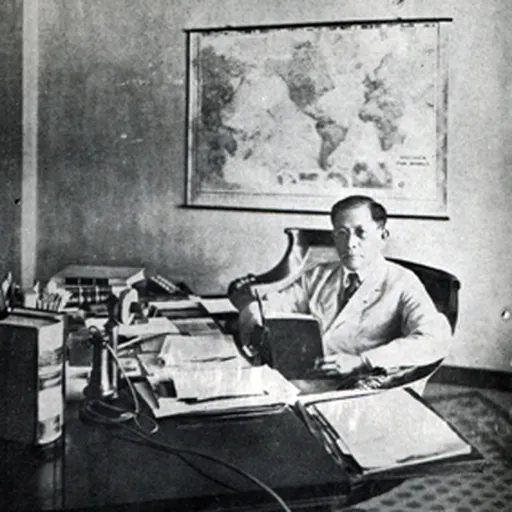
About Venancio Concepción
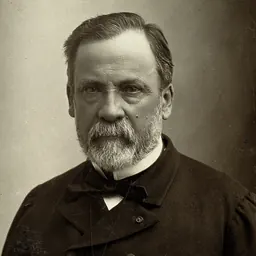
Lived 1861 – 1950 (aged 89). Venancio Concepción was a Filipino banker.
Early life and revolutionary career
Concepcion was born on May 18, 1861, in Alaminos, Zambales (now part of Pangasinan). Under the Spanish regime, he worked as an employee in the Treasury and Customs Administration in Iloilo (Administración de Hacienda y Aduana de Iloilo) and served as a counselor for the City Council from 1893 to 1898.
He was appointed as Chief of General Staff of the Republican Army and he saw action in Central Luzon. However, President Aguinaldo, just hours after Antonio Luna's death on June 5, 1899, immobilized the remaining of Luna's officers and men from the field, including General Concepción, whose headquarters in Angeles, Pampanga. Aguinaldo launched an inspection of firearms the same day Luna was murdered.
American civil government
He was taken as a prisoner by the Americans until June 1900 and then moved to Hong Kong in 1901 to discuss peace or the continuation of the Philippine-American War with the Philippine Commission. In Cagayan, he ended chief-ruling or caciquismo, organized Philippine interest committees and nationalist committees, and was elected to the Philippine Assembly representing Cagayan with a majority of 2,101 votes against two opponents: Progresista Party candidate Crescencio Alemeda and independent politician Mariano Canilla.
Under Concepcion, the bank made loans to real estate speculators and businesses in the sugar, hemp, and coconut oil industries, often based on connections rather than sound financial assessments. This led to concerns about the bank's lending practices. When Archibald Harrison, an American director of the bank, investigated these concerns and discovered irregularities, Concepcion intervened by influencing the Philippine Legislature to cut off funding for the investigation, ultimately leading to Harrison's resignation. By the time of Concepcion's forced resignation in 1920, the PNB had invested P44.1 million on Filipino-owned sugar mills, mostly given to dominant planter families in Negros. In 1922, Francis Coates Jr., a special auditor for the PNB, stated that the bank had given a capitalization of "40 percent greater than normal" for these mills making it impossible for these borrowers to pay back their loans.
Concepcion also facilitated a capital transfer by using planters' haciendas as security for loans to undercapitalized Filipino milling firms, including a P2.2 million loan to Bacolod-Murcia Milling Company. In July 1921, he was again arrested for corruption by American authorities. The Wood-Forbes report in 1921 went into detail about his past crimes and his incompetence as bank president. Shortly after his arrest, Senator Manuel L. Quezon, in a conversation with Army Chief of Staff Frank R. McCoy, said that the Philippine National Bank's disaster was "brought about by Osmeña's belief that Concepcion could manage the bank." House Speaker Sergio Osmeña supported Concepcion's candidacy as bank president. Quezon then emphasized that Osmeña was also responsible for the PNB.
He was succeeded by Samuel Ferguson as bank president in 1920.
Legacy Despite being known as a revolutionary during the Philippine-American War, Concepcion's bank policies had a long-lasting impact in the Philippines up until the presidency of Ferdinand Marcos in the 1970s. By 1921-22, Concepcion's policies allocated 26% of the PNB's P167 million assets for low-interest, 20-year loans to Negros sugar mills. This created a lasting claim on PNB's resources, leading to significant funding for sugar over the years. In 1970, the PNB loaned P447.5 million for sugar, far more than its loans for rice (P130.4 million) and coconuts (P44.2 million), with Negros farms receiving much higher average crop loans than other regions such as Central Luzon and Pampanga since the 1930s.
Don’t just read it —
keep it.
Full-length biographies made to live with: read them, listen on the way to work, watch them tonight.
- E-book
- Audio
- Video
Instant download · yours to keep · every purchase keeps this site free
Important facts
People in Venancio Concepción's life
Named in this biography and alive at the same time

Related people
Same field, nearest in time


Contemporaries
People whose lives overlapped Venancio Concepción's


Frequently asked questions
Who was Venancio Concepción?
Filipino banker and general
When was Venancio Concepción born?
Venancio Concepción was born on 18 May 1861 in Alaminos.
When did Venancio Concepción die?
Venancio Concepción died on 13 December 1950 in Manila.
What was Venancio Concepción's occupation?
Venancio Concepción was a banker.
What nationality was Venancio Concepción?
Venancio Concepción was Filipino.
Sources & further reading
· Wikipedia: Venancio Concepción
· DBpedia: Venancio Concepción
Cite this page
APA: Biography.guide. (2026). Venancio Concepción. https://biography.guide/venancio-concepcion/
MLA: "Venancio Concepción." Biography.guide, https://biography.guide/venancio-concepcion/.
Chicago: "Venancio Concepción." Biography.guide. https://biography.guide/venancio-concepcion/.
Data last updated: 2026-09-24 · Spot an error? Report a correction.
Portrait: Wikimedia Commons · author & licence
Page generated 2026-09-27 05:08 UTC