
About Vasily Shulgin
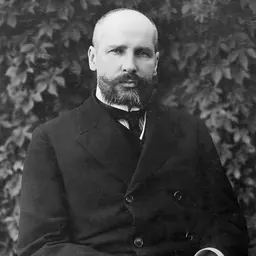
Lived 1878 – 1976 (aged 97–98). Vasily Shulgin was a Russian politician, public figure and opinion journalist.
Vasily Vitalyevich Shulgin (; 13 January 1878 – 15 February 1976), also known as Basil Shulgin, was a Russian conservative politician, monarchist and member of the White movement.
Young years Shulgin was born in Kiev. His father Vitaly Shulgin was a professor of history, monarchist and founder of the Russian nationalist newspaper Kievlyanin. His nephew twice removed was Oleksander Shulhyn, the future General Secretary for Foreign Affairs of the Ukrainian People's Republic.
Shulgin studied at the Law faculty of Kiev University and was disgusted with the constant students' protests. At that time he became an ardent opponent of revolution and supported the monarchy. He began to write articles in his father's newspaper. He also held antisemitic views but opposed open violence such as the notorious pogroms which were common in Kiev at the time.
Politician In 1907 Shulgin became a member of the Duma. He advocated right-wing views, supported the government of Pyotr Stolypin, including introduction of courts-martial, and other controversial changes. In 1913, he heavily criticised the government for the Beilis trial. Shulgin understood that participation in or turning a blind eye on the most odious manifestation of antisemitism was detrimental to the government. When the First World War broke out, Shulgin joined the army. In 1915 he was wounded and returned home. Shulgin was shocked by the inefficient organization and supply of the Russian army. Together with members of the Octobrists, the Cadets, and other right-wing or centrist politicians he established the Progressive Bloc. The aim of the Bloc was to provide the army with everything necessary since the government failed to do it.
Revolution and emigration Shulgin opposed the revolution, though it was evident that absolute monarchy in Russia would no longer exist. Together with Alexander Guchkov he persuaded Nicholas II to abdicate the throne since he believed that a constitutional monarchy with Michael Alexandrovich being the monarch was possible, and that this or even a republic, if a strong government was established, would be a remedy for Russia. For the same reason he supported the Provisional Government and Kornilov's coup.
When all hope was lost he moved to Kiev, and then the Kuban, where he participated in the White movement. During his time in Kiev, he edited the newspaper Kievlyanin, which supported the Whites and spread anti-Semitic conspiracies about the Bolsheviks, leading to a pogrom in Kiev.
In 1920 Shulgin emigrated to Yugoslavia. In 1925-26 he secretly visited the Soviet Union. He described this visit and his impression of the New Economic Policy in the book called The Three Capitals (Три столицы). The publication was likely organized by the OGPU, which aimed at dividing the White movement abroad. While in emigration, Shulgin voiced his support for both Fascist Italy and Nazi Germany. During his first years of exile, he supported his activities from incomes provided by a mill inherited from his father in Volhynia (then under Polish rule), but following the Great Depression was forced to find employment, spending some time as a cashier. in which he told his story to a Soviet historian (the real historian could not be found, and the role was entrusted to the actor and intelligence officer Sergei Svistunov). Shulgin did not make any concessions, and the goal of the film - to show that the leaders of the white emigration themselves admitted that their struggle was lost and the cause of the “builders of communism” was victorious - was not achieved; the film was shown in Moscow and Leningrad cinemas for only three days: despite the interest of the audience, the film was immediately withdrawn from distribution. According to KGB General Philip Bobkov, who supervised the creation of the film from the department and communicated closely with the entire creative team, “Shulgin looked great on the screen and, importantly, remained himself all the time. He did not play along with his interlocutor. He was a man who resigned himself to circumstances, but was not broken and did not give up his convictions. Shulgin's venerable age did not affect his work of thought or temperament, and did not diminish his sarcasm. His young opponent, whom Shulgin caustically and angrily ridiculed, looked very pale next to him.”
All this - trips around the country, published books, an invitation to the party congress and the release of a film - were signs of Khrushchev’s “thaw”. But as soon as N.S. Khrushchev was removed and new leaders came to power in the USSR, ideological policy changed, censorship in the USSR was tightened. Shulgin's involvement in public life was recognized as a mistake at a meeting of the Secretariat of the CPSU Central Committee Building nr. 1 in Kooperativnaya Street (since 1967 Feigina Street), where in the 1st floor (photo from the corner of the apartment) The Shulgins lived from 1960 until their death Vasily Shulgin died in Vladimir on February 15, 1976, on the feast of the Presentation of the Lord, at the ninety-ninth year of his life, from an angina complications. As Lyudmila Marinina, his guardian, who lived with him in recent years and cared for the old man, recalled:
There was a burial service in the cemetery church next to the Vladimir prison, where he spent 12 years. He was buried at the Baygushi cemetery . There were 10-12 people at the funeral, among them Andrei Golitsyn and Ilya Glazunov. KGB officers watched the funeral from a GAZ car. He was buried next to his wife. Both graves have survived. A strict black cross is erected above them, mounted on a small pedestal, on which names and dates of life are engraved.
Don’t just read it —
keep it.
Full-length biographies made to live with: read them, listen on the way to work, watch them tonight.
- E-book
- Audio
- Video
Instant download · yours to keep · every purchase keeps this site free
Important facts
People in Vasily Shulgin's life
Named in this biography and alive at the same time



Related people
Same field, nearest in time




Contemporaries
People whose lives overlapped Vasily Shulgin's





Frequently asked questions
Who was Vasily Shulgin?
Russian lawyer (1878–1976)
When was Vasily Shulgin born?
Vasily Shulgin was born in 1878 in Kyiv.
When did Vasily Shulgin die?
Vasily Shulgin died on 15 February 1976 in Vladimir.
What was Vasily Shulgin's occupation?
Vasily Shulgin was a politician, public figure and opinion journalist.
What nationality was Vasily Shulgin?
Vasily Shulgin was Russian.
Sources & further reading
Cite this page
APA: Biography.guide. (2026). Vasily Shulgin. https://biography.guide/vasily-shulgin/
MLA: "Vasily Shulgin." Biography.guide, https://biography.guide/vasily-shulgin/.
Chicago: "Vasily Shulgin." Biography.guide. https://biography.guide/vasily-shulgin/.
Data last updated: 2026-09-27 · Spot an error? Report a correction.
Page generated 2026-09-27 05:17 UTC