
About Alexander Guchkov
Lived 1862 – 1936 (aged 73). Alexander Guchkov was a Russian politician, businessperson and bretteur.
Alexander Ivanovich Guchkov (; 14 October 1862 – 14 February 1936) was a Russian politician, Chairman of the Third Duma and Minister of War in the Russian Provisional Government.
Early years Alexander Guchkov was born in Moscow. Unlike most of the conservative politicians of that time, Guchkov did not belong to the Russian nobility. His father, the grandson of a peasant, was a factory owner of some means, whose family came from a stock of Old Believers who had acknowledged the authority of the Russian Orthodox Church while keeping their ancient ritual. His mother was French.
Guchkov studied history and humanities at the Moscow State University, and, after having gone through his military training in a grenadier regiment, left for Germany where he read political economy in Berlin under Schmoller. Academic studies were, however, not suited to his active and adventurous character. He gave them up and started travelling. He rode alone on horseback through Mongolia to western Siberia, and narrowly escaped being lynched by a mob. Under Sergei Witte he was appointed as Minister of Trade and Industry.
In October 1906, Guchkov became the head of the conservative liberal Union of 17 October. He had the hope that the Tsar's government would recognise the necessity of great reforms and work with the moderate liberals of the Zemstvos, while safeguarding the monarchical principle. The Tsar signed the October Manifesto. Pyotr Stolypin was for some time in sympathy with that agenda, and even contemplated the formation of a ministry strengthened by leaders of public opinion, of whom Guchkov, Count Heyden and N. Lvov would have been prominent members. When this project collapsed, Guchkov continued to support Stolypin.
Guchkov was Chairman of the Duma's Committee of Imperial Defence, which had a veto over the military budget. In 1908 he condemned the diplomats' decision not to go in war in 1908, when Austria annexed Bosnia and Hercegovina.
In the third Duma, elected on a restricted franchise, the Octobrists assumed the leading role. After Khomiakov's resignation in 1910, Guchkov was elected speaker. He attacked the "irresponsible influences" at the Russian court and the shortcomings of the Ministry of War in preparing for the inevitable conflict with Germany. As Stolypin became more and more violent and reactionary, the Octobrists lost their standing ground, and Guchkov eventually resigned the presidency of the Duma.
Party crisis and World War I
In 1912 the Octobrists were defeated in elections to the fourth Duma, losing over 30 seats. Guchkov in particular was defeated in his constituency in Moscow. The remaining Octobrists in Duma split into two fractions and went into opposition. By 1915 many local party branches and the main party newspaper "Voice of Moscow" ceased to exist.
Guchkov is connected with publicising letters between Tsarina Alexandra and Rasputin. Grigori Rasputin's behavior was discussed in the Fourth Duma, and in March 1913 the Octobrists, led by Guchkov and President of the Duma, commissioned an investigation. Worried with the threat of a scandal, the Tsar asked Rasputin to leave for Siberia. Since Rasputin was attacked in the Duma, the Tsarina Alexandra hated him and suggested that Guchkov be hanged.
With the outbreak of World War I, Guchkov was put in charge of the Red Cross organisation on the German front, and it fell to him to search for the corpse of the unfortunate General of the Second Army, Alexander Samsonov. In August 1915 Guchkov was among the founders of Progressive Bloc, which demanded for establishing ministerial responsibility before the Duma. Nicholas II consistently refused to satisfy this demand. In October 1915 Guchkov became more revolutionary and involved in the preparations of a coup. On 13 October Guchkov travelled to Kislovodsk because of his health. In December 1916 Guchkov came to the painful conclusion the situation could only improve when the Tsar was replaced. Guchkov reported that members of the Progressive Bloc would consider a coup d'etat to force the government to deal with the Duma.
After the revolution
After the February Revolution the Union of 17 October legally ceased to exist. Guchkov held the office of War Minister in the Russian Provisional Government until 29 April. He was forced to resign after public unrest, caused by Milyukov's Note. Along with his fellow Octobrist Mikhail Rodzianko he continued to struggle for the establishment of "strong government". He supported Lavr Kornilov and was arrested after the Kornilov Affair, but released the next day.
After the October Revolution Guchkov provided financial support for the White Guard. When the eventual defeat of the White Guard became inevitable, he emigrated, moving first to Germany.
In 1923, whilst living in Berlin, Guchkov hosted meetings of the "Eurasian Movement" over which the OGPU maintained covert control even after the fall of The Trust. Sergey Mikhailovich Spiegelglass, who had been a military counterintelligence Chekist since January 1919, Earlier he had been a member of a military masonic lodge.
Modern perception
Don’t just read it —
keep it.
Full-length biographies made to live with: read them, listen on the way to work, watch them tonight.
- E-book
- Audio
- Video
Instant download · yours to keep · every purchase keeps this site free
Important facts
People in Alexander Guchkov's life
Named in this biography and alive at the same time
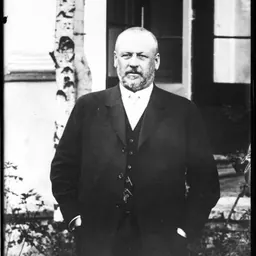
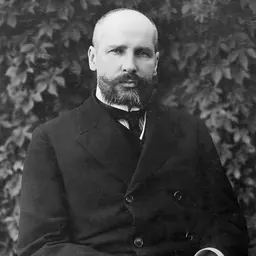

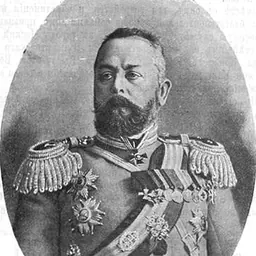
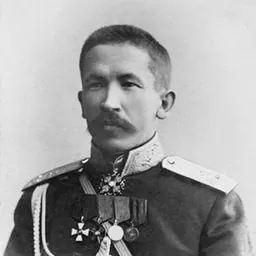

Related people
Same field, nearest in time

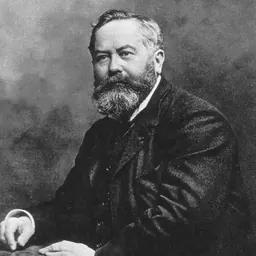



Contemporaries
People whose lives overlapped Alexander Guchkov's

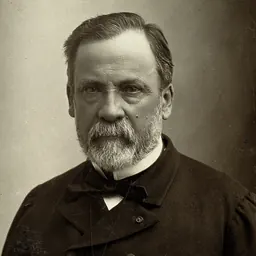



Frequently asked questions
Who was Alexander Guchkov?
Russian politician (1862–1936)
When was Alexander Guchkov born?
Alexander Guchkov was born on 26 October 1862 in Moscow.
When did Alexander Guchkov die?
Alexander Guchkov died on 14 February 1936 in Paris.
What was Alexander Guchkov's occupation?
Alexander Guchkov was a politician, businessperson and bretteur.
What nationality was Alexander Guchkov?
Alexander Guchkov was Russian.
Sources & further reading
· Wikipedia: Alexander Guchkov
Cite this page
APA: Biography.guide. (2026). Alexander Guchkov. https://biography.guide/alexander-guchkov/
MLA: "Alexander Guchkov." Biography.guide, https://biography.guide/alexander-guchkov/.
Chicago: "Alexander Guchkov." Biography.guide. https://biography.guide/alexander-guchkov/.
Data last updated: 2026-09-20 · Spot an error? Report a correction.
Page generated 2026-09-27 05:26 UTC