
About Vasili Oshchepkov
Lived 1892 – 1937 (aged 44). Vasili Oshchepkov was a Russian judoka and athlete.
Vasili Sergeyevich Oshchepkov (; January 7, 1893 - October 10, 1937) was a Russian and Soviet researcher of different types of national wrestling and martial arts. He was ranked as a Merited Master of Sports of the USSR and an Honored Coach of the USSR. He was one of the founders of Sambo, a martial art developed in the Soviet Union. During the Great Purge, Oshchepkov was arrested in 1937 and accused of being a Japanese spy; he was executed in prison as a result.
Early life
Very little is known about Vasili Oshchepkov's earlier life before adulthood. However, he became an orphan by the age of eight.
Education at the Kodokan
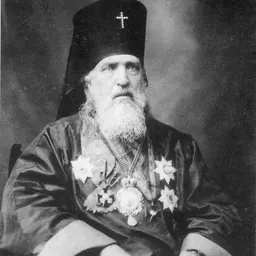
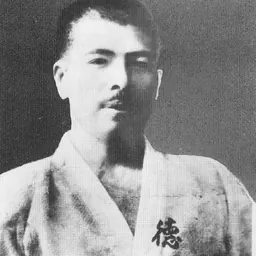
After the transfer of South Sakhalin to the Japanese in 1905 under the Treaty of Portsmouth, Vasily who remained a complete orphan in 1904 came to the attention of the Russian Orthodox mission in Japan. He was sent to study on the island of Honshu in Japan, where he first studied from September 1907 at a seminary in Kyoto, where only clergymen were trained. There he became interested in judo and, in the direction of a judo teacher from the seminary, was admitted to the Kodokan and transferred to the Tokyo Theological Seminary at the Orthodox Mission, organized by the future St. Nicholas of Japan. In the seminary he studied judo, and, on the recommendation of the coach as the best judoka at the seminary, Vasily was admitted to the entrance examinations and admitted to the Kodokan Judo Institute in Tokyo, founded by Jigoro Kano, on October 29, 1911.
On June 15, 1913, Oshchepkov received the first degree black belt - shodan. in October 1917, during a trip to Japan, he passed the exams to receive his second degree black belt, becoming the first Russian and the third European to get a nidan in judo. Ranks in judo did not go to tenth degree, as now, but only five.
Work in intelligence After finishing seminary in 1913, he returned to Russia and worked as a translator in counterintelligence, first as a Zaamurskogo border guard in Harbin, then in the Department of Counterintelligence at Vladivostok Fortress, Amur Military District, in Vladivostok. In 1914, he founded Russia's first judo school and held the world's first international judo competition held in 1915. He repeatedly went on business trips to Japan and in 1918 he taught judo to police in Vladivostok.
In 1919 he worked for the Siberian Army and in the Japanese Office of Military Field Communications as an interpreter. During this period he, through a colleague, fellow countryman and fellow student at the Tokyo Seminary Trofim Yurkevich, established a connection with the Communist Party of the Soviet Union. At the same time, Oshchepkov tried to earn money: he opened a Japanese language school, participated in trade operations with Japan, and even bought a film projector
In 1921, Oshchepkov returned to Japan under the guise of a film distributor, as the owner of houses in Aleksandrovsk inherited from his father. Since 1920, all of Sakhalin had been occupied by Japanese troops, and this opened up prospects for intelligence activities, since under Japanese law a film distributor was obliged to organize discounted screenings for military personnel. His reports to the USSR had important practical significance, distinguished by their completeness and detail.
In 1924, his superiors proposed that he move to South Sakhalin, but Oshchepkov made a counter-proposal to continue his intelligence activities in Tokyo, which was approved, and in October he departed for Harbin, and from there via Kobe to Tokyo. In Harbin, he met and quickly married his compatriot Maria.
In Tokyo, Oshchepkov organized a functioning intelligence network; however, due to disagreements with his superiors, he had to return to the USSR in 1926, where he was accused of embezzling state funds. To compensate for 3,140 yen spent on agents but unsupported by receipts, he had to sell off almost all of his personal property, including his film projector. In reality he was accused of being a Japanese spy and ten days after his arrest he was shot for his "fraternization with Japanese imperialists.” In 1957, thanks to the efforts of Oshchepkov's widow, Anna Ivanovna, he was rehabilitated and cleared of any wrongdoing
Personal life Oshchepkov was married three times. He divorced his first wife Ekaterina Zhuravleva in 1924. He fell in love with an 18-year old countrywoman Maria Grigorievna from Alexandrovsk, who lived at that time in the same city. At 22, Maria died of tuberculosis. Later, Oshchepkov married Anna Ivanovna Kazembek.
In his later years, Oshchepkov began to struggle with health problems. Oshchepkov's pupils noted that he never showed himself naked. Some have concluded that he was concealing some skin disease. Trainee Kharlampiev and Oshchepkova AA Budzinskaya said that he was at the home of the teacher at the beginning of 1937 in an alley Medvedev. According to him, "Vasily Sergeyevich lying on the bed and I was sick, he has tormented heart disease, and he never parted with nitroglycerin.
Legacy In the 2000s in various regions of Russia were organized clubs and tournaments Sambo memory Oshchepkova, including the All-Russian youth tournament in combat sambo in memory of Vasili Oshchepkov, including the Russian youth tournament in combat sambo named after Vasili Oshchepkov. During the meeting, the Board of the APEC in Vladivostok in September 2012, he was laid monument master.
In order to promote sambo in Russia and the world, as well as the formation of images in the public mind the heroes of the Fatherland on the example of the life and mission of St. Basil Oshchepkova and other worthy devotees on the initiative of a number of sports and public organizations in Russia, he launched a project named Vasili Oshchepkova project.
On September 9, 2012, the 120th anniversary of Oshchepkov's birthday was celebrated in Vladivostok's sports center, with participation of judokas from Japan and Russia.
In October, 2014, the World Sambo Championships were held for the first time in Japan where Oshchevpkov had learned judo.
In September, 2016, at Eastern Economic Forum in Vladivostok, Premier Abe of Japan, emphasizing the Russo-Japanese friendship, mentioned in his address: "I hope to visit the 21 Korabelnaya Embankment where, as Mr. Putin would know well, Vasili Oshchepkov opened the first judo school in Russia."
On September 24, 2016, the sculpture by Peter Chegadayev of Vasili Oshchepkov receiving a black belt from Jigoro Kano, entitled "Fighting Tiger Cubs", was unveiled at the place where Oshchepkov had opened the first judo school in Russia.
In film In the 2023 biographical feature film Legends of Sambo, Wolfgang Cerny portrays Oschepkov.
Don’t just read it —
keep it.
Full-length biographies made to live with: read them, listen on the way to work, watch them tonight.
- E-book
- Audio
- Video
Instant download · yours to keep · every purchase keeps this site free
Important facts
People in Vasili Oshchepkov's life
Named in this biography and alive at the same time
Related people
Same field, nearest in time

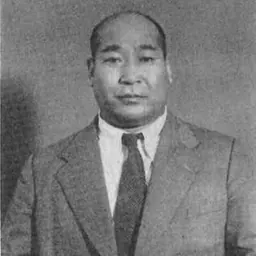

Contemporaries
People whose lives overlapped Vasili Oshchepkov's


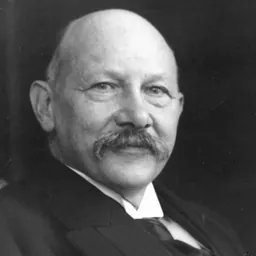
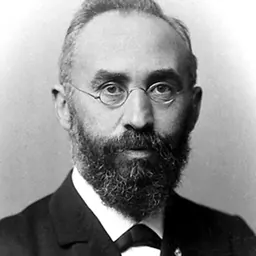
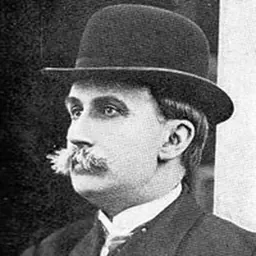
Frequently asked questions
Who was Vasili Oshchepkov?
Russian martial artist (1892–1937)
When was Vasili Oshchepkov born?
Vasili Oshchepkov was born on 25 December 1892 in Alexandrovsk-Sakhalinsky.
When did Vasili Oshchepkov die?
Vasili Oshchepkov died on 10 October 1937 in Butyrka prison.
What was Vasili Oshchepkov's occupation?
Vasili Oshchepkov was a judoka and athlete.
What nationality was Vasili Oshchepkov?
Vasili Oshchepkov was Russian.
Sources & further reading
· Wikipedia: Vasili Oshchepkov
Cite this page
APA: Biography.guide. (2026). Vasili Oshchepkov. https://biography.guide/vasili-oshchepkov/
MLA: "Vasili Oshchepkov." Biography.guide, https://biography.guide/vasili-oshchepkov/.
Chicago: "Vasili Oshchepkov." Biography.guide. https://biography.guide/vasili-oshchepkov/.
Data last updated: 2026-09-20 · Spot an error? Report a correction.
Page generated 2026-09-27 05:24 UTC