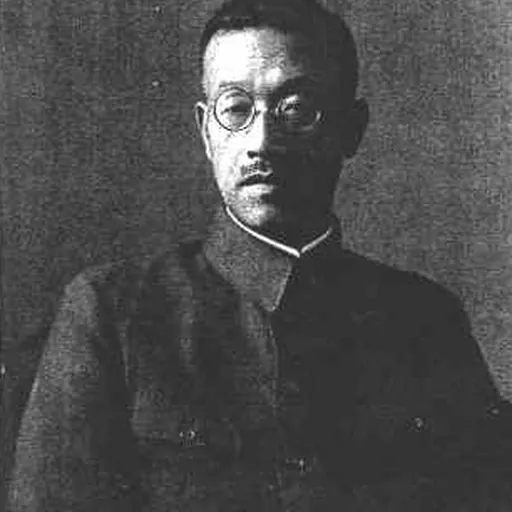
About Senkichi Awaya
Lived 1893 – 1945 (aged 51). Senkichi Awaya was a Japanese judoka and politician.
was a Japanese public official who was killed by the atomic bomb dropped on Hiroshima while he was its mayor. He was one of the key figures in the historic clash between the Japanese police and the Imperial Japanese Army in 1933. He is also known for his Christian activity in the Nonchurch movement and his close relationship with its early leaders.
Early life
Senkichi Awaya was born the second son of , a railway bureaucrat and nephew of Viscount Inoue Masaru, in the city of Sendai, after which he was named. He spent his high school years in Yonago, Tottori and then entered the First Higher School, the preparatory division of the Imperial University of Tokyo, where he studied German law.
Eisuke had a drinking problem, over which his wife often went to seek help at a local Christian church with her children. Christianity, therefore, was the most familiar religion for Senkichi since his childhood. One day, when he was a high school student, Senkichi was advised by his minister to read Kanzō Uchimura's The Biblical Studies, which impressed him and made him a devout Christian. Unlike his father, he grew up to be a teetotaler.
Awaya started judo in his early teens, and later obtained a fifth-degree black belt and became a higher-ranking winner in the national police judo championships. Since then, Awaya and his family have socialized with Uchimura and his son, who later became Commissioner of the Nippon Professional Baseball.
Hisaichi Terauchi, Commander of the 4th Division of the Army, demanded an official apology from the Osaka police, insisting that the policeman had unfairly injured the Army's prestige. Awaya, however, refused to apologize because he believed that military personnel, as well as civilians, should also observe the traffic regulations. Five months later, Awaya and Terauchi resolved their conflict through the mediation of the governor of Hyōgo, with both apologizing to each other. A year later, when Awaya left the police, however, the Home Ministry and the Army made an agreement that would preclude the civilian police from handling crimes committed by military personnel and bolster Japanese militarism.
Mayor of Hiroshima In 1943, Awaya was offered the mayoralty of Hiroshima by his senpai Okinori Kaya. He was not willing to accept it until he decided to try himself, and one of his friends told him that mayors should never be angry. The hardest job that he had to do in Hiroshima was to order to demolish buildings to create firebreaks according to the military's directions.
Awaya lived at the official mayoral residence in the Kakomachi district of Hiroshima, apart from his family at first. Still he decided to invite his family after the Great Tokyo Air Raid, believing that Hiroshima was much safer than Tokyo. His wife Sachiyo and third son Shinobu came to live in Hiroshima in April and in June 1945, respectively.
Sachiyo was the only person who had escaped instant death in the mayoral residence. Seriously injured, she was carried into the Hiroshima Red Cross Hospital (Nisseki Hospital) and taken care of by her daughters but died on 7 September that year. He was succeeded by Shichirō Kihara, whom the city council appointed mayor on 22 October 1945.
Toraji Tsukamoto delivered a eulogy for Awaya and his family at their official funeral service held in December 1945. They were buried at Tama Cemetery in western Tokyo.
Legacy
In August 1995, a half-century after the bombing, the government of Hiroshima created a monument in commemoration of Awaya's death where the mayoral residence used to stand. Tsuneo Kanazawa, the minister of the Independent Church of Sapporo, wrote an epitaph to commemorate his 51-year-long life.
Awaya's private house in Setagaya, Tokyo, was inherited by his eldest daughter, Motoko Sakama. It was designated a cultural asset by the government of Tokyo in 2003.
Awaya's third daughter, Chikako, graduated from the International Christian University, receiving a scholarship from an anonymous donor who turned out to be an American woman. While a student at today's Ochanomizu University, she was conscripted to work at an armaments factory in northern Tokyo during the closing months of the war. Two weeks after Japan's surrender, she went to Hiroshima to take care of her heavily injured mother until her death on 7 September 1945. Yasuko also died from radiation exposure at age 19 on 24 November of that year.
Don’t just read it —
keep it.
Full-length biographies made to live with: read them, listen on the way to work, watch them tonight.
- E-book
- Audio
- Video
Instant download · yours to keep · every purchase keeps this site free
Important facts
People in Senkichi Awaya's life
Named in this biography and alive at the same time


Related people
Same field, nearest in time


Contemporaries
People whose lives overlapped Senkichi Awaya's


Frequently asked questions
Who was Senkichi Awaya?
Japanese judoka (1893–1945)
When was Senkichi Awaya born?
Senkichi Awaya was born on 7 November 1893 in Sendai.
When did Senkichi Awaya die?
Senkichi Awaya died on 6 August 1945 in Hiroshima.
What was Senkichi Awaya's occupation?
Senkichi Awaya was a judoka and politician.
What nationality was Senkichi Awaya?
Senkichi Awaya was Japanese.
Sources & further reading
Cite this page
APA: Biography.guide. (2026). Senkichi Awaya. https://biography.guide/senkichi-awaya/
MLA: "Senkichi Awaya." Biography.guide, https://biography.guide/senkichi-awaya/.
Chicago: "Senkichi Awaya." Biography.guide. https://biography.guide/senkichi-awaya/.
Data last updated: 2026-09-23 · Spot an error? Report a correction.
Portrait: Wikimedia Commons · author & licence
Page generated 2026-09-27 05:06 UTC