
About Vasa Pomorišac
Lived 1893 – 1961 (aged 67). Vasa Pomorišac was an art critic and painter.
Vasa Pomorišac (15 December 1893 — 9 September 1961) was a Serbian artist and professor at the Academy of Applied Arts in Belgrade. He worked as a painter, stained glass window maker, etcher, printmaker and he was also an art critic. He is considered an expressionist painter in the same category as his contemporaries Mihajlo Petrov, Ivan Radović, Petar Dobrović, and Jovan Bijelić.
Biography Pomorišac was born in the Serbian town of Modoš (now Jaša Tomić) in what was then part of the Austrian Empire. He first studied painting with Stevan Aleksić until 1913, when he went to the Academy of Fine Arts in Munich, where he was briefly a student of Gabriel von Hackl, Franz von Stuck and Angelo Jank. At Munich, he met fellow student Živorad Nastasijević (1893-1966), who became a close friend. His studies were interrupted by a period of national service between 1914 and 1918, when he served in the Austrian Army at the Russian front and after surrendering to the Russians, he joined the First Serbian Volunteer Division which participated with the Russians and Romanians against the Central Powers in the Battle of Dobruja, where he was wounded. Pomorišac was taken to a Moscow hospital where he soon recovered and spent the next year convalescing and at the same time familiarizing himself with the art treasures of the city and the works of great Russian painters. As a non-combatant, he was transferred from Imperial Russia to Greece, where he received the status of a "war painter" at the Photographic section (Fotografska sekcija) of the Serbian Supreme Command (Vrhovna komanda) in Salonika and worked in the Thessaloniki Atelier.
After the war, on his return to Belgrade in 1919 he visits a Munich alumnus Ljubo Babić in Zagreb and enrolls in life-drawing classes given by Beta Vukanović at the Arts and Crafts School in Belgrade. After graduation, with his friend Ljubomir Ivanović he visits Serbian monasteries and copies frescoes and murals in Serbian villages in Hungary and Romanian Banat.
He then went to London where he attended classes at Saint Martin's School of Art and the Royal College of Art while learning the craft of stained glass painting. He trained in London from 1920 to 1924 where he specialized in drawing and architecture at Saint Martin's (1921-1922) and took extra courses in stained glass painting at London's Central School of Art and Design (1922-1924), becoming the first known Serbian artist to work in that medium. There he spent time visiting museums, galleries and castles studying all kinds of aspects of arts and architecture but found England still under the influence of John Ruskin. He attended lectures by artist Percy J. Delf Smith, sculptor George Frampton, and architect William Lethaby whose visions followed the modern European trends, including his own.
He returned to Belgrade in 1924. Since he was out of work, he accepted a commission from the Roman Catholic Church community in Jaša Tomić to paint an altar icon in the Catholic Church, then being restored in the neo-Gothic style. At the School of Arts and Crafts, he replaced Beta Vukanović as a teaching master from 1930 to 1931. In Belgrade, Pomorišac's stained glass work gave the Cvijeta Zuzorić Art Pavilion "a trendy Art Deco look".
Paris was his home from 1935 to 1939. Since 1942 he was a professor at the Academy of Fine Arts in Belgarde and since 1950 at the Academy of Applied Arts in Belgrade.
He was a member of the Association of Warrior Painters and Sculptors of the 1912-1918 Wars, Lada, among the founders of Zograf (Painters) and the Association of Qualified Fine Artists in Belgrade. In 1944 he became a member of the Association of Fine Artists of Serbia (ULUS). In addition to engaging in the original painting, he often copied frescoes from our medieval churches and monasteries, which he exhibited in London and Paris, and gave three copies of frescoes from Manasija monastery to the Maritime Office at the Victoria and Albert Museum in London.
Art career Vasa Pomorišac believed that art was an organic part of society. It must be grounded in traditional creativity and such as to oppose modernism that is foreign to our cultural mentality. The Zograf (Painters) group was formed around this ideology and contained artists of the same or similar orientation - painters Stanislav Beložanski, Živorad Nastasijević, Zdravko Sekulić, Josin Car, Ilija Kolarović, Svetolik Lukić, Radmila Milojković, Zdravko Sekulić and architects Bogdan Nestorović and Branislav Kojić. Modernist criticism saw them as a national anachronism and therefore inappropriate to the new age. Pomorišac especially emphasized his attachment to the past, Serbian and Byzantine, which he knew well and brought into his painting spiritually. He often copied murals from our medieval churches and monasteries that he exhibited in London and Paris. He was a very popular portrait painter and often expressed himself in that genre. Basically, his stylistic development ranged from moderate constructivism, through neo-classicism to cool, monochrome colorism. It is a very special and distinguished phenomenon in Serbian painting between the two world wars.
Pomorišac is Serbia's first painter to paint on glass. Of his many works of this kind, which he produced before Belgrade became a victim of Axis and Allied bombing in World War II, only pieces that remained are the stained glass in the Old Palace and the Metropol Hotel.
He is the author of a banknote, issued by the National Bank of Yugoslavia, of 100 dinars, dated July 15, 1934, and of 1,000 dinars, dated September 6, 1935, which was not put into circulation. Both notes feature compositions inspired by national history. He is also the author of 1,000 dinars banknote, man and woman in national costume, with many details and symbols, but of a dark color, bearing the date of May 1, 1942, published by the Serbian National Bank, during the period of Nazi occupation.
Solo exhibitions 1926 Men's gymnasium hall, Novi Sad 1927 Art Friends' Salon, Cvijeta Zuzorić Pavilion, Belgrade 1937 Galerie Le Niveau, Paris 1939 Galerie Contemporaine, Paris 1953 Art Pavilion, (retrospective exhibition), Belgrade 1954 City Museum, Zrenjanin, Higher Mixed High School, Šabac 1956 Novi Sad 1959 High School, Svetozarevo, Art Pavilion, Podgorica 1960 Hall of the Peoples Committee, Uzice 1970 - 1971 Gallery of the Cultural Center (retrospective exhibition), Belgrade 1981 Small art salon, Novi Sad 1982 National Museum, Belgrade 1983 Gallery of the Center for Culture "Olga Petrov", Pančevo 1987 Museum of Contemporary Art, Belgrade (retrospective exhibition)
Art criticism 1927 Painter Stevan Aleksić, Raška, vol. I, no. 56, Belgrade 1927 Živorad Nastasijević's Art Exhibition, Literary Criticism, December 2, no. 1. p. 4-5, Belgrade 1928 Stjepan Baković Exhibition, Literary Criticism, January 2, no. 2-3. p. 5, Belgrade 1928 Ljubomir Ivanović Exhibition, "Lade", Life and Work, April, vol. And, Vol. 3. p. 324-236, Belgrade 1928 Ivan Radović, Life and Work, April, vol. And, Vol. 4. p. 313-314, Belgrade 1928 The Crisis of our Fine Arts, Matica Srpska Yearbook, May, vol. CII, Vol. 316, Vol. 2. p. 259-263, Novi Sad 1928 Exhibition of Sculptures in Engraving by Risto Stijović, Life and Work, June, vol. And, Vol. 6. p. 478-479, Belgrade 1928 Our Glory Uroš Predić, Banatski glasnik, vol. II, no. 6-8, Zrenjanin 1929 About Our Medieval Art, Radio Belgrade, May, Belgrade 1929 Our Art Events - After the Autumn Exhibition at the Cvijeta Zuzorić Salon, Social Renewal, September 17, Vol. I, no. 2, s, 11-12, Belgrade 1930 Two significant exhibitions, Social Renewal, February 2, vol. II, no. 5. p. 12-13, Belgrade 1930 II Spring Exhibition of Yugoslav Artists at the Art Pavilion, Belgrade Municipal Gazette, June 25, vol. XLVIII, iss. 13. p. 666-670, Belgrade 1930 Great Russian Exhibition, Social Renewal, February, no. 13. p. 12-13, Belgrade 1933 How to Look at a Work of Art, Kolarac National University, February, Belgrade 1953 Mosaic, Mosaic, September–October, vol. I, no. 1, Belgrade
Don’t just read it —
keep it.
Full-length biographies made to live with: read them, listen on the way to work, watch them tonight.
- E-book
- Audio
- Video
Instant download · yours to keep · every purchase keeps this site free
Important facts
People in Vasa Pomorišac's life
Named in this biography and alive at the same time


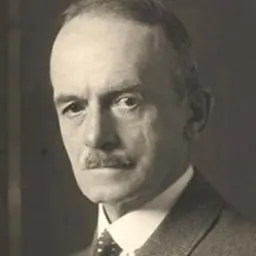
Related people
Same field, nearest in time
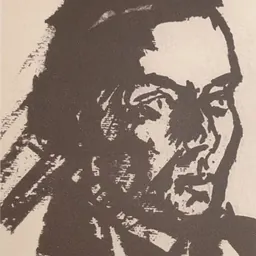
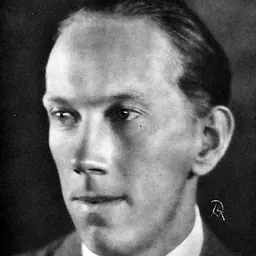
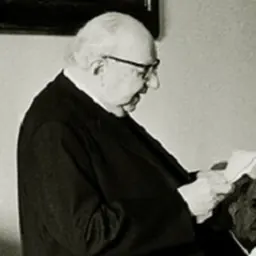


Contemporaries
People whose lives overlapped Vasa Pomorišac's



Frequently asked questions
Who was Vasa Pomorišac?
Serbian artist and professor (b. 1893, d. 1961)
When was Vasa Pomorišac born?
Vasa Pomorišac was born on 15 December 1893 in Jaša Tomić.
When did Vasa Pomorišac die?
Vasa Pomorišac died on 9 September 1961 in Belgrade.
What was Vasa Pomorišac's occupation?
Vasa Pomorišac was an art critic and painter.
Sources & further reading
Cite this page
APA: Biography.guide. (2026). Vasa Pomorišac. https://biography.guide/vasa-pomorisac/
MLA: "Vasa Pomorišac." Biography.guide, https://biography.guide/vasa-pomorisac/.
Chicago: "Vasa Pomorišac." Biography.guide. https://biography.guide/vasa-pomorisac/.
Data last updated: 2026-09-20 · Spot an error? Report a correction.
Page generated 2026-09-27 05:09 UTC