
About Umberto Barbaro
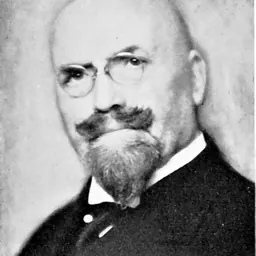
Lived 1902 – 1959 (aged 57). Umberto Barbaro was an Italian film director, linguist, screenwriter, film critic, film editor and translator.
Umberto Barbaro (3 January 1902, Acireale – 19 March 1959, Rome) was an Italian film critic and essayist.
Biography Umberto Barbaro was active in many fields: fiction, drama, cinema, criticism and history of figurative art. In 1923 he was the editor of La bilancia and collaborated with Dino Terra, Vinicio Paladini and Paolo Flores. In 1927 he was among the leaders of the Movimento Immaginista and one of the "left" among the Futurists. His work received attention in France, America, Russia and Germany. With Anton Giulio Bragaglia he founded the Teatro degli Indipendenti in Rome. He knew Russian and German and translated the works of Heinrich von Kleist, Mikhail Bulgakov and Frank Wedekind into Italian. Barbaro was a journalist, essayist, novelist and his writings appear in several magazines of the time.
In 1936 he co-founded, with Luigi Chiarini, the Centro Sperimentale di Cinematografia in Rome and became a teacher. They published the monthly film magazine Bianco e Nero, directly tied to the Centro Sperimentale. After the Second World War, Barbaro continued his studies on cinema in general and in particular Soviet cinema. He made additional translations into Italian of the writings of theorists of cinema, including Vsevolod Pudovkin, Sergej Mikhailovich Eisenstein, Rudolf Arnheim and Béla Balázs. In 1947 he also translated Sigmund Freud. In 1945 Barbaro was appointed Special Commissioner by the Centro Sperimentale di Cinematografia, a position he held until 1947, when it was removed for political reasons. Barbaro was a backer of the neo-realist cinema.
Barbaro began his filmmaking debut as writer, in 1933 with a documentary, Cantieri dell'Adriatico followed by his only full-length film, L'ultima nemica. After the war turns, with the help of Roberto Longhi, Barbaro made two short of films dedicated to Carpaccio and Caravaggio.
Barbaro was a film critic for L'Unità, the weekly Vie Nuove e a Filmcritica, and the fortnightly L'Eco del cinema magazines.
Umberto Barbaro has been elected to the Biblioteca del Cinema and awarded the Premio Nazionale Filmcritica
Publications Luce fredda, novel, Lanciano, Carabba Ed., 1931; reprinted Montepulciano, Ed. Del Grifo, 1990 L'isola del sale, a novel serialized in L'Italia letteraria, 1935; reprinted Bari, Palomar, 2002 L'essenza del can barbone, short stories, Lanciano, Carabba, 1931; reprinted Naples, Liguori Ed., 1996 L'attore, (a cura), Rome, Bianco e Nero Ed., 1938. Text can also be found in Bianco e Nero, 2/3, 1938 Film: soggetto e sceneggiatura, Rome, Bianco e Nero, 1939 Il cinema e l'uomo moderno, Rome, Le Edizioni Sociali, 1950 Poesia del film, Roma, Filmcritica Ed., 1955; reprinted Rome, Bulzoni, 1999 L'arte dell'attore, with Luigi Chiarini, (edited) Rome, Bianco e Nero Ed.,1950
Posthumous works Il film e il risarcimento marxista dell'arte, Roma, Editori Riuniti, 1960 Servitù e grandezza del cinema, edited by Lorenzo Quaglietti, Roma, Editori Riuniti, 1962 Il cinema tedesco, edited by di Mino Argentieri, Roma, Editori Riuniti,1973 Neorealismo e realismo, edited by Gianpiero Brunetta, Roma, Editori Riuniti, 1973 Fratelli d'Italia, film script written with Luigi Chiarini, in Cinemasessanta, 302, October–December 2009
Filmography Cantieri dell'Adriatico, documentary, director, 1933 Seconda B (1934) The Last Enemy, film, director, 1938 The Sinner (1940) Sleeping Beauty (1942) Street of the Five Moons (1942) The Innkeeper (1944) Carpaccio, documentary, director 1947 Caravaggio, documentary, director 1948
Scripts Seconda B, directed by Goffredo Alessandrini,1934 La peccatrice, directed by Amleto Palermi, 1941 Via delle cinque lune, directed by Luigi Chiarini, 1942 La bella addormentata, directed by Luigi Chiarini, 1942 Paura d'amare, directed by Gaetano Amata, 1942 La locandiera, directed by Luigi Chiarini, 1943 Caccia tragica, directed by Giuseppe De Santis, 1948 Fabiola, directed by Alessandro Blasetti, 1948. Not credited Czarci żleb (The Passage of the Devil), directed by Tadeusz Kański and Aldo Vergano. Poland, unpublished in Italy, 1949 La figlia del forzato, directed by Gaetano Amata, 1953
Don’t just read it —
keep it.
Full-length biographies made to live with: read them, listen on the way to work, watch them tonight.
- E-book
- Audio
- Video
Instant download · yours to keep · every purchase keeps this site free
Important facts
People in Umberto Barbaro's life
Named in this biography and alive at the same time



Related people
Same field, nearest in time


Contemporaries
People whose lives overlapped Umberto Barbaro's


Frequently asked questions
Who was Umberto Barbaro?
Italian writer (1902-1959)
When was Umberto Barbaro born?
Umberto Barbaro was born on 3 January 1902 in Acireale.
When did Umberto Barbaro die?
Umberto Barbaro died on 19 March 1959 in Rome.
What was Umberto Barbaro's occupation?
Umberto Barbaro was a film director, linguist, screenwriter, film critic, film editor and translator.
What nationality was Umberto Barbaro?
Umberto Barbaro was Italian.
Sources & further reading
Cite this page
APA: Biography.guide. (2026). Umberto Barbaro. https://biography.guide/umberto-barbaro/
MLA: "Umberto Barbaro." Biography.guide, https://biography.guide/umberto-barbaro/.
Chicago: "Umberto Barbaro." Biography.guide. https://biography.guide/umberto-barbaro/.
Data last updated: 2026-09-20 · Spot an error? Report a correction.
Page generated 2026-09-27 05:23 UTC