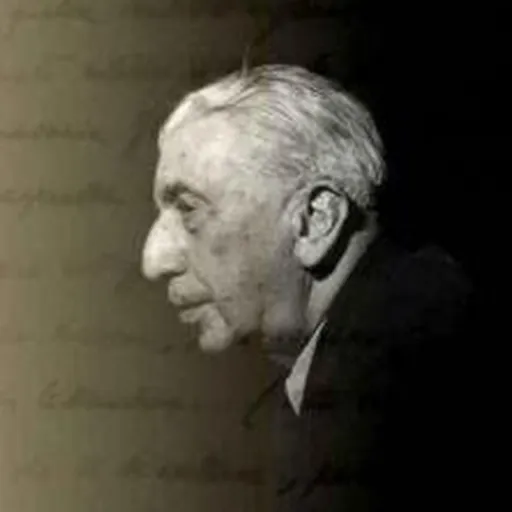
About Roberto Longhi
Lived 1890 – 1970 (aged 79). Roberto Longhi was an Italian art historian, university teacher, journalist and film director, known for Caravaggio and Piero della Francesca.
Roberto Longhi (28 December 1890 – 3 June 1970) was an Italian academic, art historian, and curator. The main subjects of his studies were the painters Caravaggio and Piero della Francesca.
Early life and career Longhi was born in December 1890 in Alba, Piedmont to parents from Emilia. He studied with Pietro Toesca in Turin and Adolfo Venturi in Rome. The latter made him book reviews editor of the journal L'Arte in 1914. Between 1912 and 1917, Longhi, primarily an essayist, published texts in L'Arte and La Voce on Mattia Preti, Piero della Francesca, Orazio Borgianni and Orazio Gentileschi. His writings in L'Arte were academic whereas his writings in La Voce were very radical. In 1968 he authored a monograph on the artist.
Whilst establishing himself as a notable Caravaggio scholar, Longhi retained a lively interest in Piero della Francesca, editing a monograph in 1928, representing him as the leading painter of the Quattrocento. Longhi believed Piero della Francesca played a decisive role in the development of Venetian painting. This monograph, which Kenneth Clark opined could hardly be improved upon, established itself as a classic of art-historical literature. He also advised Count Alessandro Contini-Bonacossi (1878–1955) until 1945.
Postwar In 1950, Longhi co-founded and edited with his wife Lucia Lopresti (who wrote under the name Anna Banti) Paragone, a bi-monthly magazine on art and literature still running to this day.
Longhi also curated a number of exhibitions, including Mostra della pittura bolognese del Trecento (Pinacoteca Nazionale, Bologna, 1948); I pittori della realtà in Lombardia (Royal Palace, Milan, 1953); and Arte lombarda dai Visconti agli Sforza (Royal Palace, Milan, 1958).
Longhi died on 3 June 1970 and is buried at Cimitero degli Allori in Florence.
Longhi created the Fondazione di Studi di Storia dell’Arte Roberto Longhi (also known as Fondazione Roberto Longhi) upon his death. He left the foundation his art collection, books and photographs. The foundation promotes the development of studies in art history by awarding grants to scholars to study in Florence. When his wife Lucia Lopresti died, she left their home, Villa Il Tasso (also known as Villa Il Ficalbo), to the foundation.
Honours
Knight Grand Cross of the Order of Merit of the Italian Republic (30 December 1969)
Grand Officer of the Order of Merit of the Italian Republic (2 June 1961)
Don’t just read it —
keep it.
Full-length biographies made to live with: read them, listen on the way to work, watch them tonight.
- E-book
- Audio
- Video
Instant download · yours to keep · every purchase keeps this site free
Important facts
Family & relationships
People in Roberto Longhi's life
Named in this biography and alive at the same time

Related people
Same field, nearest in time

Contemporaries
People whose lives overlapped Roberto Longhi's






Frequently asked questions
Who was Roberto Longhi?
Italian art historian (1890-1970)
When was Roberto Longhi born?
Roberto Longhi was born on 28 December 1890 in Alba.
When did Roberto Longhi die?
Roberto Longhi died on 3 June 1970 in Florence.
What was Roberto Longhi's occupation?
Roberto Longhi was an art historian, university teacher, journalist and film director.
What was Roberto Longhi known for?
Roberto Longhi was known for Caravaggio and Piero della Francesca.
What nationality was Roberto Longhi?
Roberto Longhi was Italian.
Sources & further reading
Cite this page
APA: Biography.guide. (2026). Roberto Longhi. https://biography.guide/roberto-longhi/
MLA: "Roberto Longhi." Biography.guide, https://biography.guide/roberto-longhi/.
Chicago: "Roberto Longhi." Biography.guide. https://biography.guide/roberto-longhi/.
Data last updated: 2026-09-21 · Spot an error? Report a correction.
Portrait: Wikimedia Commons · author & licence
Page generated 2026-09-27 05:00 UTC