
About Rudolf Arnheim
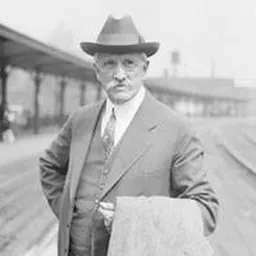
Lived 1904 – 2007 (aged 102). Rudolf Arnheim was a German writer, art historian, psychologist, university teacher, film critic and film scholar, known for Formalist film theory.
Rudolf Arnheim (; July 15, 1904 – June 9, 2007) was a German-born writer, art and film theorist, and perceptual psychologist. He learned Gestalt psychology from studying under Max Wertheimer and Wolfgang Köhler at the University of Berlin and applied it to art.
His magnum opus was his book Art and Visual Perception: A Psychology of the Creative Eye (1954). Other major books by Arnheim have included Visual Thinking (1969), and The Power of the Center: A Study of Composition in the Visual Arts (1982). Art and Visual Perception was revised, enlarged and published as a new version in 1974, and it has been translated into fourteen languages. He lived in Germany, Italy, England, and the U.S., where he taught at Sarah Lawrence College, Harvard University, and the University of Michigan. Not long after he was born, his family moved to Kaiserdamm in Charlottenburg, where they stayed until the early 1930s. His father, Georg Arnheim, owned a small piano factory, and Georg Arnheim's plan for his son was for him to take over the factory. However, Rudolf wanted to continue his education, so his father agreed that he could spend half his week at the university and the other half at the factory.
Works Although Art and Visual Perception: A Psychology of the Creative Eye took fifteen months to complete, he felt that he essentially wrote it in one long sitting. Revised in 1974, it has been translated into fourteen languages, and is one of the most influential art books of the century. In Art and Visual Perception, he attempts to use science to better understand art, still keeping in mind the important aspects of personal bias, intuition, and expression. Visual Thinking (1969) challenges the differences between thinking versus perceiving and intellect versus intuition. In it Arnheim critiques the assumption that language goes before perception and that words are the stepping stones of thinking. Sensory knowledge allows for the possibility of language, since the only access to reality we have is through our senses. Visual perception is what allows us to have a true understanding of experience. Arnheim also argues that perception is strongly identified with thinking, and that artistic expression is another way of reasoning. In The Power of the Center: A Study of Composition in the Visual Arts (1982), Arnheim addresses the interaction of art and architecture on concentric and grid spatial patterns. He argues that form and content are indivisible, and that the patterns created by artists reveal the nature of human experience.
Theories Arnheim believed that most people have their most productive ideas in their early twenties. They get hooked on an idea and spend the rest of their lives expanding on it. Arnheim's productive or generative idea was that the meaning of life and the world could be perceived in the patterns, shapes, and colors of the world. Therefore, he believed that we have to study those patterns and discover what they mean. He believed that artwork is visual thinking and a means of expression, not just putting shapes and colors together that look appealing. Art is a way to help people understand the world, and a way to see how the world changes through your mind. Its function is to show the essence of something, like our existence. Overall, he wrote fifteen books about perceptual psychology and art, architecture, and film.
Publications An abstract description of the Image and its functions as a Picture, Signs and Symbols from the book Visual Thinking by Rudolf Arnheim. This visualization represents the affordance in abstractness related to images.
1928: Experimentell-psychologische Untersuchungen zum Ausdrucksproblem. Psychologische Forschung, 11, 2–132. 1932: Film als Kunst. Berlin: Ernst Rowohlt. Neuausgaben: 1974, 1979, 2002. . 1933/1936: Rundfunk als hörkunst/Radio as Sound 1943: Gestalt and art. Journal of Aesthetics and Art Criticism, 2, 71–5. 1949/1966: Toward a Psychology of Art. Berkeley and Los Angeles: University of California Press. . 1954/1974: Art and Visual Perception: A Psychology of the Creative Eye. Berkeley and Los Angeles: University of California Press. . 1957: Film as Art, Berkeley: University of California Press. [A revised and reduced version of Film als Kunst, 1932.] 1962/1974: Picasso's Guernica. Berkeley: University of California Press. . 1969: Visual Thinking. Berkeley: University of California Press. . 1971: Entropy and Art. Berkeley: University of California Press. . 1972/1996: Anschauliches Denken. Zur Einheit von Bild und Begriff. Erstausgabe 1972, nun Köln: DuMont Taschenbuch 1996. 1977: The Dynamics of Architectural Form. Berkeley and Los Angeles: University of California Press. . 1977: Kritiken und Aufsätze zum Film. (Hrsg.: Helmut H. Diederichs) München: Hanser. 1979: Radio als Hörkunst. München: Hanser. Neuausgabe: 2001 (Suhrkamp). 1982/88: The Power of the Center: A Study of Composition in the Visual Arts. Berkeley: University of California Press. . 1986: New Essays on the Psychology of Art. Berkeley: University of California Press. . 1989: Parables of Sun Light: Observations on Psychology, the Arts, and the Rest. Berkeley: University of California Press. . 1990: Thoughts on Art Education. Los Angeles: Getty Center for Education. . 1992: To the Rescue of Art. Berkeley: University of California Press. . 1996: The Split and the Structure. Berkeley: University of California Press. . 1997: Film Essays and Criticism. University of Wisconsin Press. . 2004: Die Seele in der Silberschicht. (Hrsg.: Helmut H. Diederichs) Frankfurt am Main: Suhrkamp. 2009: I baffi di Charlot. Scritti italiani sul cinema 1932-1938. (Ed.: Adriano D'Aloia) Turin: Kaplan. . 2012: Cinema como Arte. As técnicas da linguagem audiovisual. (Transl.: Marco Bonetti) Niterói: Muiraquitan.
Don’t just read it —
keep it.
Full-length biographies made to live with: read them, listen on the way to work, watch them tonight.
- E-book
- Audio
- Video
Instant download · yours to keep · every purchase keeps this site free
Important facts
People in Rudolf Arnheim's life
Named in this biography and alive at the same time




Related people
Same field, nearest in time



Contemporaries
People whose lives overlapped Rudolf Arnheim's



Frequently asked questions
Who was Rudolf Arnheim?
German psychologist (1904-2007)
When was Rudolf Arnheim born?
Rudolf Arnheim was born on 15 July 1904 in Berlin.
When did Rudolf Arnheim die?
Rudolf Arnheim died on 9 June 2007 in Ann Arbor.
What was Rudolf Arnheim's occupation?
Rudolf Arnheim was a writer, art historian, psychologist, university teacher, film critic and film scholar.
What was Rudolf Arnheim known for?
Rudolf Arnheim was known for Formalist film theory.
What nationality was Rudolf Arnheim?
Rudolf Arnheim was German.
Sources & further reading
Cite this page
APA: Biography.guide. (2026). Rudolf Arnheim. https://biography.guide/rudolf-arnheim/
MLA: "Rudolf Arnheim." Biography.guide, https://biography.guide/rudolf-arnheim/.
Chicago: "Rudolf Arnheim." Biography.guide. https://biography.guide/rudolf-arnheim/.
Data last updated: 2026-09-20 · Spot an error? Report a correction.
Page generated 2026-09-27 05:30 UTC