
About Ulrich Hütter
Lived 1910 – 1990 (aged 79). Ulrich Hütter was a German professor, engineer, aerospace engineering and wind power.
Ulrich Hütter (18 December 1910 – 12 August 1990) was an Austro-German aeronautical engineer and university teacher who came to wider prominence through his second career as a pioneer of wind power technology.
Life Ulrich Hütter was born in Pilsen in Bohemia, Austria-Hungary (today Plzeň in the Czech Republic). Eduard Hütter (1880–1967), his father, was an architect originally from Salzburg, whose professional career increasingly focused on monument conservation on behalf of the government. The family relocated to Salzburg in connection with Eduard Hütter's work after the war ended,
In 1936 Ulrich Hütter switched to the College of Technology (subsequently renamed) in Stuttgart to study aeronautical technology, and emerging two years later with his degree in the subject. Meanwhile, in July 1932 Ulrich and his brother Wolfgang had joined the NSDAP (party), a move which presumably appeared career enhancing at the time, although it would cause problems for him after 1945. was submitted as "a contribution to the design fundamental for wind power plants". It expounded what subsequently became known as "Hütter's wind rotor theory".
Between 1939 and 1943 he was actually living not in Vienna (which had been incorporated into Germany since 1938) but in Weimar, where he was employed in several different roles, one of which involved heading up the aerodynamics department at the Weimar Engineering College. He was employed, in addition, as a designer-constructor at Ventimotor GmbH., a pioneering wind-power company founded in 1940 by Fritz Sauckel, the regional "Gauleiter" (governor) and Freundeskreis Reichsführer SS Walter Schieber, an exceptionally talented and well-qualified chemist-engineer with close links to the government. One of the principal projects for which Ventimotor GmbH. had been earmarked was as the supplier for a large decentralised power generation network using wind energy to be created in the context of the government's massively ambitious and gruesomely controversial "Generalplan Ost" for eastern central Europe. However, after German defeat at Stalingrad towards the end of 1942 it became the turn of the Soviet army to advance against the enemy. For the German army there would be no "final victory", and Germany's "Generalplan Ost" was over-written, after 1945, by the Soviet vision for the territories involved. During 1943 activities at Ventimotor GmbH. were suspended till after the war. According to one source he "served briefly in the military" before, still in 1943, being redeployed to Stuttgart to work as head of the construction-design department at the research institute of "Luftschiffbau Zeppelin GmbH." at Stuttgart-Ruit.
Only in 1952/53 was Hütter's teaching position at the Stuttgart College of Technology reinstated. The degree project was characteristically practical, and described a procedure whereby unpowered aircraft [i.e. gliders] could be tow-started and launched, using relatively little equipment. Under more normal circumstances it would have been unusual for someone intending to pursue a career as a universities level teacher in Germany to wait till they were 46 before obtaining a habilitation degree, but Hütter's career path towards the universities sector had been far from direct, and had included the twelve Hitler years. The qualification conferred the right not just to teach, but also to lecture at the college (reclassified, following the extension of the curriculum on the arts and h7umanities side, in 1967 as a full "University"). widely viewed among admirers as a milestone in the history of wind energy exploitation, and the design-precursor for all modern free-power wind turbines. The design featured a windmill of 34 meter diameter, delivering 100 kW of output, employing glass fibre reinforced plastic (GFRP) and incorporating provision for blade angle adjustment.
In 1959 Hütter accepted an extraordinary professorship in the context of his appointed as head of the college's newly founded Department of Flight Physics. As the size and scope of the department expanded, Hütter's status and seniority grew correspondingly, together with his international reputation.
Ulrich Hütter retired from his university posts and other public-facing roles in 1980. On 12 August 1990, he died at Kirchheim unter Teck, where he had made his home nearly half a century earlier. In 2016 Ulrich Hütter's contribution to energy technology was celebrated in a public mural created at Erfurt.
Don’t just read it —
keep it.
Full-length biographies made to live with: read them, listen on the way to work, watch them tonight.
- E-book
- Audio
- Video
Instant download · yours to keep · every purchase keeps this site free
Important facts
People in Ulrich Hütter's life
Named in this biography and alive at the same time


Related people
Same field, nearest in time
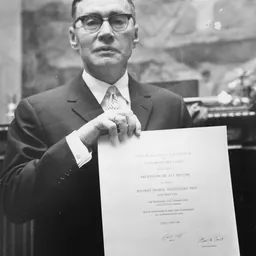

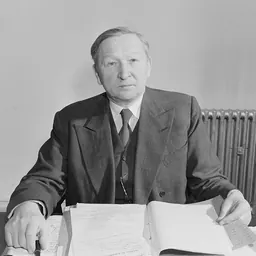
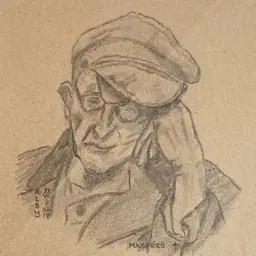
Contemporaries
People whose lives overlapped Ulrich Hütter's





Frequently asked questions
Who was Ulrich Hütter?
German professor (1910–1990)
When was Ulrich Hütter born?
Ulrich Hütter was born on 18 December 1910 in Plzeň.
When did Ulrich Hütter die?
Ulrich Hütter died on 12 August 1990 in Kirchheim unter Teck.
What was Ulrich Hütter's occupation?
Ulrich Hütter was a professor, engineer, aerospace engineering and wind power.
What nationality was Ulrich Hütter?
Ulrich Hütter was German.
Sources & further reading
Cite this page
APA: Biography.guide. (2026). Ulrich Hütter. https://biography.guide/ulrich-hutter/
MLA: "Ulrich Hütter." Biography.guide, https://biography.guide/ulrich-hutter/.
Chicago: "Ulrich Hütter." Biography.guide. https://biography.guide/ulrich-hutter/.
Data last updated: 2026-09-22 · Spot an error? Report a correction.
Page generated 2026-09-27 05:04 UTC