
About Ulanhu
Lived 1906 – 1988 (aged 81). Ulanhu was a Chinese politician.
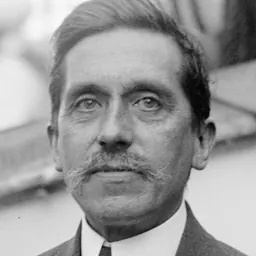
Ulanhu or Ulanfu (; 23 December 1907 – 8 December 1988), born Yun Ze , was the founding Chairman of China's Inner Mongolia Autonomous Region, serving from 1947 to 1966.
An ethnic Tumed Mongol, he took the nom de guerre Ulanhu Except for the period of the Cultural Revolution, his family dominated the politics of Inner Mongolia. His son Buhe served as Chairman of Inner Mongolia for a decade, and his granddaughter Bu Xiaolin was appointed to the same position in 2016.
Early career
Born in Tumed Left Banner, just outside the city of Hohhot, Ulanhu was the child of herders. He went to elementary school in his hometown, and went on to study at the Mongolian-Tibetan College of Beiping (now Beijing). He joined the Socialist Youth League of China (later renamed Communist Youth League) in 1924, intending to become communist revolutionary. In 1925, he joined the Chinese Communist Party and was sent to Moscow Sun Yat-sen University in the Soviet Union to study Marxism. In Moscow, Ulanhu shared a desk with Chiang Ching-kuo, the son of Chiang Kai-shek.
In 1929, when he returned from his studies, Ulanhu began organizing communist rallies in Mongolia, and was appointed a Committee Member of the CCP's West-Mongolia Working Committee. In 1931, Ulanhu was chosen to run the military and intelligence offices in Mongolia, serving in Ikh Juu League (now the city of Ordos). During the Second World War, Ulanhu led his forces to stop the Japanese from advancing towards Hohhot and led his officers to march to northern Shaanxi where he continued battling against the Japanese forces. In August 1941, he arrived at the revolutionary base of Yan'an to work on ethnic affairs.
Civil war During the Chinese Civil War, Ulanhu was one of the commanders of the Pingjin Campaign and the Liaoshen Campaign, he also led his Communist forces to destroy the local bandits and anti-communist forces in Mongolia. Ulanhu was instrumental in bringing Inner Mongolia under the control of the Chinese Communist Party and was elected the Acting Governor and founding Chairman of the Autonomous Government of Inner Mongolia in 1947. Inner Mongolia was the first of five recognized autonomous regions in China.
Early PRC In September 1954, Ulanhu was named Vice Premier, ranking eighth.
In 1955 he was awarded the rank of General (shangjiang), becoming one of only 57 generals bestowed the honour of being a "founding general" of the People's Republic. He served as Party Committee Secretary and regional government chairman of Inner Mongolia from the region's founding to 1966.
During the Great Leap Forward, Ulanhu delayed de facto communization in Mongol pastoral areas. Traditional forms of herd management remained until 1965 when herds were communized just before the Cultural Revolution. and persecuted as a suspected member of the independence-leaning Inner Mongolian People's Revolutionary Party, a charge later proven to be false. However, while he was a target for struggle, Ulanhu survived the Cultural Revolution without enduring some of the more severe physical hardships inflicted upon some of his colleagues, largely owing to the support of Premier Zhou Enlai.
After rehabilitation and death Ulanhu was politically rehabilitated in 1973, prior to the 10th National Congress of the Chinese Communist Party, with the personal blessing of Mao Zedong. In 1977, Ulanhu became head of the United Front Work Department of the central organization of the CCP. In this role, he contributed to the political rehabilitation of those related to pre-Cultural Revolution policies of the UFWD, such as Li Weihan. under President Li Xiannian from 1983 to 1988. Upon completion of the term as vice president, he was elected vice-chairman of the National People's Congress. He died shortly thereafter in 1988. In December 2007, the CCP held a high-profile conference to commemorate the 100th anniversary of Ulanhu's birth. In 2009, the historic epic Spring Comes Early to the Grasslands aired on China Central Television, and depicted some of Ulanhu's activities during the revolution.
Family Ulanhu married twice and had four sons and four daughters. His son, Buhe, served as the Chairman of Inner Mongolia Another son of Ulanhu, Uje, served as mayor of Baotou.
Don’t just read it —
keep it.
Full-length biographies made to live with: read them, listen on the way to work, watch them tonight.
- E-book
- Audio
- Video
Instant download · yours to keep · every purchase keeps this site free
Important facts
People in Ulanhu's life
Named in this biography and alive at the same time




Related people
Same field, nearest in time






Contemporaries
People whose lives overlapped Ulanhu's

Frequently asked questions
Who was Ulanhu?
former Vice President Of People Republic Of China (1906-1988)
When was Ulanhu born?
Ulanhu was born on 23 December 1906 in Tumed-Tsi.
When did Ulanhu die?
Ulanhu died on 8 December 1988 in Beijing.
What was Ulanhu's occupation?
Ulanhu was a politician.
What nationality was Ulanhu?
Ulanhu was Chinese.
Sources & further reading
Cite this page
APA: Biography.guide. (2026). Ulanhu. https://biography.guide/ulanhu/
MLA: "Ulanhu." Biography.guide, https://biography.guide/ulanhu/.
Chicago: "Ulanhu." Biography.guide. https://biography.guide/ulanhu/.
Data last updated: 2026-09-20 · Spot an error? Report a correction.
Page generated 2026-09-27 05:26 UTC