
About Ukai Gyokusen
Lived 1807 – 1887 (aged 79–80). Ukai Gyokusen was a Japanese photographer.
was a pioneering Japanese photographer. Although he is much less well known than his contemporaries Shimooka Renjō and Ueno Hikoma, he is important for being the first Japanese professional photographer, having established a photographic studio in Edo (now Tokyo) in 1860 or 1861.
Ukai was born in Fuchū, Hitachi Province, which is now Ishioka, Ibaraki Prefecture, the youngest of four brothers. The family was well-off, Ukai's father being a finance commissioner for the daimyō Matsudaira Jijū Yorisaki. When Ukai was thirteen, he was adopted by the sake supplier to another daimyō, Mikawaya, and he thus became a merchant. Ukai developed an interest in art and antiques after coming to know the bunjinga painter Tani Bunchō, and in 1831 he left the sake business to become a full-time artist.
In 1859, with the intention of learning photographic technique, Ukai travelled to Yokohama, one of the few Japanese cities to which foreigners had access and therefore (with Nagasaki) one of the early sites of photography in Japan. Ukai was taught by American photographer Orrin Freeman, whose camera and equipment he eventually may have bought. In 1860 or 1861 he moved to Edo and set up a studio, the Eishin-dō , which is mentioned in a late 1861 publication titled Ō-Edo tōsei hanakurabe shohen. By operating in Edo, a city that excluded foreigners, Ukai was unlike Shimooka, Ueno and others whose clientele was predominantly foreign residents and visitors. Instead, Ukai photographed those few Japanese who both knew of photography and could afford to sit for him. Within a few years, Ukai managed to produce over two hundred ambrotype portraits of members of the nobility. He closed his studio in 1867. featuring lithographs derived from photographs by Ukai.
In 1883 Ukai buried several hundred of his glass negatives at Yanaka Cemetery in Tokyo. A monument placed at the site included carved biographical details that were supplemented four years later when Ukai died and was interred at the spot. The glass negatives were unearthed in 1956 and reported in the periodical Sun Shashin Shimbun.
Of the many unattributed Japanese ambrotypes that have survived from the 1860s, some were probably produced by Ukai. One photograph that has been positively identified as his work is an 1863 portrait of Miura Shushin.
He died on May 12, 1887.
Don’t just read it —
keep it.
Full-length biographies made to live with: read them, listen on the way to work, watch them tonight.
- E-book
- Audio
- Video
Instant download · yours to keep · every purchase keeps this site free
Important facts
People in Ukai Gyokusen's life
Named in this biography and alive at the same time
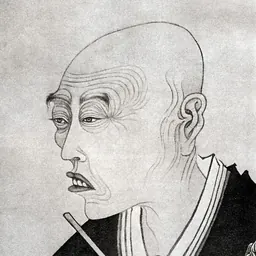



Related people
Same field, nearest in time



Contemporaries
People whose lives overlapped Ukai Gyokusen's





Frequently asked questions
Who was Ukai Gyokusen?
Japanese photographer
When was Ukai Gyokusen born?
Ukai Gyokusen was born in 1807 in Ishioka.
When did Ukai Gyokusen die?
Ukai Gyokusen died on 12 May 1887.
What was Ukai Gyokusen's occupation?
Ukai Gyokusen was a photographer.
What nationality was Ukai Gyokusen?
Ukai Gyokusen was Japanese.
Sources & further reading
Cite this page
APA: Biography.guide. (2026). Ukai Gyokusen. https://biography.guide/ukai-gyokusen/
MLA: "Ukai Gyokusen." Biography.guide, https://biography.guide/ukai-gyokusen/.
Chicago: "Ukai Gyokusen." Biography.guide. https://biography.guide/ukai-gyokusen/.
Data last updated: 2026-09-20 · Spot an error? Report a correction.
Page generated 2026-09-27 05:03 UTC