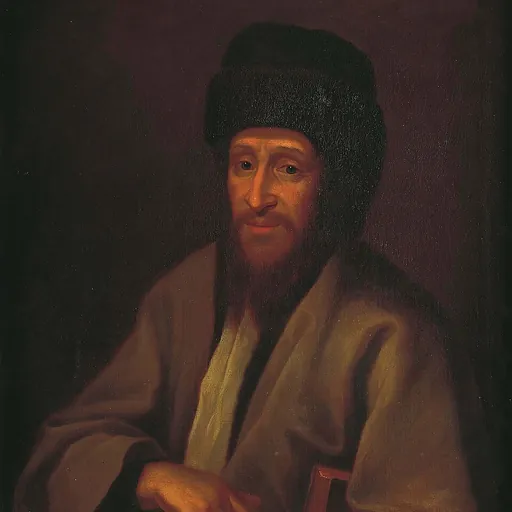
About Tzvi Ashkenazi
Lived 1660 – 1718 (aged 57–58). Tzvi Ashkenazi was a rabbi.
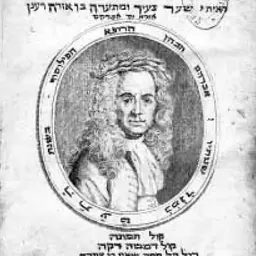
Tzvi Hirsch ben Yaakov Ashkenazi (; 1656 – 2 May 1718), known as the Hakham Tzvi after his responsa by the same title, served for some time as rabbi of Amsterdam. He was a resolute opponent of the followers of the self-proclaimed messiah, Sabbatai Zevi. He had a chequered career due to his independence of character. He visited many lands, including England, where he wielded much influence. His responsa are held in high esteem.
Early life and education Ashkenazi was born in 1656 in Habsburg Moravia, most likely in Gross Meseritsch (now Velké Meziříčí) where his father, Jacob Wilner, was active. He was descended from a well-known family of scholars, a grandson of Ephraim ha-Kohen who in turn was the son-in-law of a grandchild of Elijah Ba'al Shem of Chelm. He spent most his childhood in Alt-Ofen (now Óbuda, Budapest) where his grandfather served as rabbi. Tutored by his father and grandfather, he later went to Thessaloniki, where he attended the school of Eliyahu Kovo and devoted himself to an investigation of the Sephardi methods of study. He also witnessed the impact of the Sabbatean movement on the community, an experience which significantly influenced his career. Upon his return journey, he seems to have stayed some time, probably until 1679, in Istanbul, where his learning and astuteness made such an impression he became known by the Sephardic title Hakham "rabbi", an honorific he retained throughout his life. Shortly after his return to Alt-Ofen, he married into a prominent and wealthy local family. His income as a rabbi of the Kloyz was only 60 thalers annually, so he was compelled to defray his living expenses by engaging in various business pursuits (e.g. dealing in jewelry). After the death of his father-in-law, whom Ashkenazi had latterly aided in his official duties, one party in the Jewish community wished to have Ashkenazi installed as rabbi of the three congregations (the unity known as AH"U), while another party favored the election of Moses ben Alexander Rothenburg. Finally, it was decided that both candidates should serve alternately, each for six months. Friction and strife over religious questions ensued, and finally became so intense that, in 1709, Ashkenazi deemed it advisable to resign and resume his duties as the rabbi of the Kloyz. Poland, he was called to Hamburg to serve as member of a judicial body convened to settle a complicated legal question. His grandson, Meshullam Solomon, was one of the two opposing Chief Rabbis of the United Kingdom and the rabbi of the Hambro' Synagogue in London.
Yaakov Lorberbaum (1760-1832, known in English as Jacob ben Jacob Moses of Lissa, Jacob Lorberbaum or Jacob Lisser) was the great-grandson of Tzvi Ashkenazi.
Don’t just read it —
keep it.
Full-length biographies made to live with: read them, listen on the way to work, watch them tonight.
- E-book
- Audio
- Video
Instant download · yours to keep · every purchase keeps this site free
Important facts
People in Tzvi Ashkenazi's life
Named in this biography and alive at the same time
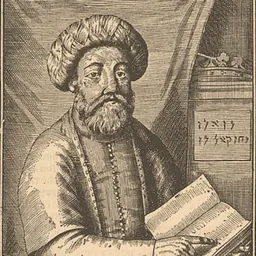
Related people
Same field, nearest in time

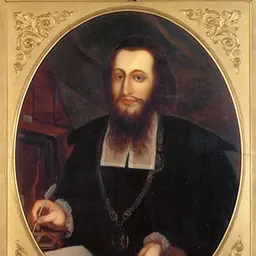
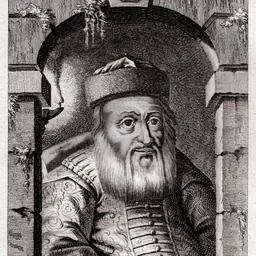

Contemporaries
People whose lives overlapped Tzvi Ashkenazi's





Frequently asked questions
Who was Tzvi Ashkenazi?
Moravian rabbi
When was Tzvi Ashkenazi born?
Tzvi Ashkenazi was born in 1660 in Velké Meziříčí, Moravia.
When did Tzvi Ashkenazi die?
Tzvi Ashkenazi died on 3 May 1718 in Lviv.
What was Tzvi Ashkenazi's occupation?
Tzvi Ashkenazi was a rabbi.
Sources & further reading
Cite this page
APA: Biography.guide. (2026). Tzvi Ashkenazi. https://biography.guide/tzvi-ashkenazi/
MLA: "Tzvi Ashkenazi." Biography.guide, https://biography.guide/tzvi-ashkenazi/.
Chicago: "Tzvi Ashkenazi." Biography.guide. https://biography.guide/tzvi-ashkenazi/.
Data last updated: 2026-09-22 · Spot an error? Report a correction.
Portrait: Wikimedia Commons · author & licence
Page generated 2026-09-27 05:02 UTC