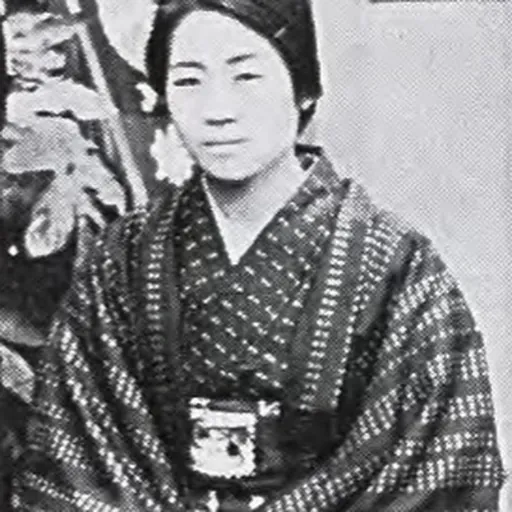
About Tsuneko Akamatsu
Lived 1897 – 1965 (aged 67). Tsuneko Akamatsu was a Japanese politician.
Tsuneko Akamatsu (11 August 1897 – 21 July 1965) was a Japanese politician who served in the House of Councillors.
Early life and education Tsuneko Akamatsu was born in Tokuyama, Yamaguchi, on 11 August 1897, to Yasuko (died 1914) and Shōtō Akamatsu (died 1921), the high priest at Nishi Hongan-ji. Her grandfather, (1841–1919), also held the position of high priest at Nishi Hongan-ji. Three of her brothers became university professors. Her brother Katsumaro Akamatsu was elected to the House of Representatives in 1937, but purged from politics after World War II.
Akamatsu entered the Kyoto Women's University in 1913, and met Toyohiko Kagawa while attending it. She ended her education in order to focus on the socialist movement. In 1923, she moved to Tokyo and worked with Kagawa's relief efforts after the Great Kantō earthquake.
Activism The Japan General Federation of Labour (Sōdōmei) invited her to join its women's division in 1925, and was chief of the organization's Women's Department from 1934 to 1940. Ichikawa Fusae, Akamatsu, and Natsu Kawasaki formed the Women's Postwar Counter-Measures Committee on 25 August 1945, to push for women's suffrage. Akamatsu was a founding member of the Women's Democratic Club, an organization meant to promote female political participation, alongside Yoko Matsuoka, Setsuko Hani, Shidzue Katō, Miyamoto Yuriko, and others. Tanino Setsu and Akamatsu convinced Golda Stander, an American occupation officer, to require menstrual leave in Japanese law.
Political career Ten women won seats in the House of Councillors in the 1947 elections, including Akamatsu with the support of the Japan Socialist Party. She was reelected in 1953, and 1959. During her tenure in the House of Councillors she served as Parliamentary Vice-Minister of Health and Welfare in the Ashida Cabinet and chaired of the Labor Committee in 1950. She was a founding member of the Democratic Socialist Party in 1960.
Akamatsu was campaigning in Sendai in 1964, when she collapsed. She died in Nirayama, Shizuoka, in 1965.
Don’t just read it —
keep it.
Full-length biographies made to live with: read them, listen on the way to work, watch them tonight.
- E-book
- Audio
- Video
Instant download · yours to keep · every purchase keeps this site free
Important facts
People in Tsuneko Akamatsu's life
Named in this biography and alive at the same time

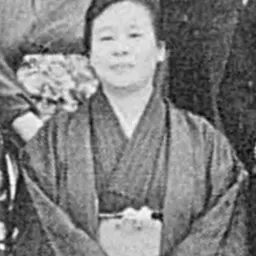

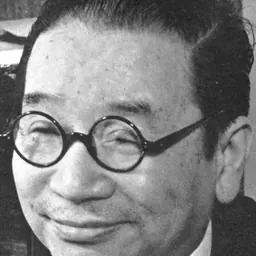
Related people
Same field, nearest in time





Contemporaries
People whose lives overlapped Tsuneko Akamatsu's

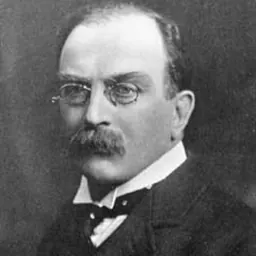

Frequently asked questions
Who was Tsuneko Akamatsu?
Japanese politician (1897-1965)
When was Tsuneko Akamatsu born?
Tsuneko Akamatsu was born on 11 August 1897 in Tokuyama.
When did Tsuneko Akamatsu die?
Tsuneko Akamatsu died on 21 July 1965.
What was Tsuneko Akamatsu's occupation?
Tsuneko Akamatsu was a politician.
What nationality was Tsuneko Akamatsu?
Tsuneko Akamatsu was Japanese.
Sources & further reading
Cite this page
APA: Biography.guide. (2026). Tsuneko Akamatsu. https://biography.guide/tsuneko-akamatsu/
MLA: "Tsuneko Akamatsu." Biography.guide, https://biography.guide/tsuneko-akamatsu/.
Chicago: "Tsuneko Akamatsu." Biography.guide. https://biography.guide/tsuneko-akamatsu/.
Data last updated: 2026-09-21 · Spot an error? Report a correction.
Portrait: Wikimedia Commons · author & licence
Page generated 2026-09-27 04:58 UTC