
About Traugott Maximilian Eberwein
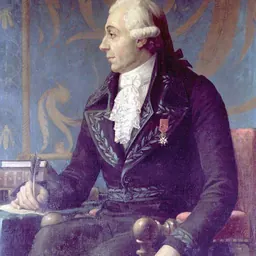
Lived 1775 – 1831 (aged 56). Traugott Maximilian Eberwein was a composer, conductor and court chapel master.
Traugott Maximilian Eberwein (27 October 1775 – 2 December 1831 ), was a German composer and conductor, who is attributed with the start of early musical history in Rudolstadt.
Family Eberwein was born into a musical family, his father Alexander Bartholomäus Eberwein (1751-1811) was a court musician and his brother Carl Eberwein was a composer who frequently worked with Johann Wolfgang von Goethe, putting his work into music such as Faust.
Eberwein had three children with his wife Catharina Bianchi, Caecilie Eberwein (1800-1800), Julius Eberwein (1802-1870) and Ludwig Eberwein (1805-1884).
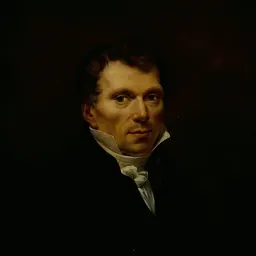
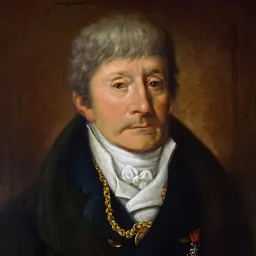
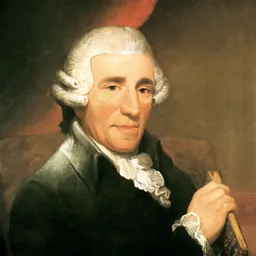
Biography Eberwein was taught music at an early age by his father, where he learned all sorts of instruments and already started composing music at the age of seven with a Timpani. In 1782, he was already making money for the family by playing music at weddings and funerals. In 1791, after his father thought he gained a basic understanding of music, he stopped teaching him. He later continued getting taught by Johann Matthäus Rempt. Eberwein later went to study musicology and violin and became a pupil of F.L.Æ. Kunzen in Frankfurt, and Ernst Johann Christoph Schick in Mainz. After his return from the Study trip, he went to Vienna where he visited Joseph Haydn, whom he impressed after showing him some of his work. After this, he also visited other composers such as Ludwig van Beethoven and Antonio Salieri. In 1810, he went back to Vienna to visit Beethoven and Selieri where he then met Anton Reicha.
On 18 October 1831, he performed his last public opera, Das befreite Jerusalem, at the Theater Rudolstadt. He died on 2 December 1831 due to an illness.
Works Operas Piedro und Elvira Claudine von Villa Bella Das befreite Jerusalem Ferdusi Das goldene Netz Singspiele Die hohle Eiche Das Storchnest Der Mond Die Fischerin Das Schachtournier Songs Ergo bibamus (Johann Wolfgang von Goethe) Der Jahrmarkt zu Plundersweilen (Johann Wolfgang von Goethe) Other Overture in C major Symphony No. 3 in E major, Op. 84 Mass in A major, Op. 87
Don’t just read it —
keep it.
Full-length biographies made to live with: read them, listen on the way to work, watch them tonight.
- E-book
- Audio
- Video
Instant download · yours to keep · every purchase keeps this site free
Important facts
People in Traugott Maximilian Eberwein's life
Named in this biography and alive at the same time



Related people
Same field, nearest in time


Contemporaries
People whose lives overlapped Traugott Maximilian Eberwein's



Frequently asked questions
Who was Traugott Maximilian Eberwein?
German composer and conductor
When was Traugott Maximilian Eberwein born?
Traugott Maximilian Eberwein was born on 27 October 1775 in Weimar.
When did Traugott Maximilian Eberwein die?
Traugott Maximilian Eberwein died on 2 December 1831 in Rudolstadt.
What was Traugott Maximilian Eberwein's occupation?
Traugott Maximilian Eberwein was a composer, conductor and court chapel master.
What nationality was Traugott Maximilian Eberwein?
Traugott Maximilian Eberwein's recorded nationality: Duchy of Saxe-Weimar-Eisenach.
Sources & further reading
· Wikipedia: Traugott Maximilian Eberwein
· DBpedia: Traugott Maximilian Eberwein
Cite this page
APA: Biography.guide. (2026). Traugott Maximilian Eberwein. https://biography.guide/traugott-maximilian-eberwein/
MLA: "Traugott Maximilian Eberwein." Biography.guide, https://biography.guide/traugott-maximilian-eberwein/.
Chicago: "Traugott Maximilian Eberwein." Biography.guide. https://biography.guide/traugott-maximilian-eberwein/.
Data last updated: 2026-09-20 · Spot an error? Report a correction.
Page generated 2026-09-27 05:20 UTC