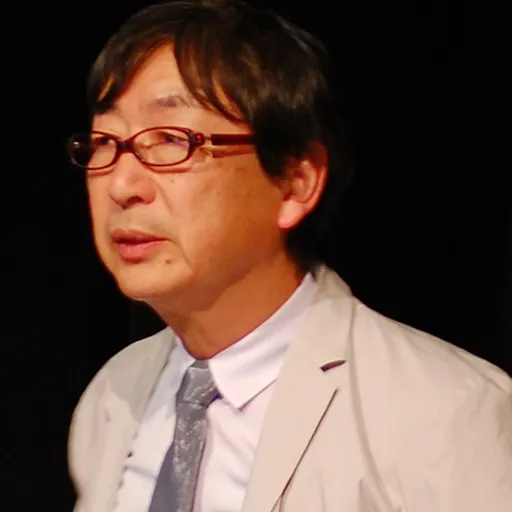
About Toyo Ito
Born 1941. Toyo Ito is a Japanese architect.
is a Japanese architect known for creating conceptual architecture, in which he seeks to simultaneously express the physical and virtual worlds. He is a leading exponent of architecture that addresses the contemporary notion of a "simulated" city, and has been called "one of the world's most innovative and influential architects."
In 2013, Ito was awarded the Pritzker Prize, one of architecture's most prestigious prizes. He was a likely front-runner for the Pritzker Prize for the previous 10 years. A recent trend has seen less experienced and well-known winners, for example Chinese architect Wang Shu in 2012, and the award to Toyo Ito is seen as recognition of a lifetime's achievement in architecture.
Early life and education Ito was born in Keijō, Japanese Korea (today's Seoul, South Korea) to Japanese parents on 1 June 1941. In 1943, he moved to Japan with his mother and two sisters living until middle school age in rural Shimosuwa, Nagano Prefecture. His father was the chairman of a textile subsidiary of Mitsui & Co. His father returned to Japan just before the end of the Second World War to live with his family. Ito has stated that his experience of living by Lake Suwa and the stillness of its waters had a great impact on him as an architect later in life.
Ito attended Hibiya High School in central Tokyo, where he was a member of the baseball team. His first application to the University of Tokyo was unsuccessful and Ito spent a year as a ronin student. He matriculated at the University of Tokyo in 1961, and chose architecture as his field of specialisation in his second year only because his grades for the first year was not good. He originally intended to study either mechanical or electrical engineering. At the time, Kenzo Tange was among the faculty of the university's architecture department, while Arata Isozaki, Sachio Otani, and Kisho Kurokawa were his students.
Career After working for Kiyonori Kikutake Architect and Associates from 1965 to 1969 (alongside Itsuko Hasegawa), in 1971 he started his own studio in Tokyo, named Urbot ("Urban Robot"). In 1979, the studio name was changed to Toyo Ito & Associates.
Tower of Winds (1986) and Egg of Winds (1991) are interactive landmarks in public spaces, resulting from a creative interpretation of contemporary technical possibilities.
Critical vision Ito's work is often said to have affinities with the ideas of philosophers such as Munesuke Mita and Gilles Deleuze.
Ito has defined architecture as "clothing" for urban dwellers, particularly in the contemporary Japanese metropolis. This theme revolves around the equilibrium between the private life and the metropolitan, "public" life of an individual.
The current architecture of Toyo Ito expands on his work produced during the postmodern period, aggressively exploring the potentials of new forms. In doing so, he seeks to find new spatial conditions that manifest the philosophy of borderless beings.
Exhibitions Ito's work has been exhibited widely. In 1991, Ito used 130 video projectors to simulate the urban environment of Tokyo for the Visions of Japan exhibition at The Victoria and Albert Museum in London. Later, in 2000, his Vision and Reality at the Louisiana Museum of Modern Art also became a traveling exhibition. Ito similarly exploited the effect of video projection as a medium with which to exhibit architecture in his Blurring Architecture exhibition, initiated at the Suermondt-Ludwig-Museum in Aachen and traveling to four other cities (Tokyo, Antwerp, Auckland, and Wellington between 1999 and 2001).
Ito designed the Berlin-Tokyo/Tokyo-Berlin Exhibition (2006) at the Neue Nationalgalerie, Berlin. The design featured a smooth, undulating landscape that occupied almost the entirety of the museum's main exhibition space. This exhibition, in collaboration with the Mori Art Museum, was one of the largest undertakings in the museum's history. A major retrospective of Ito's work was shown at the Tokyo Opera City Art Gallery in 2006 as Toyo Ito: The New "Real" in Architecture.
List of works Source: 1976 – White U House (house for his sister) 1984 – Silver Hut (Ito's own house, adjacent to White U) 1986 – Tower of Winds, West Exit, Yokohama Station, Nishi-ku, Yokohama 1991 – Yatsushiro Municipal Museum 1994 – Old People's Home in Yatsushiro 2001 – Sendai Mediatheque: a multi-function complex accommodating a mixed programme of library, art gallery, audio-visual library, film studio and café. It was a competition winning scheme chosen in 1995 from amongst 235 competing proposals. Widely recognised as one of Ito's seminal works. 2002 – Temporary Serpentine Gallery Pavilion, in Kensington Gardens, London 2002 – Bruges pavilion 2004 – Matsumoto Performing Art Center, Matsumoto 2004 – Tod's Omotesandō Building, Tokyo 2006 – First Prize "Taichung Opera International Competition" in Taiwan 2006 – VivoCity Singapore at HarbourFront 2007 – Library of Tama Art University, Tokyo 2008 – World Games Stadium in Kaohsiung, Taiwan 2008 – Huge Wine Glass in Pescara (broken after 64 days from unveiling) 2009 – Suites Avenue Building, Barcelona, Spain 2009 – Torre Realia BCN and Hotel Porta Fira, L'Hospitalet de Llobregat, Barcelona, Spain 2009 – Za-Koenji Public Theater, Kōenji, Suginami, Tokyo 2009 – White O, Marbella, Chile 2011 – Toyo Ito Museum of Architecture, Imabari, Ehime, Japan 2011 – Ken Iwata Mother and Child Museum, Imabari, Ehime, Japan 2013 – College of Social Sciences, National Taiwan University, Taipei, Taiwan 2013 – Taipei New Horizon Building, Taipei, Taiwan 2014 – National Taichung Theater, Taiwan 2014 – CapitaGreen, Singapore 2015 – Meiso no Mori Municipal Funeral Hall Kakamigahara-shi, Gifu, Japan 2016 – International Museum of the Baroque, Puebla, Mexico 2019 – The Tokyo Toilet project - Three Mushrooms, Tokyo, Japan
Gallery of works
Honors and recognition
Ito's awards and honors include:
1986 – Architectural Institute of Japan Award for Silver Hut 1992 – 33rd Mainichi Art Award for Yatsushiro Municipal Museum 1997 – IAA 'Interach '97' Grand Prix of the Union of Architects in Bulgaria Gold Medal 1998 – Education Minister's Art Encouragement Prize in Japan 2000 – Arnold W. Brunner Memorial Prize in architecture from the American Academy of Arts and Letters 2001 – Gold prize of the Japanese Good Design Award 2006 – RIBA Royal Gold Medal 2008 – Frederick Kiesler Prize for Architecture and the Arts 2009 – Asahi Prize 2010 – Praemium Imperiale 2012 - Golden Lion for Best National Participation at the Venice Biennale of Architecture 2013 – Pritzker Prize for Architecture 2013 – Asahi Prize 2014 – Mathew Art Award in Berlin 2016, 2017 – Prix Versailles World Judge 2017 – UIA Gold Medal 2018 – Person of Cultural Merit 2020 – Design Educates Award, Jury member 2023 – Honorary Royal Academician (HonRA)
Professorship Ito holds a professorship at the Japan Women's University. He is also an honorary professor at the University of North London and has served as guest professor at Columbia University. He teaches at Tama Art University Graduate program as a professor.
Don’t just read it —
keep it.
Full-length biographies made to live with: read them, listen on the way to work, watch them tonight.
- E-book
- Audio
- Video
Instant download · yours to keep · every purchase keeps this site free
Important facts
People in Toyo Ito's life
Named in this biography and alive at the same time
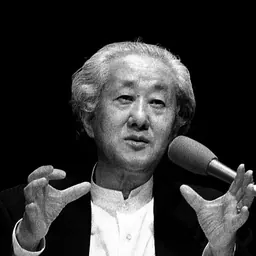
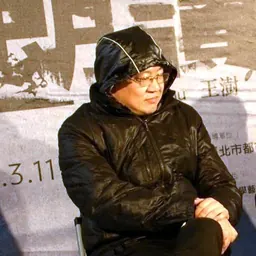





Related people
Same field, nearest in time
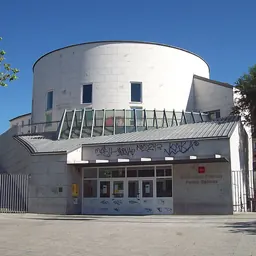




Contemporaries
People whose lives overlapped Toyo Ito's



Frequently asked questions
Who is Toyo Ito?
Japanese architect (born 1941)
When was Toyo Ito born?
Toyo Ito was born on 1 June 1941 in Seoul.
What is Toyo Ito's occupation?
Toyo Ito is an architect.
What nationality is Toyo Ito?
Toyo Ito is Japanese.
Sources & further reading
Cite this page
APA: Biography.guide. (2026). Toyo Ito. https://biography.guide/toyo-ito/
MLA: "Toyo Ito." Biography.guide, https://biography.guide/toyo-ito/.
Chicago: "Toyo Ito." Biography.guide. https://biography.guide/toyo-ito/.
Data last updated: 2026-09-23 · Spot an error? Report a correction.
Portrait: Wikimedia Commons · author & licence
Page generated 2026-09-27 05:08 UTC