
About Kiyonori Kikutake
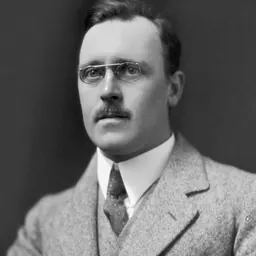
Lived 1928 – 2011 (aged 83). Kiyonori Kikutake was a Japanese architect and university teacher.
(April 1, 1928 – December 26, 2011) was a prominent Japanese architect known as one of the founders of the Japanese Metabolist group. He was also the tutor and employer of several important Japanese architects, such as Toyo Ito, Shōzō Uchii and Itsuko Hasegawa.
Background Kikutake was born in 1928 in Kurume, Japan and graduated from Waseda University in 1950.
Career Kikutake is best known for his "Marine City" project of 1958, which formed part of the Metabolist Manifesto launched at the World Design Conference in Tokyo in 1960 under the leadership of Kenzo Tange. He, along with fellow member Kisho Kurokawa was invited to exhibit work at the "Visionary Architecture" exhibition in New York of 1961, through which the Metabolists gained international recognition. Kikutake continued his practice until his death in 2011, producing several key public buildings throughout Japan, as well as lecturing internationally. He was also the President and then Honorary President of the Japan Institute of Architects. Kikutake often collaborated with the prominent Japanese structural engineer Gengo Matsui. Starting from the early 1950s, they worked together on the design of more than 40 buildings, including on well-known projects like the Sky House, Hotel Tōkōen, Toku’un-ji Temple Ossuary, and the Hagi Civic Hall.
Awards Kikutake was the recipient of numerous awards both in his native Japan and internationally. These include the Japan Academy of Architecture Prize (1970) and the UIA (Union Internationale des Architectes) Auguste Perret Prize (1978).
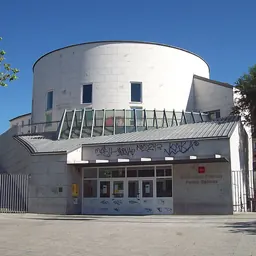
List of works Sky House, Tokyo, 1958 Marine City (proposal), 1958 Shimane Prefectural Government Third Annex, 1958 Prefectural Museum Shimane, 1960 Tatebayashi Civic Centre, Gumma, 1963 Administrative building of Izumo Shrine, Shimane, 1963 Tokouen Resort, 1964 Pacific Hotel Chigasaki, Kanagawa, 1966 Miyakonojo Civic Hall, Miyazaki, 1966 Shimane Prefectural Library, 1968 Kurume Civic Center, 1969; demolished 2017 Expo Tower, Expo '70, Osaka, 1969 Pasadena Heights, 1975 Matsumi Tower, Ibaraki, 1976 Tanabe Art Museum, Shimane, 1979 Hotel AreaOne Sakaiminato Marina, 1985 Hotel Seiyo Ginza, Tokyo, 1987 Fukuoka City Hall, 1988 Edo-Tokyo Museum, Tokyo, 1993 Hotel Sofitel Tokyo, Tokyo, 1994 Kitaya Inari Shrine, Tokyo, 1997 Shimane Art Museum, Shimane, 1999 National Showa Memorial Museum, Tokyo, 1999 Kyushu National Museum, Fukuoka, 2005
Don’t just read it —
keep it.
Full-length biographies made to live with: read them, listen on the way to work, watch them tonight.
- E-book
- Audio
- Video
Instant download · yours to keep · every purchase keeps this site free
Important facts
People in Kiyonori Kikutake's life
Named in this biography and alive at the same time



Related people
Same field, nearest in time


Contemporaries
People whose lives overlapped Kiyonori Kikutake's


Frequently asked questions
Who was Kiyonori Kikutake?
Japanese architect (1928-2011)
When was Kiyonori Kikutake born?
Kiyonori Kikutake was born on 1 April 1928 in Kurume.
When did Kiyonori Kikutake die?
Kiyonori Kikutake died on 26 December 2011 in Japan.
What was Kiyonori Kikutake's occupation?
Kiyonori Kikutake was an architect and university teacher.
What nationality was Kiyonori Kikutake?
Kiyonori Kikutake was Japanese.
Sources & further reading
· Wikipedia: Kiyonori Kikutake
Cite this page
APA: Biography.guide. (2026). Kiyonori Kikutake. https://biography.guide/kiyonori-kikutake/
MLA: "Kiyonori Kikutake." Biography.guide, https://biography.guide/kiyonori-kikutake/.
Chicago: "Kiyonori Kikutake." Biography.guide. https://biography.guide/kiyonori-kikutake/.
Data last updated: 2026-09-20 · Spot an error? Report a correction.
Page generated 2026-09-27 05:33 UTC