
About Tove Jansson
Lived 1914 – 2001 (aged 86). Tove Jansson was a Finnish painter, writer, illustrator, children's writer, cartoonist and caricaturist.
Tove Marika Jansson (; 9 August 1914 – 27 June 2001) was a Finland- Swedish author, novelist and comic strip author, painter and illustrator. Brought up by artistic parents, her mother an illustrator and postage stamp designer, her father a sculptor, Jansson studied art from 1930 to 1938 in Helsinki, Stockholm, and Paris. She held her first solo art exhibition in 1943. Over the same period, she penned short stories and articles for publication, and subsequently drew illustrations for book covers, advertisements, and postcards. She continued her work as an artist and writer for the rest of her life.
Jansson wrote the Moomin novel series for children, starting with the 1945 The Moomins and the Great Flood. The following two books, Comet in Moominland and Finn Family Moomintroll, published in 1946 and 1948 respectively, were highly successful, and sales of the first book increased correspondingly. For her work as a children's author she received the Hans Christian Andersen Medal in 1966; among her many later awards was the Selma Lagerlöf Prize in 1992. Her Moomin stories have been adapted for the theatre, the cinema, and as an opera.
She held a solo exhibition of paintings in 1955, and five more between 1960 and 1970. She carried out several commissions for murals in public buildings around Finland between 1945 and 1984. She created the illustrations both for her own books and for editions of classics including Alice's Adventures in Wonderland and The Hobbit.
Starting with the semi-autobiographical (The Sculptor's Daughter) in 1968, Jansson wrote six novels, including the admired (The Summer Book), and five short story collections for adults.
Early life
Tove Jansson was born in Helsinki, in the Grand Duchy of Finland, an autonomous state within the Russian Empire at the time. Her family, part of the Swedish-speaking minority of Finland, was an artistic one: her father, Viktor Jansson, was a sculptor, and her mother, Signe Hammarsten-Jansson, was a Swedish-born graphic designer responsible for many of Finland's postage stamps, and an illustrator. Tove's siblings became artists too: Per Olov Jansson became a photographer and Lars Jansson an author and cartoonist. Whilst their home was in Helsinki, the family spent their summers in a rented cottage on one of the islands of Pellinki near Porvoo, east of Helsinki;
Jansson went to Finland's first co-educational school, in Helsinki. She then studied at Konstfack (University College of Arts, Crafts and Design), in Stockholm in 1930–1933, the Graphic School of the Finnish Academy of Fine Arts in 1933–1937, and finally at and in Paris in 1938. Her first solo exhibition was held in 1943. It was not published until 1933. She sold drawings that were published in magazines in the 1920s.
In the 1930s Jansson made several trips to other European countries. She drew from these for her illustrated short stories and articles, which were published in magazines, periodicals and daily papers. During this period, Jansson designed many book covers, adverts and postcards. Following her mother's example, she drew illustrations for Garm, a Finnish-Swedish political and satirical magazine.
The themes of the Moomin books changed as time went by. The first books, written starting during the Second World War, up to Moominland Midwinter (1957), are adventure stories that include floods, comets and supernatural events. The Moomins and the Great Flood deals with Moominmamma and Moomintroll's flight through a dark and scary forest, where they encounter various dangers. In Comet in Moominland, a comet nearly destroys the Moominvalley. Some critics have considered this an allegory of nuclear weapons. Finn Family Moomintroll deals with adventures brought on by the discovery of a magician's hat. Finally, Moominsummer Madness (1955) is set in a theatre: the Moomins explore the empty building and perform Moominpappa's melodrama.
Moominland Midwinter marks a turning point in the series. Jansson described it as a book about “what it is like when things get difficult”: the story focuses on Moomintroll, who wakes up in the middle of the winter (Moomins hibernate from November to April), and has to cope with the strange and unfriendly world he finds. The short story collection Tales from Moominvalley (1962) and the novels Moominpappa at Sea (1965) and Moominvalley in November (1970) are serious and psychologically searching books, far removed from the light-heartedness and cheerful humor of Finn Family Moomintroll.
In addition to the Moomin novels and short stories, Tove Jansson wrote and illustrated four picture books: The Book about Moomin, Mymble and Little My (1952), Who will Comfort Toffle? (1960), The Dangerous Journey (1977) and An Unwanted Guest (1980). As the Moomins' fame grew, two of the original novels, Comet in Moominland and The Exploits of Moominpappa, were revised by Jansson and republished.
Critics have interpreted several of the Moomin characters as being inspired by real people, especially members of the author's family and close friends, and Jansson spoke in interviews about the backgrounds of, and possible models for, her characters. a subtlety lost in translation. Snufkin is based on Jansson's friend, the journalist and member of parliament Atos Wirtanen.
The Moomins relate strongly to Jansson's own family – they were bohemian and lived close to nature. Jansson remained close to her mother until her mother's death in 1970; even after Tove had become an adult, the two often travelled together, and during her final years Signe lived with Tove part-time.
Wartime satire in Garm magazine
Cover of Garm magazine, October 1944, lampooning Adolf Hitler as "self-important and comic"
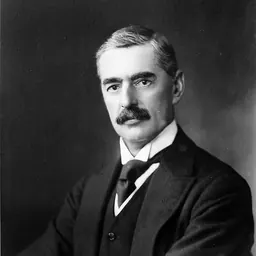
Tove Jansson worked as an illustrator and cartoonist for the Swedish-language satirical magazine Garm from 1929 to 1953, when the magazine ceased production. One of her political cartoons achieved a brief international fame: she drew Adolf Hitler as a crying baby in diapers, surrounded by Neville Chamberlain and other great European leaders, who tried to calm the baby down by giving it slices of cake – Austria, Poland, Czechoslovakia, etc. In the Second World War, (when Finland fought against the Soviet Union, part of the time cooperating with Nazi Germany, ) her cover illustrations for Garm lampooned both Hitler and Joseph Stalin: in one, Stalin draws his sword from his impressively long scabbard, only to find it absurdly short; in another, multiple Hitlers ransack a house, carrying away food and artworks. In The Spectators view, Jansson made both "Hitler and Stalin appear as preposterous little figures, self-important and comic".
The figure of the Moomintroll appeared first in Jansson's political cartoons, where it was used as a signature character near the artist's name. This "Proto-Moomin", then called (in Swedish) or (in Finnish),
Murals
Throughout her career, Jansson created a series of commissioned murals and public works which may still be viewed in their original locations, including:
The canteen at the factory at , Helsinki (1945)
She created a set of illustrations for the 1962 Swedish edition of J. R. R. Tolkien's 1937 children's book The Hobbit, at the request of the Swedish children's author Astrid Lindgren. The scholar of literature Björn Sundmark states that Jansson's work helped to define how Tolkien's Middle-earth fantasy could be depicted visually. The edition with her illustrations was not reprinted for many years, even though reviewers and "Tolkienists" liked Jansson's "expressive"
Adaptations
Several stage productions have been made from Jansson's Moomin series, including a number that Jansson herself was involved in. The earliest was a 1949 version of Comet in Moominland, titled , performed at Åbo Svenska Teater.
The Moomintrolls have been adapted to media including television animations and feature films.
Personal life
Jansson had several male lovers, including the artists Sam Vanni and Tapio "Tapsa" Tapiovaara, and the political philosopher Atos Wirtanen; she briefly became engaged to Wirtanen. —and developed a secret love affair with the married theater director Vivica Bandler.
In 1956, Jansson met her lifelong partner, , known as "Tooti". In Helsinki they lived apart but nearby, so they could meet unnoticed, but this did not resolve the problem that Jansson's mother often came to stay. They found a partial solution by building a house on a small island in the Gulf of Finland, and staying there for the summer. Jansson's and Pietilä's travels and summers spent together on the Klovharu island in Pellinki have been captured on several hours of film, shot by Pietilä. Several documentaries have been made of this footage, the latest being (Haru, the lonely island) (1998) and (Tove and Tooti in Europe) (2004). The character Too-ticky, described by Sue Prideaux as "a wild-haired artistic troll in a Breton sweater and a beret",
Jansson died on 27 June 2001 at the age of 86.
Cultural legacy
In March 2014, the Ateneum Art Museum opened a major centenary exhibition showcasing Jansson's works as an artist, an illustrator, a political caricaturist and the creator of the Moomins. The exhibition drew nearly 300,000 visitors in six months. After Helsinki the exhibition embarked on a tour in Japan to visit five Japanese museums.
In January 2016, a permanent Tove Jansson exhibition of murals, an oil painting, photographs and sketches opened at the Helsinki Art Museum. The two murals in the exhibition, Party in the Countryside and Party in the City were created for Helsinki City Hall's restaurant. From June 2017 to September 2017, an exhibition of Jansson's paintings, illustrations, and cartoons was held in Kunstforeningen Gammel Strand in Copenhagen in collaboration with Ateneum in Helsinki. The exhibition then moved from October 2017 to January 2018 to the Dulwich Picture Gallery in London. This was the first major retrospective exhibition of her work in the United Kingdom.
A biopic, titled Tove, directed by Zaida Bergroth was released in October 2020.
Commemorations
Jansson was selected as the main motif in the 2004 minting of a Finnish commemorative coin, the €10 Tove Jansson and Finnish Children's Culture commemorative coin. The obverse depicts a combination of her portrait and the skyline, an artist's palette, a crescent and a sailing boat. The reverse features three Moomin characters. In 2014 she was again featured on a commemorative coin, this time of €20, becoming the only person other than the former Finnish president to be granted two such coins. She was featured on a €2 commemorative coin that entered general circulation in June 2014. Since 1988, Finland's Post has released several postage stamp sets and one postal card with Moomin motifs. In 2014, Jansson was featured on a Finnish stamp set. In 2014 the City of Helsinki honoured Jansson by renaming a park near her childhood home in "Tove Jansson's Park". The city has in addition placed a memorial plaque to Jansson at her home in Ullanlinnankatu, Helsinki.
When an animated series, Moominvalley was broadcast in 2019, the journalist Rhianna Pratchett wrote an article about the impact Jansson had had on her father, the fantasy author Terry Pratchett; he called Jansson one of the greatest children's writers ever, and credited her writing as one of the reasons he became an author.
Moomin works
The Moomin books
(1945, The Moomins and the Great Flood) (1946, Comet in Moominland), reworked as (1968) (1948, Finn Family Moomintroll; in some editions The Happy Moomins) (1950, The Exploits of Moominpappa), reworked as (1968) (1954, Moominsummer Madness) (1957, Moominland Midwinter) (1965, Moominpappa at Sea) (1970, Moominvalley in November)
Short story collections
(1962, lit. "The invisible child and other tales", translated as Tales from Moominvalley)
Picture books
(1952, lit. "Then what happened?", translated as The Book about Moomin, Mymble and Little My) (1960, Who Will Comfort Toffle?) (1977, The Dangerous Journey) (1980, Villain in the Moominhouse) (1993, Songs From Moominvalley; songbook. With Lars Jansson and Erna Tauro)
Comic strips
The Moomin comic strips were initially serialised in newspapers. The Evening News strips were collected into a series of books:
Books for adults
Novels
(1972, The Summer Book) (1974, Sun City) (1982, The True Deceiver) (1984, The Field of Stones) (1989, Fair Play)
Short story collections
(1968, The Sculptor's Daughter) (semi-autobiographical) (1971, The Listener) (1978, lit. "The Doll's House and Other Stories", translated as Art in Nature) (1987, Travelling Light) (1991, Letters from Klara) (1998 compilation, Messages: Selected Stories 1971–1997) A Winter Book (2006). Introduced by Ali Smith, with stories selected from Sculptor's Daughter, Messages, The Listener, Letters from Klara, and Travelling Light. The Woman Who Borrowed Memories (New York Review Books, 2014). Selections from The Listener, The Doll's House and Other Stories, Travelling Light, Letters from Klara, and Messages.
Autobiographical
(1993, Notes from an Island; autobiography; illustrated by Tuulikki Pietilä) (2019) (personal letters, edited by Boel Westin and Helen Svensson)
Miscellaneous
(under the pseudonym of Vera Haij, 1933, Sara and Pelle and the Octopuses of the Water Sprite) Vi. En romantisk bok för älskande (1965; illustrated by Signe Hammarsten-Jansson)
Awards
Ducat Prize of the Finnish Art Society for young artists (1939, 1953) Expressen Heffaklumpen Prize (with Astrid Lindgren) (1970) Nominated for the Nobel Prize in Literature (1975). Pro Finlandia Medal (1976) The Finnish Cultural Award (1990) The American-Scandinavian Foundation Honorary Cultural Award (1996)
Don’t just read it —
keep it.
Full-length biographies made to live with: read them, listen on the way to work, watch them tonight.
- E-book
- Audio
- Video
Instant download · yours to keep · every purchase keeps this site free
Important facts
Family & relationships
People in Tove Jansson's life
Named in this biography and alive at the same time





Related people
Same field, nearest in time
Contemporaries
People whose lives overlapped Tove Jansson's


Frequently asked questions
Who was Tove Jansson?
Finnish children's writer and illustrator (1914–2001)
When was Tove Jansson born?
Tove Jansson was born on 9 August 1914 in Helsingborg, Helsinki.
When did Tove Jansson die?
Tove Jansson died on 27 June 2001 in Helsinki.
What was Tove Jansson's occupation?
Tove Jansson was a painter, writer, illustrator, children's writer, cartoonist and caricaturist.
What nationality was Tove Jansson?
Tove Jansson was Finnish.
Sources & further reading
Cite this page
APA: Biography.guide. (2026). Tove Jansson. https://biography.guide/tove-jansson/
MLA: "Tove Jansson." Biography.guide, https://biography.guide/tove-jansson/.
Chicago: "Tove Jansson." Biography.guide. https://biography.guide/tove-jansson/.
Data last updated: 2026-09-26 · Spot an error? Report a correction.
Page generated 2026-09-27 05:13 UTC