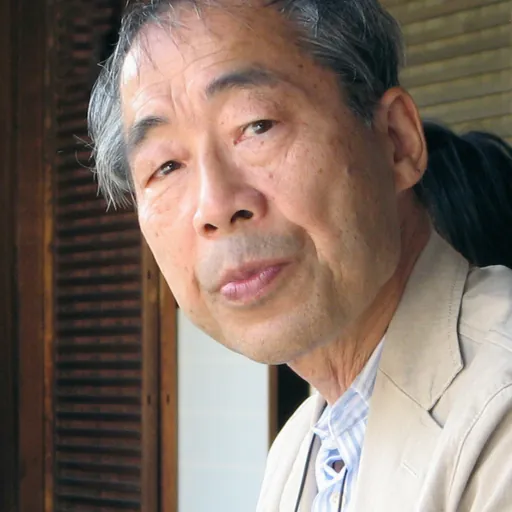
About Toshisada Nishida
Lived 1941 – 2011 (aged 70). Toshisada Nishida was a Japanese zoologist.
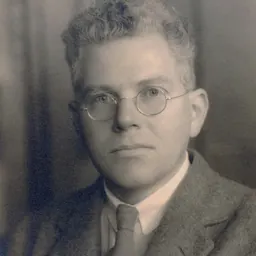
Toshisada Nishida (3 March 1941 – 7 June 2011) was a Japanese primatologist who established one of the first long term chimpanzee field research sites. He was the first to discover that chimpanzees, instead of forming nuclear family-like arrangements, live a communal life with territorial boundaries. His discoveries of the medicinal use of plants by wild chimpanzees helped form the basis of the field of zoopharmacognosy.
Nishida was a full professor of Zoology at Kyoto University, the President of the Primate Society of Japan, the President of the International Primatological Society, and the Editor-in-Chief of the journal Primates. In 2008, he was a recipient of the Leakey Prize for his accomplishments in human evolutionary science.
Scientific career
Early career As a graduate student, Toshisada Nishida studied primatology at Kyoto University under Junichiro Itani, a successor of Japanese primatologist Kinji Imanishi. Nishida studied Japanese macaques with Imanishi from 1963 to 1965 before traveling to Tanzania to study chimpanzees.
Chimpanzee research Despite being more genetically distant from humans than chimpanzees, in the 1960s baboons were considered the best model of human evolution as they had descended from the trees to become savanna-dwellers as early humans did. However, baboons did not possess many of the characteristics deemed important for human evolution, such as tool technology, cooperative hunting, food sharing, territoriality, cultural traditions, and certain cognitive capacities, such as planning and theory-of-mind. Chimpanzees, however, show all characteristics.
Early primatologists had observed chimpanzees traveling through trees, eating fruits at their leisure, but rarely noted anything of interest in their behaviour. In the 1960s, there were only two field sites studying chimpanzee behaviour: one led by Jane Goodall in the Gombe Stream, and another located in the foothills of the Mahale Mountains at Lake Tanganyika,
During Nishida's first visit to Mahale, he observed chimpanzees living in communities with territorial boundaries, noting the existence of hostility between neighbouring groups. As chimpanzees are often encountered alone or in small groups in the forest, and due to the difficulty of determining community relations between chimpanzees, this challenged the existing scientific belief that chimpanzees lived in nuclear family-like groups. on apes in captivity, Nishida and his students were documenting very similar power struggles among wild chimpanzees, including one by a male named Kalunde. Kalunde played a game that Nishida called "allegiance-fickleness", which allows elderly males to maintain a key position in the group by regularly switching sides in alliances with younger males.
Cultural differences in chimpanzees Nishida collaborated frequently with Western scientists. In 1975, he invited William McGrew and Caroline Tutin, primatologists familiar with the chimpanzees at Gombe National Park, to Mahale. They had no reason to expect major behavioural differences in the same subspecies of chimpanzee with the same ecology; however, McGrew and Tutin observed the Mahale chimpanzees frequently engaging in handclasp grooming, a behavior that had not been observed in the Gombe chimpanzees. Based on their visit, McGrew and Tutin were the first to seriously question the assumption of "typical" chimpanzee behaviour, an important step towards culture studies on the great apes.
Zoopharcognosy While at the Mahale site in the early 1970s, Nishida observed wild chimpanzees consuming Aspilia leaves, which have no nutritional value and are not digested. He noticed the chimpanzees consuming them very slowly in the morning, swallowing the leaves without chewing. Nishida, along with primatologist Richard Wrangham, published their observations of the potentially medicinal use of plants by wild chimpanzees in 1971. De Waal believes that this paper, along with later studies conducted on self-medication among animals, became the foundations of the field of zoopharmacognosy, or the study of self-medication by animals through the ingestion of plants, insects, or soils. His final book, Chimpanzees of the Lakeshore, was published posthumously in 2012 by Cambridge University Press.
Conservation work Nishida was a patron of the United Nations Environment Programme's Great Ape Survival project, and worked with UNESCO in an attempt to establish the great apes as a "World Heritage Species". In 1985, he successfully lobbied the Tanzanian government to protect the Mahale Mountains, forming the Mahale Mountains National Park. In 1994, he founded the Mahale Wildlife Conservation Society.
Recognition In 2008, Toshisada Nishida and primatologist Jane Goodall were made co-recipients of Leakey Prize, which recognizes accomplishments in human evolutionary science. That year, Nishida also received the International Primatological Society lifetime achievement award.
After his retirement, Nishida stayed focused on primatology and chimpanzee conservation. In 2004, he became Director of the Japan Monkey Centre, serving as Editor-in-Chief of its journal, Primates, until his death. He made his last field trip to Mahale in the summer of 2009. In 2011, Nishida asked two of his colleagues to ensure the Mahale project would continue for at least another century. Nishida died from cancer later that year, in June 2011.
Don’t just read it —
keep it.
Full-length biographies made to live with: read them, listen on the way to work, watch them tonight.
- E-book
- Audio
- Video
Instant download · yours to keep · every purchase keeps this site free
Important facts
People in Toshisada Nishida's life
Named in this biography and alive at the same time

Related people
Same field, nearest in time



Contemporaries
People whose lives overlapped Toshisada Nishida's


Frequently asked questions
Who was Toshisada Nishida?
Japanese scientist (1941–2011)
When was Toshisada Nishida born?
Toshisada Nishida was born on 3 March 1941 in Kyoto Prefecture.
When did Toshisada Nishida die?
Toshisada Nishida died on 7 June 2011.
What was Toshisada Nishida's occupation?
Toshisada Nishida was a zoologist.
What nationality was Toshisada Nishida?
Toshisada Nishida was Japanese.
Sources & further reading
· Wikipedia: Toshisada Nishida
Cite this page
APA: Biography.guide. (2026). Toshisada Nishida. https://biography.guide/toshisada-nishida/
MLA: "Toshisada Nishida." Biography.guide, https://biography.guide/toshisada-nishida/.
Chicago: "Toshisada Nishida." Biography.guide. https://biography.guide/toshisada-nishida/.
Data last updated: 2026-09-23 · Spot an error? Report a correction.
Portrait: Wikimedia Commons · author & licence
Page generated 2026-09-27 05:07 UTC