
About Toshiko Takaezu
Lived 1922 – 2011 (aged 88). Toshiko Takaezu was an American painter, ceramicist, artist and painting.
Toshiko Takaezu (June 17, 1922 – March 9, 2011) was an American ceramic artist, painter, sculptor, textile artist and educator whose body of work spanned a wide range of mediums, including ceramics, weavings, bronzes, and paintings. She was noted for her pioneering work in ceramics and played an important role in the international revival of interest in the ceramic arts. Takaezu is known for her rounded, closed ceramic forms which broke from traditions of clay as a medium for functional objects. Instead she explored clay's potential for aesthetic expression, taking on Abstract Expressionist concepts in a manner that places her work in the realm of postwar abstractionism. She was of Japanese descent and from Pepeʻekeo, Hawaii.
Takaezu is recognized as one of a number of ceramic artists in the 1950s and 1960s who were instrumental in moving the practice of ceramics beyond a commercial trade to become a form of artistic expression. A major retrospective of her work at the Museum of Fine Arts Boston in 2023, and a traveling retrospective organized by The Isamu Noguchi Foundation and Garden Museum to be launched at The Noguchi Museum in 2024 are reflective of the recent revival of interest in her practice and legacy.
Early life and education Takaezu was born the middle child of eleven to Japanese immigrant parents in Pepeʻekeo, Hawaii, on 17 June 1922. Her parents had immigrated from the Japanese town of Gushikawa on the island of Okinawa. Her parents maintained a traditional Japanese lifestyle: shoes were removed upon entering the house, breakfast consisted of miso soup and rice, sleeping was on the floor. Takaezu did not learn to speak English until she entered first grade. At the age of nine, her family moved to Maui, where her grade school—under the direction of a progressive principal—encouraged students to read and recite poetry and to draw. It was there that she received her first exposure to the arts.
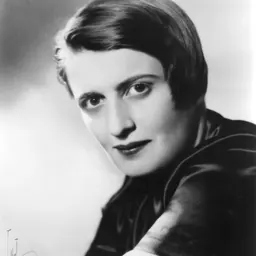
After graduating from high school in 1940, she went to stay with her older sisters in Honolulu, where she worked at the Hawaii Potter's Guild creating identical pieces from press molds. The Hawaii Potter's Guild was a commercial pottery studio owned by the Gantt family. It was there, during World War II, that Takaezu first worked with clay, producing ashtrays and other functional items in press molds. While she hated creating hundreds of identical pieces, she appreciated that she could practice glazing. At the pottery guild, Takaezu met Carl Massa, a New York sculptor who was with the Special Services Division of the U.S. Army. Massa became an important inspiration for her, teaching and encouraging her to create sculpture and to read books such as Ayn Rand’s The Fountainhead and Irving Stone’s Lust for Life, an interpretation of Van Gogh’s life story. Eager to learn more about the lives and careers of artists, Takaezu enrolled in Saturday painting classes at the Honolulu Museum of Art School (1947-1949) studying with Louis Pohl and Ralston Crawford.
In 1948, Takaezu began teaching a ceramics class at the YWCA in Honolulu, where she discovered her deep love for teaching and inspiring students. After the second year, she realized that becoming a fine art teacher required further study. Her instinct for self-motivation–fostered by growing up in a large family—told her it was time to leave Hawaii and travel to the mainland. A pivotal influence and mentor on her development as an artist, Grotell was, in Takaezu’s view, "an unusual and rare human being who felt it was important for students to become individuals. It was through her criticism that I began to discover who I was." After becoming Grotell's assistant, Takaezu also began her teaching career. She instructed summer courses at the Cranbrook Academy from 1954 to 1956. Although working in clay was her main interest, while studying with Marianne Strengell at Cranbrook, Takaezu became interested in the creative potential of fiber. Responding to the texture of yarn and its rich color possibilities, she approached weaving as a different way of thinking and developing ideas. She also taught summer sessions at the Cleveland Institute of Art (1955–64), where she became head of the ceramic department. In 1965 she left her teaching position to move to New Jersey, ultimately establishing a permanent studio and house in Quakertown in 1975, where she set to work designing and building an innovative kiln that would serve the growing scale of her ambitions for clay. Letters, drawings, and notes from the Takaezu papers at the Smithsonian's Archives of American Art, detail the process. Takaezu enlisted the help of Dick Hay from Indiana State University to build the 270-cubic-foot, two-chamber, cross-draft kiln of industrial grade refractory material, much of it donated. The kiln's capacious bisque and glaze firing chambers and its moveable roof allowed Takaezu to work at a scale rarely attempted. From 1967 to 1992 she taught at the Creative Art Program (later named Visual Arts Program) of Princeton University. While studying there, she worked with Kaneshige Toyo and visited Shoji Hamada, both influential Japanese potters. Through her travels in Japan, including residence in a Zen monastery, she strengthened her original cultural receptivity to the spirit of natural materials. To her, and in a Buddhist animistic fashion, she recounted, "Clay is a sentient being, alive, animate, and responsive," a material entity that "has much to say."
Takaezu's practice, especially following her time in Japan, has been lauded for its reach back to traditional forms and techniques, as well as to the social context of the Japanese mingei, or "arts of the people," movement.
Returning from Japan, Takaezu joined the faculty of the Cleveland Institute of Art, where she taught for ten years until 1965. For her many contributions to the arts as well as her dedication as a teacher, Princeton University awarded Takaezu the Behrman Award for Distinguished Achievement in the Humanities in 1992, and an honorary doctorate of humane letters in 1996. At the time of the exhibition The Poetry of Clay: The Art of Toshiko Takaezu at the Philadelphia Museum of Art in 2004, she returned to Princeton as a Belknap Visitor in the Humanities to speak about her life and career. She taught at several other universities and art schools: Cranbrook Academy of Art, Bloomfield Hills, Michigan; University of Wisconsin, Madison, Wisconsin; Honolulu Academy of Art, Honolulu, Hawaii. Indeed, she often used her kilns to bake chicken in clay, and to dry mushrooms, apples and zucchinis. Influenced by Japanese and Scandinavian designs, her early works are frequently brushed with calligraphic markings and stylized floral motifs. Takaezu's multi-spouted vessels, produced largely in 1953, brought her early awards and attention. In January 1955, one of her two-necked freeform bottles was first noted in the then-two-year-old Ceramics Monthly magazine. Then in the late 1950s, strongly influenced by the Finnish ceramist Maija Grotell, she embraced the notion of ceramic pieces as artworks meant to be seen rather than used. When she developed her signature "closed form" after sealing her pots, she found her identity as an artist. The ceramic forms resembled human hearts and torsos, closed cylindrical forms, and huge spheres she called "moons." By engaging a strategy of containment in her closed columns and ovoid forms, she harnessed negative space in an encompassing manner. Before closing her forms, and leaving only a pinhole to allow heated gas to escape during firing, she would insert a piece of clay wrapped in paper into the vessel's interior. During the firing process, the paper burns away and the clay nugget hardens, becoming a rattle inside each form. Strongly influenced by her study of Zen Buddhism, she regarded her ceramic work as an outgrowth of nature and seamlessly interconnected with the rest of her life.
In the early 1970s, when Takaezu didn't have access to a kiln, she painted on canvas. She was once asked by Chōbyō Yara what the most important part of her ceramic pieces is. She replied that, it is the hollow space of air within, because it cannot be seen but is still part of the pot. She relates this to the idea that what's inside a person is the most important. Takaezu also became known for the squat balls she called moon pots, and the vertical closed forms, which grew sharply in height in the 1990s. At times, Takaezu exhibited the moon pots in hammocks, an allusion to her method of drying the pots in nets. She also cast bronze bells and wove rugs.
In the 1970s, Takaezu began a series of tall forms that she called "Tree Forms," thin ceramic trunks inspired by the scorched trees she had seen throughout her career along the Devastation Trail in Hawaii's Volcanoes National Park. A group of extended cylinders, called Growth (1973), reflects her strong relationship with nature. Inspired by a surrealistic landscape of burned trees silhouetted against the volcanic surface of her homeland, she created Lava Forest (Homage to the Devastation Forest). In the late 1970s she made Homage to Tetragonoloblus, a tribute to the tropical legume plant that is being promoted as a reliable food source in areas of the world challenged by regular food shortages. Originally produced in clay, the forms were later developed as a series in bronze.
Takaezu was known to not date her work, often noting only the decade in which they were made, as a practice that intended that the pieces were experienced in terms of the artist's evolution rather than in a carefully laid out chronology.
Takaezu died on March 9, 2011, in Honolulu, following a stroke she suffered in May 2010. The Toshiko Takaezu Foundation was established in 2015 to support and promote her legacy, and with the foundation's support, major retrospectives organized by the Museum of Fine Arts Boston and The Noguchi Museum are being held in 2023-24 and 2024-26 respectively.
Exhibitions
1995: National Museum of Modern Art, Kyoto, Japan 2006: Hunterdon Art Museum, Clinton, New Jersey 2020: ASU Ceramics Museum, Brickyard, Tempe Arizona 2022: Venice Biennale 2023: Museum of Fine Arts, Boston 2024: The Noguchi Museum (and other venues) 2025-26: Princeton University Art Museum
She has also been in several group exhibitions throughout the United States and internationally in countries including Belgium, Czechoslovakia, Japan, and Switzerland.
Honors and awards Takaezu won many honors and awards for her work: 1980: National Endowment for the Arts fellowship 1983: Dickinson College Arts Award 1987: Living Treasure Award (Honolulu, HI) 2010: Konjuhosho Award, conferred by the Emperor of Japan to individuals who have made significant contributions to Japanese society (Naha City, Okinawa, Japan)
Collections Takaezu's work may be found in private and corporate permanent collections, as well as several public collections across the United States: Arizona State University, Tempe, Arizona Canton Museum of Art, Canton, Ohio Cantor Arts Center, Stanford, California Carnegie Museum of Art, Pittsburgh, Pennsylvania Cleveland Museum of Art, Cleveland, Ohio Currier Museum of Art, Manchester, New Hampshire Detroit Institute of Arts, Detroit, Michigan Everson Museum of Art, Syracuse, New York Fine Arts Museums of San Francisco, San Francisco, California Frances Young Tang Teaching Museum and Art Gallery, Skidmore College, Saratoga Springs, New York Harn Museum of Art, Gainesville, Florida Hunter Museum of American Art, Chattanooga, Tennessee Hunterdon Art Museum, Clinton, New Jersey Grounds for Sculpture, Hamilton, New Jersey High Museum of Art, Atlanta, Georgia Los Angeles County Museum of Art, Los Angeles, California Metropolitan Museum of Art, New York, New York Milwaukee Art Museum, Milwaukee, Wisconsin Museum of Arts and Design, New York, New York Museum of Fine Arts, Boston, Massachusetts Philadelphia Museum of Art, Philadelphia, Pennsylvania Princeton University Art Museum, Princeton, New Jersey Racine Art Museum, Racine, Wisconsin Seattle Art Museum, Seattle, Washington Smithsonian American Art Museum, Washington, D.C. Toledo Museum of Art, Toledo, Ohio University of Michigan Museum of Art, Ann Arbor, Michigan
Don’t just read it —
keep it.
Full-length biographies made to live with: read them, listen on the way to work, watch them tonight.
- E-book
- Audio
- Video
Instant download · yours to keep · every purchase keeps this site free
Important facts
People in Toshiko Takaezu's life
Named in this biography and alive at the same time





Related people
Same field, nearest in time


Contemporaries
People whose lives overlapped Toshiko Takaezu's

Frequently asked questions
Who was Toshiko Takaezu?
American artist (1922-2011)
When was Toshiko Takaezu born?
Toshiko Takaezu was born on 17 June 1922 in Pepeekeo.
When did Toshiko Takaezu die?
Toshiko Takaezu died on 9 March 2011 in Honolulu.
What was Toshiko Takaezu's occupation?
Toshiko Takaezu was a painter, ceramicist, artist and painting.
What nationality was Toshiko Takaezu?
Toshiko Takaezu was American.
Sources & further reading
Cite this page
APA: Biography.guide. (2026). Toshiko Takaezu. https://biography.guide/toshiko-takaezu/
MLA: "Toshiko Takaezu." Biography.guide, https://biography.guide/toshiko-takaezu/.
Chicago: "Toshiko Takaezu." Biography.guide. https://biography.guide/toshiko-takaezu/.
Data last updated: 2026-09-22 · Spot an error? Report a correction.
Page generated 2026-09-27 05:12 UTC