
About Tony Duquette
Lived 1914 – 1999 (aged 85). Tony Duquette was an American costume designer, interior designer, landscape architect, sculptor and marionetteist.
Anthony Duquette (June 11, 1914 – September 9, 1999) was an American artist who specialized in designs for stage and film.
Early life and education
Duquette was born in Los Angeles, California. He was the oldest of four children. He grew up between Los Angeles, where he wintered with his family, and Three Rivers, Michigan, where they lived the rest of the year. As a student, Duquette was awarded scholarships at both the Chouinard Art Institute in Los Angeles
After graduating from Chouinard, he began working in advertising, creating special environments for the latest seasonal fashions. He also began to free-lance for designers such as William Haines, James Pendleton and Adrian.
Career
1935–1946 Duquette presented some of his work in the Louvre during the post-war years. Duquette designed costumes and settings for the movies, interiors for Mary Pickford and Buddy Rogers, jewelry and special furnishings for Lady Mendl, as well as numerous night clubs and public places.
1947–1960 Upon his return from Europe in 1947, Duquette continued his works for private clients and for the theatre and motion pictures. He presented his first exhibition at the Mitch Liesen Gallery in Los Angeles in 1949 and shortly thereafter was asked to present his works at the Pavilion de Marsan of the Louvre Museum, Paris. Returning from a year in France, where he received design commissions from the Duke and Duchess of Windsor
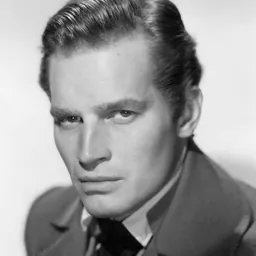
1960–1970s During the 1960s and '70s, the Duquettes continued to travel extensively, working in Austria, Ireland and France as well as New York, Dallas, San Francisco, South America and Asia. Duquette created interiors for Doris Duke, Norton Simon, and J. Paul Getty, a castle in Ireland for Elizabeth Arden and a penthouse in the Hawaiian Islands. He also designed interiors for commercial and public spaces like the Hilton Hawaiian Village, Sheraton Universal Hotel, and sculptures and tapestries for the Ritz Carlton Hotel in Chicago as well as the Los Angeles Music Center and the University of California at Los Angeles. Designs for film and theatre include Yolanda and the Thief, Lovely to Look At, Kismet, and Ziegfeld Follies for MGM, as well as Jest of Cards, Beauty and the Beast, and Danses Concertantes for the San Francisco Ballet. Operas for which Duquette designed both costumes and settings include Der Rosenkavelier, The Magic Flute, and Salome. His designs for the original Broadway production of Camelot won Duquette the Tony Award for Best Costume Design. and in celebration of the bicentennial. This multi-sensorial exhibit was seen by hundreds of thousands of visitors over a three-year period at the California State Museum of Science and Industry at Exposition Park. As part of the unique experience of "ethnic angels," Duquette included a poetic narration by Ray Bradbury, spoken by Charlton Heston. Duquette embellished the celebratory experience with original music by Garth Hudson (reissued in 2005). The size of the building added to the effect, where from the 80 foot ceiling hung an 18-foot Madonna, dressed in an ornate and symbolic gown. She was surrounded by angels and alters and jeweled tapestries. All of this was enhanced by special lighting effects which changed the Madonna's facial color "to represent the four races." "Duquette writes that his 'Angels' exhibit stresses over and over again 'the brotherhood of man, which is an implied theme of this 'celebration." He stated, "It is my hope that this celebrational environment, into which I have poured the aspirations of a lifetime, will transport the viewer to another dimension."
Duquette designed furniture and chandeliers for Long Beach-based Buffums including at branches in La Habra Fashion Square and Pomona Mall. Cultural impact In 1979, the Duquettes formed the Anthony and Elizabeth Duquette Foundation for the Living Arts, a non-profit public foundation whose purpose is to present museum-quality exhibitions of artistic, scientific, and educational value to the public and to purchase, promote and preserve Duquette's own works. in the Malibu Mountains of California. Calling it Sortilegium, which is Latin for "fortune-telling", Duquette strove to create a living work of art. After many years of work, this was also destroyed, by the Green Meadow fire of 1993. The work in progress had been extensively chronicled on television and by national and international magazines before its complete destruction. The Malibu property was bought in 2007 and architect David Randall Hertz was hired to design a home on one of the previous Duquette building pads. Following Duquette's legacy, Hertz designed a house from the wings of a Boeing 747-100, appropriately known as the 747 Wing House. Ten years later, Hertz purchased part of the property from Duquette's long time collaborator Hutton Wilkinson. He named the property Xanabu and continued restoring and revitalizing Duquette's legacy.
Personal life
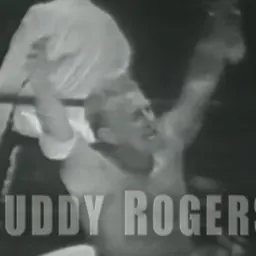
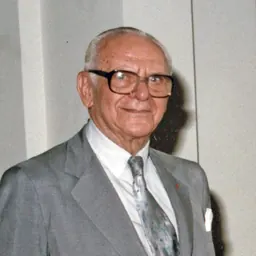
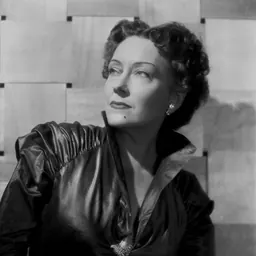
Marriage In 1949, Duquette married artist Elizabeth "Beegle" Johnstone at a private ceremony at Pickfair, with Mary Pickford as matron of honor and Buddy Rogers as best man. The reception that followed was attended by Hollywood celebrities including Gloria Swanson, Greta Garbo, Fred Astaire, Vincente Minnelli, Louella Parsons, Hedda Hopper, Oscar Levant, Vernon Duke, and Marion Davies. The young couple collaborated on many design commissions and were active on the Hollywood social scene. After 46 years of marriage and artistic collaboration with Duquette, Elizabeth died from Parkinson's disease in Los Angeles. Up until his death at the age of 85, Duquette continued designing interiors, jewelry and works of art. For his 80th birthday, he created a new work entitled "The Phoenix Rising from His Flames", which was presented to UCLA at the Armand Hammer Museum of Art and Cultural Center in Los Angeles.
Death On September 9, 1999, Duquette died of a heart attack at UCLA Medical Center in Los Angeles. He was 85 years old.
Legacy Duquette's house in Beverly Hills, "Dawnridge", continues as the headquarters for the design business, headed by Duquette's longtime collaborator Hutton Wilkinson.
Don’t just read it —
keep it.
Full-length biographies made to live with: read them, listen on the way to work, watch them tonight.
- E-book
- Audio
- Video
Instant download · yours to keep · every purchase keeps this site free
Important facts
Family & relationships
People in Tony Duquette's life
Named in this biography and alive at the same time



Related people
Same field, nearest in time


Contemporaries
People whose lives overlapped Tony Duquette's


Frequently asked questions
Who was Tony Duquette?
American artist (1914–1999)
When was Tony Duquette born?
Tony Duquette was born on 11 June 1914 in Los Angeles.
When did Tony Duquette die?
Tony Duquette died on 9 September 1999 in Los Angeles.
What was Tony Duquette's occupation?
Tony Duquette was a costume designer, interior designer, landscape architect, sculptor and marionetteist.
What nationality was Tony Duquette?
Tony Duquette was American.
Sources & further reading
Cite this page
APA: Biography.guide. (2026). Tony Duquette. https://biography.guide/tony-duquette/
MLA: "Tony Duquette." Biography.guide, https://biography.guide/tony-duquette/.
Chicago: "Tony Duquette." Biography.guide. https://biography.guide/tony-duquette/.
Data last updated: 2026-09-22 · Spot an error? Report a correction.
Page generated 2026-09-27 05:28 UTC