
About Buddy Rogers
Lived 1921 – 1992 (aged 71). Buddy Rogers was an American professional wrestler and actor.
Early life Rogers was the son of Herman Gustav Rohde Sr., and Frieda Stech, both German immigrants. He grew up in Camden, New Jersey. He was athletic, and took up wrestling at age nine at the local YMCA, joining the Camden YMCA Wrestling League and winning its heavyweight championship. He served in the U.S. Navy and worked in a shipyard during World War II. Rogers also excelled in football, boxing, track and swimming, winning the YMCA's three-mile swimming championship in 1937. Rogers joined the Dale Brothers Circus as a wrestler at age 17. He later worked at a shipyard, and became a police officer. Rogers soon became a top professional wrestler using his real name around his hometown as Dutch Rhode, where he gained his first major win over Ed "Strangler" Lewis. He continued his career in Houston, where he assumed the name Buddy Rogers. Rogers would get his first title during his tenure there, winning the NWA Texas Heavyweight Championship four times, once from Lou Thesz, beginning a long feud between them both in and out of the ring.
After leaving the Texas territory for Columbus, Ohio, Rogers bleached his hair, and was given the moniker "Natural Guy" by promoter Jack Pfefer. The moniker later evolved to "Nature Boy". In the early 1950s, Lillian Ellison (under the moniker Slave Girl Moolah) worked as his valet. Ellison claims that the partnership ended after Rogers pushed for a sexual relationship, which Ellison refused. In addition, the $148,000 gate in ticket sales was a professional wrestling record for almost twenty years. Every NWA World Heavyweight Champion was required to pay a $25,000 deposit to the NWA Board of Directors, before winning the championship belt. The deposit was held by the NWA for the duration of the champion's reign. The third safeguard was Thesz, who could "take" the title if necessary. Ultimately, Thesz won the match and the title. Rogers was formally recognized as the first ever WWWF World Heavyweight Champion on April 11, 1963, when promoter and first WWWF President Willie Gilzenberg handed Rogers the WWWF World Heavyweight Championship belt on Washington, D.C., television. Gilzenberg explained that Rogers won a wrestling tournament in Rio de Janeiro, Brazil, although it was fictional. WWE.com currently cites April 25, 1963, as the beginning of Rogers's reign. Rogers was a top draw, but his reign was ultimately cut short by a mild heart attack which greatly hindered his endurance and in-ring performance. Vincent J. McMahon and Toots Mondt were in a panic and hid Rogers's medical problems. In an emergency title switch, Rogers lost to Bruno Sammartino in a quick 48 second match on May 17, 1963, in Madison Square Garden. The match had to be kept short for fear of Rogers having a major heart attack and dying in the ring.
Following his loss to Sammartino, health problems forced Rogers to wrestle in only a limited number of short singles matches that lasted a minute or two. He participated in a few tag team matches with partner Handsome Johnny Barend where he spent almost the entire match in his corner on the ring apron while Barend did the wrestling. Rogers defeated Hans "The Great" Mortier in less than a minute with the figure-four leglock in Madison Square Garden and teamed with Handsome Johnny Barend to take two out of three falls via pin from Sammartino and Bobo Brazil, with Rogers pinning Sammartino for the final fall. The big rematch was to be held October 4, 1963, at Roosevelt Stadium in Jersey City, New Jersey. The tickets were printed with Rogers–Sammartino on them. However, it was announced that Rogers was retiring and Gorilla Monsoon, who had won a tournament, got the title shot that night. In 1966–1967, Rogers wrestled in 18 short matches in Canada. In 1969, Rogers appeared in 19 quick matches in an Ohio-based promotion called Wrestling Show Classics before he realized his health was not getting better to the point where he could wrestle. He spent time on television talking with his former manager Bobby Davis. A decade later, Rogers would try to make a legitimate comeback.
Jim Crockett Promotions and return to WWF (1978–1992) In 1979, Rogers returned to wrestling as a fan favorite in Florida, although he was in his late 50s. He later moved up to Jim Crockett Promotions (JCP) in the Carolinas as a villain manager overseeing professional wrestlers like Jimmy Snuka, Ken Patera, Gene Anderson, Dewey Robertson and Big John Studd. His most notable moment during his run in the Carolinas was his feud with the new "Nature Boy" Ric Flair, before Rogers put over Flair on July 9, 1978.
After his time in Mid-Atlantic Championship Wrestling (MACW), Rogers moved back into WWF where he was a fan favorite manager and part-time professional wrestler who also hosted the interview segment "Rogers' Corner" until 1983. When Rogers retired from wrestling, he took a job as a manager at a Playboy Club casino. He resided in Haddonfield, New Jersey, until he moved to Fort Lauderdale, Florida, in 1987.
In 1989, while Rogers was eating a turkey sandwich at a hoagie shop in Florida, a man in his late 20s began verbally abusing two female employees. he was not placed on life-support and died on June 26, 1992, at the age of 71.
Legacy Lou Thesz, Rogers's long-time colleague and frequent opponent, described Rogers's early impact in his memoir, Hooker: Rogers is remembered by fans and performers alike as one of the top all-time stars in the business, but it's probably not common knowledge just how influential he was... he broke into the business somewhere around 1941 as a hero-type personality, with little more going for him than a good body and natural charisma in the ring – which is actually a pretty good beginning – and he was a hit almost from the start. He had that indefinable something fans responded to, and he was sharp enough to build upon what he had, paying attention to what got a reaction from the fans. What evolved over several years was the "Nature Boy", the prototype of the cocky, strutting, sneering, arrogant peroxide blond villain that is almost a tired wrestling cliché today. Rogers invented the character, and I believe he did it better than anyone. Thesz continued,
He was also one of the first guys to rely a lot on what we called "flying" moves in the ring – body slams, dropkicks, piledrivers, ricochets off the ropes into his opponent, action moves that are commonplace today. All of those moves were in use before Rogers came along, but they were used sparingly; most of the wrestling prior to Rogers's emergence was done on the mat. Rogers was the first to use flying moves in quantity, staying off the mat, and the style was so popular with the fans that other wrestlers, including me, followed his lead. American Wrestling Association (Ohio) AWA World Heavyweight Championship (Ohio version) (3 times) American Wrestling Association (New England) AWA Eastern States Heavyweight Championship (1 time) Capitol Wrestling Corporation/World Wide Wrestling Federation/World Wrestling Federation WWWF World Heavyweight Championship (1 time, inaugural) NWA United States Heavyweight Championship (Northeast version) (1 time, inaugural) NWA United States Tag Team Championship (Northeast version) (2 times) – with Johnny Valentine (1) and Johnny Barend (1) WWF Hall of Fame (Class of 1994) International Professional Wrestling Hall of Fame Class of 2021 Midwest Wrestling Association MWA Ohio Tag Team Championship (7 times) – with Great Scott (6) and Juan Sebastian (1) Jack Pfefer Promotions World Heavyweight Championship (Jack Pfeffer version) (4 times) Montreal Athletic Commission World Heavyweight Championship (Montreal version) (3 times) National Wrestling Alliance NWA World Heavyweight Championship (1 time) NWA Hall of Fame (class of 2010) NWA Chicago NWA United States Heavyweight Championship (Chicago version) (1 time) NWA Mid-America NWA Mid-America Heavyweight Championship (1 time, inaugural) NWA San Francisco NWA World Tag Team Championship (San Francisco version) (1 time) – with Ronnie Etchison NWA Western States Sports NWA North American Heavyweight Championship (Amarillo version) (1 time) Pro Wrestling Illustrated Stanley Weston Award (1990) Professional Wrestling Hall of Fame and Museum Class of 2002 (Television Era) Southwest Sports Inc. NWA Texas Heavyweight Championship (7 times) 1 NWA Texas Tag Team Championship (1 time) – with Otto Kuss St. Louis Wrestling Hall of Fame Class of 2008 World Wide Wrestling Alliance WWWA World Heavyweight Championship (1 time) Wrestling Observer Newsletter Wrestling Observer Newsletter Hall of Fame (Class of 1996) Other titles Maryland Eastern Heavyweight Championship (12 times) Victory Championship Wrestling VCW Hall of Fame (Class of 2018)
1 Five of Rogers's six reigns with the NWA Texas Heavyweight Championship occurred before the title came under the control of the NWA and before the NWA was created. The situation is the same regarding Rogers's reign with the NWA Texas Tag Team Championship.
Don’t just read it —
keep it.
Full-length biographies made to live with: read them, listen on the way to work, watch them tonight.
- E-book
- Audio
- Video
Instant download · yours to keep · every purchase keeps this site free
Important facts
more
Herman Gustav Rohde, Jr.People in Buddy Rogers's life
Named in this biography and alive at the same time

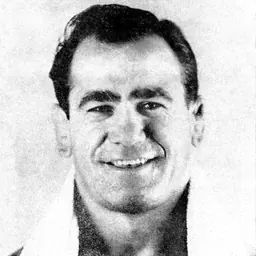
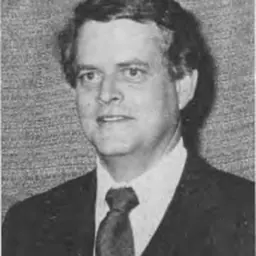



Related people
Same field, nearest in time
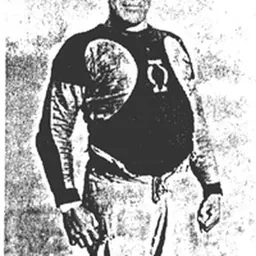
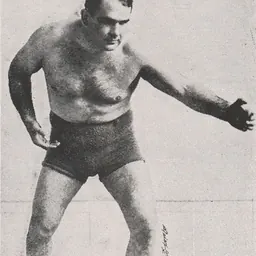
Contemporaries
People whose lives overlapped Buddy Rogers's





Frequently asked questions
Who was Buddy Rogers?
American professional wrestler (1921-1992)
When was Buddy Rogers born?
Buddy Rogers was born on 20 February 1921 in Camden.
When did Buddy Rogers die?
Buddy Rogers died on 26 June 1992 in Fort Lauderdale.
What was Buddy Rogers's occupation?
Buddy Rogers was a professional wrestler and actor.
What nationality was Buddy Rogers?
Buddy Rogers was American.
Sources & further reading
· DBpedia: Buddy Rogers (wrestler)
Cite this page
APA: Biography.guide. (2026). Buddy Rogers. https://biography.guide/buddy-rogers/
MLA: "Buddy Rogers." Biography.guide, https://biography.guide/buddy-rogers/.
Chicago: "Buddy Rogers." Biography.guide. https://biography.guide/buddy-rogers/.
Data last updated: 2026-09-25 · Spot an error? Report a correction.
Page generated 2026-09-27 05:08 UTC