
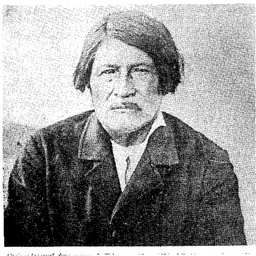
Tomás Katari
Quechua chief
About Tomás Katari
Lived 1741 – 1781 (aged 39–40). Tomás Katari was a cacique.
Tomás Katari or Catari (died January 15, 1781) was an Aymara peasant and cacique of northern Potosí who led a popular uprising in Upper Peru (present-day Bolivia) in the late 18th century.
Conditions before the rebellion During the 1770s, the economic and political stability of the Macha community in Upper Peru was continuously disrupted. In 1772, the alcabala (sales tax) was increased from 2 percent to 4 percent. Then in 1774, aduanas (customhouses) were established and the acabala was applied to grain. The acabala was again increased in 1776 to 6 percent, the same year Upper Peru became part of the new Viceroyalty of the Rio de la Plata. Provincial officials began appointing outsider wealthy and/or mestizo caciques to indigenous townships, violating traditional practices of hereditary local cacique governance beneath Spanish rule. By the end of the decade, relations between the Indian communities and appointees of Spanish colonial officials saw increasing strain.
Joaquín Alós purchased the position of regional corregidor and began his tenure in early 1778 by seizing the legal documentation and order of dismissal Macha commoners possessed against the wealthy appointed mestizo cacique, Blas Bernal. Alós proceeded to arrest Tomás Katari, an illiterate Macha commoner who had sought Bernal's removal in the court of Charcas. He instructed Bernal to whip Katari in the public square, warning that further legal appeals to the regional courts would merit severe punishment. traveled from Macha by foot over 1000 miles to Buenos Aires, center of the new viceroyal administrative court. The rebels targeted Spanish and creoles, regardless of individual affiliations. Damaso and Nicolas were gruesomely executed in La Plata and the cause was then taken up by Julián Apasa, under the name of Túpac Katari.
It has been argued that the violence that followed Katari's imprisonment and death demonstrates some of the limitations of Katari's power. That Katari purported an ideology of non-violence, however, is unsubstantiated.
It has been argued that due to his initial more institutional methods of resistance, Katari's image has not been used as that of Tupac Amaru by Indian or Latin American nationalist movements.
Don’t just read it —
keep it.
Full-length biographies made to live with: read them, listen on the way to work, watch them tonight.
- E-book
- Audio
- Video
Instant download · yours to keep · every purchase keeps this site free
Important facts
People in Tomás Katari's life
Named in this biography and alive at the same time

Related people
Same field, nearest in time




Contemporaries
People whose lives overlapped Tomás Katari's





Frequently asked questions
Who was Tomás Katari?
Quechua chief
When was Tomás Katari born?
Tomás Katari was born in 1741 in Potosí Department.
When did Tomás Katari die?
Tomás Katari died on 15 January 1781 in Yamparáez Province.
What was Tomás Katari's occupation?
Tomás Katari was a cacique.
What nationality was Tomás Katari?
Tomás Katari's recorded nationality: Viceroyalty of Peru.
Sources & further reading
Cite this page
APA: Biography.guide. (2026). Tomás Katari. https://biography.guide/tomas-katari/
MLA: "Tomás Katari." Biography.guide, https://biography.guide/tomas-katari/.
Chicago: "Tomás Katari." Biography.guide. https://biography.guide/tomas-katari/.
Data last updated: 2026-09-20 · Spot an error? Report a correction.
Page generated 2026-09-27 05:22 UTC