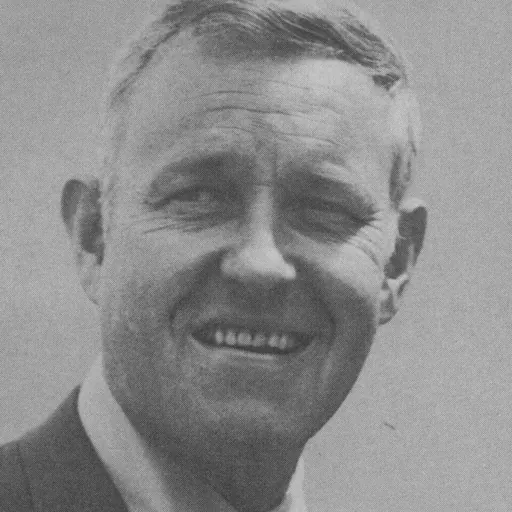
About Tom McCall
Lived 1913 – 1983 (aged 69). Tom McCall was an American politician, journalist and governor.
Thomas Lawson McCall (March 22, 1913 January 8, 1983) was an American politician and journalist in the state of Oregon, serving as the state's 30th governor from 1967 to 1975. A progressive Republican, he was known as a staunch environmentalist and an advocate of sustainable development.
Raised in Massachusetts and in central Oregon, McCall attended the University of Oregon and went on to work as a journalist in Moscow, Idaho and in Portland. He started out as a newspaper reporter and moved on to radio and television broadcasting. While at KGW-TV, he produced the documentary Pollution in Paradise, which brought public attention to air and water pollution in Oregon, specifically in the Willamette River.
McCall first entered politics as an administrative assistant to Governor Douglas McKay. He made an unsuccessful bid for Congress in 1954, losing in the general election to Edith Green. In 1964, he was elected as Oregon Secretary of State, and in 1966 he defeated Democrat Bob Straub to become governor. In office, McCall promoted environmentally friendly reforms and criticized overpopulation and excessive industrial development. During his tenure, the state enacted major shoreline conservation, container deposit, and land-use planning legislation. McCall also became known for his colorful rhetoric and for creative problem-solving, notably sponsoring the Vortex I music festival and implementing the country's first odd–even gasoline rationing program during the 1973 oil crisis.
After his response to the oil crisis gained him national recognition, he toured the country promoting the "Oregon Story" as an example for other states to follow, and publicly mulled a third party run for president. Tom McCall Waterfront Park in Portland is one of several places and institutions named in his honor.
Early life Born in Scituate, Massachusetts, McCall was the son of Hal McCall and Dorothy Lawson McCall, and grandson of copper-king Thomas Lawson and Massachusetts governor and congressman Samuel W. McCall. As a child, he divided his time between Thomas Lawson's Massachusetts estate named Dreamwold and his father's ranch near Prineville, Oregon named Westernwold. This bicoastal upbringing caused him to develop an unusual accent that he characterized as being "a cross between Calvin Coolidge and a Texas Ranger"; his voice would become an asset, setting him apart during his later careers as a public speaker. While at Oregon, McCall was a member of the Phi Delta Theta fraternity.
Journalism career After graduating from U of O in 1936, McCall worked as a summer replacement at the Bend Bulletin, earning $15 a week. He then moved northeast to the Palouse of north central Idaho in February 1937, to the university town of Moscow. He wrote for the News-Review, and following a merger, the Daily Idahonian.
After five years in Moscow, he was encouraged to leave in March 1942; upheaval in the UI athletic department the previous year (firing of football head coach Ted Bank (also athletic director) and basketball head coach Forrest Twogood) brought continuing negative criticism by McCall and his boss thought that he should advance his career elsewhere.
In 1946, McCall was hired by Portland radio station KEX, Where he remained until 1949 when he became executive secretary to Oregon governor Douglas McKay. In 1952, McCall joined KGW radio in Portland, where he served as a newscaster and political commentator until 1955, when he transitioned from radio to television at KPTV.
After a year and a half at KPTV, McCall returned to KGW just as the radio station began to branch into television broadcasting. McCall served a commentator for KGW-TV's news broadcasts from the station's sign-on in December 1956 through early 1964, at which point he left to focus on his campaign for Oregon's secretary of state.
In 1962, McCall produced and narrated Pollution in Paradise, a documentary focused on pollution in and around Oregon. Produced at a cost of $16,000, the documentary principally concerned the impacts of mill runoff and pesticide use on the Willamette River, along with industrial air pollution in various locales. Pollution in Paradise first aired on November 21, 1962 on KGW-TV.
Political career McCall speaking at the Charles A. Sprague Tree Seed Orchard dedication ceremony in Merlin, Oregon, October 23, 1969. McCall made his first run for office in 1954, winning the Republican nomination for Oregon's third district seat over eight-term incumbent Homer D. Angell. Despite his later reputation as a progressive, McCall ran to Angell's right in the primary, portraying himself as a loyal supporter of Dwight D. Eisenhower's pro-business policies.
In 1958, when Mark Hatfield was elected governor of Oregon, he vacated the position of Secretary of State. McCall later said he thought Hatfield had promised to appoint him to the unexpired portion of the term, but the job went to Hatfield associate Howell Appling instead. When Appling chose not to run for re-election in 1964, McCall sought and won the office. In this position, he began to focus on fighting pollution and reining in unchecked economic growth, claiming that "Oregon is at a crossroads [...] There is still a chance to choose between the polluted chaos of Southern California and cleanliness."
After attempts to convince the People's Army Jamboree to either not carry out their plans or to move the date, McCall was convinced by a group of hippies to hold the country's first state-sponsored rock festival at Milo McIver State Park near Estacada, Oregon. "Vortex I: A Biodegradable Festival of Life," as it was called, was inspired by the Woodstock Festival held the previous year, and was intended to draw radical youth out of Portland and reduce the potential for confrontation with the Legionnaires. "I think I just committed political suicide," McCall is reported to have remarked immediately after approving the event.
However, the festival, nicknamed "The Governor's Pot Party", was a success, attracting between 50,000 and 100,000 people. The feared violent clash between the antiwar groups and the Legion was avoided, and McCall was re-elected in November with 56% of the vote, again defeating Bob Straub.
Second term McCall became nationally known in January 1971 for a comment he made in an interview with CBS News's Terry Drinkwater:
He was responding to the rapid population growth and suburban sprawl that the state was then experiencing, which was bringing with it strains on utilities and the rapid loss of arable land in the Willamette Valley.
In July 1971, McCall went on a fishing trip on a portion of the Snake River that acts as border between Idaho and Oregon. At the time, under the Oregon Constitution, the Senate President became acting governor when the governor was out of state. Whenever McCall's group camped for the night on the Idaho side, Oregon Senate President John Burns, a Democrat, became acting governor. Partisan executive control of the state changed eight times during the trip. The incident led to voters approving a 1972 ballot measure restoring the line of succession that existed prior to 1920, with the Secretary of State assuming the office when the governor left the state, died, or resigned.
The Oregon Story and the Third Force
During the summer of 1973, Oregon began to suffer from energy shortages, several months before the rest of the United States was affected by the OPEC oil embargo. The state's power grid was heavily reliant on hydroelectricity and an unusually dry winter had left reservoir levels critically low. McCall's administration took action to encourage energy conservation by lowering speed limits, reducing government energy consumption, and ordering the cessation of all business display lighting. The governor and his aides were not certain whether the latter was legal, but Oregonians generally complied, and McCall later reflected that he had tapped into his constituents' mood: "People wouldn’t believe there was a crisis with the Golden Arches blazing away [...] People are fed up with garishness. They feel assaulted by blinking, flashing, rotating, ostentatious waste." Biographer Brent Walth doubts that McCall was ever serious about making the Third Force a third party or running for president, and believes that he was simply enjoying the spotlight and using it to promote his political ideas.
Legacy
In 1968, Governor McCall created the Harbor Drive Task Force to come up with proposals to replace the riverfront highway with a public space. The 37-acre (150,000 m2) Waterfront Park was built in 1974, running along the Willamette River for the length of downtown Portland. McCall was honored after his death when the park was renamed Tom McCall Waterfront Park in 1984.
McCall was a leading figure in passing the Oregon Beach Bill to declare Oregon shores public land in 1967.
In 1969, McCall played a major role in the founding of SOLV, an environmental non-profit organization whose goal is to "build community through volunteer action to preserve this treasure called Oregon."
The Tom McCall Forum, which pairs prominent speakers with opposing political viewpoints, is presented annually by Pacific University.
The Nature Conservancy named a nature preserve in Wasco County, Oregon after McCall.
Oregon schools that have been named for him include: Tom McCall East Upper Elementary School in Forest Grove and Tom McCall Elementary School in Redmond.
In 1998 McCall was inducted into the Hall of Achievement at University of Oregon's School of Journalism.
On October 10, 2006, the Salem Statesman Journal announced plans by a "committee of citizens" to fund and place the life-size bronze statue of the late governor pictured above in Salem's Riverfront Park.
On March 30, 2015, Oregon Governor Kate Brown, a Democrat, signed SB333, which "designates March 22 of each year as Tom McCall Day to commemorate Governor McCall and encourage school districts to educate children about Governor McCall's legacy." The measure took effect January 1, 2016.
Marriage While both were working in Moscow in February 1939, McCall met Audrey Owen of Spokane,
Don’t just read it —
keep it.
Full-length biographies made to live with: read them, listen on the way to work, watch them tonight.
- E-book
- Audio
- Video
Instant download · yours to keep · every purchase keeps this site free
Important facts
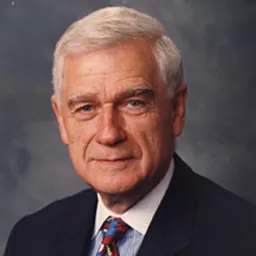
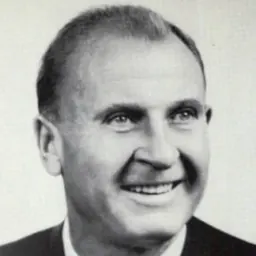
People in Tom McCall's life
Named in this biography and alive at the same time






Related people
Same field, nearest in time




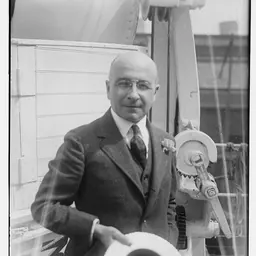
Contemporaries
People whose lives overlapped Tom McCall's

Frequently asked questions
Who was Tom McCall?
American politician (1913-1983)
When was Tom McCall born?
Tom McCall was born on 22 March 1913 in Scituate.
When did Tom McCall die?
Tom McCall died on 8 January 1983 in Portland.
What was Tom McCall's occupation?
Tom McCall was a politician, journalist and governor.
What nationality was Tom McCall?
Tom McCall was American.
Sources & further reading
Cite this page
APA: Biography.guide. (2026). Tom McCall. https://biography.guide/tom-mccall/
MLA: "Tom McCall." Biography.guide, https://biography.guide/tom-mccall/.
Chicago: "Tom McCall." Biography.guide. https://biography.guide/tom-mccall/.
Data last updated: 2026-09-22 · Spot an error? Report a correction.
Portrait: Wikimedia Commons · author & licence
Page generated 2026-09-27 05:02 UTC