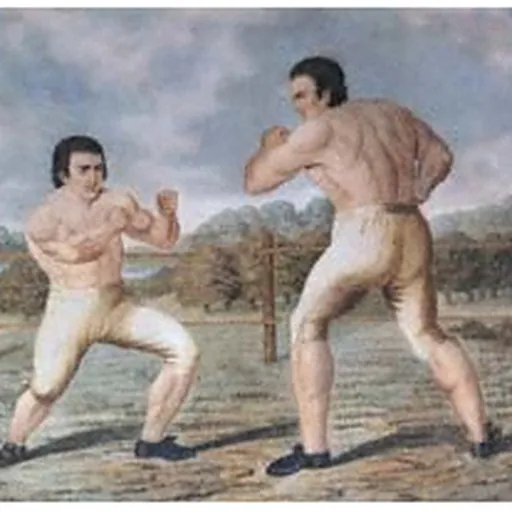
About Tom Johnson
Lived 1750 – 1797 (aged 46–47). Tom Johnson was a British boxer.
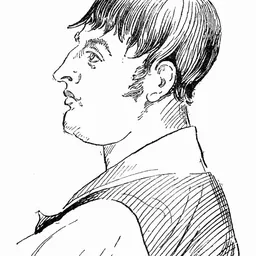
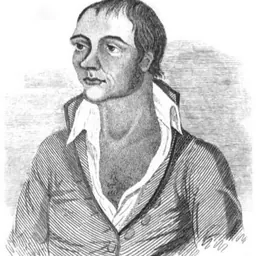
Tom Johnson (born Thomas Jackling; c. 1750 – 21 January 1797) was a bare-knuckle fighter who was referred to as the Champion of England between 1784 and 1791. His involvement in pugilistic prizefighting is generally seen to have coincided with a renewed interest in the sport. Although a strong man, his success was largely attributed to his technical abilities and his calm, analytical approach to despatching his opponents. But Johnson was less prudent outside the ring; he was a gambler and considered by many of his acquaintances to be an easy mark. He is thought to have earned more money from the sport than any other fighter until nearly a century later, but much of it was squandered.
Johnson's first fight probably took place in June 1783 against Jack Jarvis, after he had unintentionally slighted the wagon driver and professional fighter. Jarvis challenged Johnson to fight him as a matter of honour, and was comprehensively beaten in the resulting match. Johnson's success encouraged him to take up the sport professionally. By June 1784 he had declared himself to be the champion, although whether of England or the world is uncertain.
In the later years of his fight career, and for some time after it ended, he acted as a second for other prominent fighters and ran a public house. His dissipation outside the ring appears to have resulted in his decision to leave England for Ireland, where he continued to tutor other boxers but eventually resorted to gambling to earn a living. He died a broken man, both physically and financially.
Johnson was inducted into the Pioneer category of the International Boxing Hall of Fame in 1995.
Life before boxing Tom Johnson was born in Derby, England in about 1750, although Pierce Egan, an early historian of boxing, states that Johnson was born in Yorkshire. His birth name was Thomas Jackling, but he used the name Tom Johnson throughout his fight career.
Johnson moved to London at a young age and spent the next twenty years or so
His selflessness and strength were exemplified during this period by the assistance that he gave to a fellow worker who had become ill. Johnson would carry two sacks of corn on each journey between the wharf and the grain warehouse, rather than the usual single sack, up an incline so steep that it was known as Labour-in-vain-hill. He gave the extra money he earned to the family of the sick man until he was able to return work.
Background to 18th-century prizefighting Prizefighting in early 18th-century England took many forms rather than just pugilism, which was referred to by noted swordsman and then boxing champion James Figg as "the noble science of defence". But by the middle of the century the term was generally used to denote boxing fights only. The appeal of prizefighting at that time has been compared to that of duelling; historian Adrian Harvey says that: Patriotic writers often extolled the manly sports of the British, claiming that they reflected a courageous, robust, individualism in which the nation could take pride. Pugilism was regarded as humane and fair and its practice was presented in chivalrous terms. It was also a symbol of national courage, embodying the worth which Englishmen placed upon their own individual honour. The French, it was argued, did not like pugilism because they were not a free people and relied on the authorities to resolve their disputes. By contrast, the British dealt with their own problems in a straightforward manner, according to established rules of fair play. However, the patronage of the aristocracy and the wealthy ensured that any legal scrutiny was generally benign, in particular because fights could take place on private estates. This patronage also explains why London was the centre for the sport; people of wealth tended to congregate in the city during the winter months and in the summer dispersed to their country estates.
Jack Broughton, a celebrated boxing champion (and another who was also a swordsman), The style of fighting was also very different from modern boxing; the contestants stood facing each other squarely with their feet in line and their fists raised level in front of them, rather than the present-day stance of generally having one foot slightly in front of the other and one fist leading. Brute strength was the primary factor for success and knock-downs were frequent, a consequence of the instability inherent in the positioning of the fighters' feet. Rounds were not timed but instead lasted until a man was knocked down, with fighters permitted to wrestle each other to the ground. Moving around the ring, known as shifting, was deprecated and sometimes explicitly prohibited by the rules for a fight;
Career as a fighter
Early period
Johnson probably began fighting in June 1783, at the age of thirty-three, although Brailsford suggests it was 1781 or slightly earlier.
The final fight of Johnson's early period, during which the stake money was relatively low, was his comprehensive win over a ponderous fighter called Fry for a prize of 50 guineas at Kingston. The fight, which lasted less than 30 minutes, ended with Fry badly beaten up and Johnson with barely a scratch on him. This fight did not attract many supporters of the sport; it took place on 6 June 1786 and was therefore during the period when the wealthy were away from London. A barrel-chested man, He was known for his coolness under pressure and he took time to analyse his opponent's strengths, weaknesses and technique. He did not retreat from the fight but avoided risk and was careful not to expose himself too much to attack, although his guard was described as "inelegant" by Egan. That writer also explained that he "worked round his antagonist in a way peculiar to himself, that so puzzled his adversary to find out his intent, that he was frequently thrown off his guard, by which manoeuvring Johnson often gained the most important advantages." All of this meant that his fights were not usually of short duration; he made certain of the outcome rather than risking anything. (Dennis Brailsford, writing in the Oxford Dictionary of National Biography, and in contradiction to more contemporary accounts, believes that this fight occurred before the one against Fry; he calls Johnson's opponent Will Ward, another name under which Warr fought.) then in Buckinghamshire, on either 18 or 19 December 1787 saw Richard Humphries ("The Gentleman Boxer") acting as Johnson's second and Daniel Mendoza as his bottle-holder. Ryan was the favourite to win before the fight, and he had Johnson reeling against the rails of the ring with a blow to the head after almost 20 minutes had elapsed. Humphries' second stepped in to prevent a second strike and this enraged the crowd because they believed Ryan could continue hitting until Johnson fell to the ground. They encouraged Ryan to declare himself victor as a consequence of this foul but he refused, as he wanted to win by means other than a technicality. He allowed Johnson to recover and then, in the space of the next ten minutes, lost the bout.
A proposed bout later in the same year against Ben Bryan (sometimes known as Ben Brian, Ben Brain or Ben Bryant) came to nothing. Bryan had been a collier in Kingswood, Bristol before moving to London to fight. He was seen as a strong potential challenger, having already won two fights in the provinces and then won against John Boone (known as "The Fighting Grenadier"), a man called Corbally, and Tom Tring. Three of the challenges were accepted, including that from Isaac Perrins to Tom Johnson. Perrins, who has been described as "the knock-kneed hammerman from Soho", had already issued a general challenge, offering to fight any man in England for a prize of 500 guineas, having beaten all challengers in the counties around Birmingham.
The Perrins–Johnson fight took place at Banbury on 22 October 1789, billed as a battle between Birmingham and London as well as for the English Championship. The venue had been intended to be Newmarket during a race meeting but permission could not be obtained. and he was "universally allowed to possess much skill and excellent bottom".
The first five minutes of competition saw neither man strike a blow and then when Perrins tried to make contact Johnson dodged and felled Perrins in return. Although Perrins recovered to hold the upper hand in the first few rounds, Johnson then began to dance around the ring, forcing Perrins to follow in order to make a fight of it. This was the first time in his career that Johnson had found it necessary to resort to this tactic of shifting. Tony Gee has said that
The contestants received 250 guineas each, with Johnson also receiving two-thirds of the entrance takings (after costs) and Perrins receiving the other third. The net takings were £800, and the number of spectators was variously stated as being 3,000 or 5,000. and the words "Strength and magnanimity" in the case of Perrins, and "Science and intrepidity" for that of Johnson. Chaloner has speculated that these may have been produced by Perrins' employers, Boulton and Watt, and says that they bear similarities with the work of a French die maker called Ponthon who was supplying the firm with industrial items from at least 1791. The National Portrait Gallery holds two pictures of the Banbury fight, one an etching published by George Smeeton in 1812, and the other by Joseph Grozer in 1789.
Last fight Ben Bryan now challenged Johnson once more. He had recovered from his previous illness and won a fight at Banbury against Jacombs, another of the Birmingham challengers, on the day after Johnson's victory against Perrins. Brailsford has commented that this dissipation in his personal life was at odds with his cautious, calculated approach when in the prize ring. Jack Anderson, a modern historian of the sport, has summarised the early boxing writers as agreeing the period of Johnson's reign as champion "rescued the declining sport and heralded the beginning of a golden age".
Life after boxing Johnson acted as second to various fighters around the period of his rise and fall. He performed this duty for Tom Tyne ("The Tailor") at Croydon on 1 July 1788 and at Horton Moor on 24 March 1790, having previously done so for a fighter called Savage who had taken on Jack Doyle at Stepney Fields on 22 November 1787. He also acted twice for Humphries, in his fights against Mendoza at Odiham on 9 January 1788, when Mendoza sprained his ankle on the slippery surface, and at Stilton on 9 May 1789. There was much controversy at the latter, with O'Hara reporting that this caused Mendoza's second, a Captain Brown, to call Johnson a blackguard; Johnson responded by threatening "to punch Brown into Eternity." Johnson switched fighters and seconded Mendoza against Humphries at Doncaster on 29 September 1790, and again in a contest against Warr near Croydon in May 1792. Similarly, he acted as second for Hooper when he fought George Maddox at Sydenham Common on 10 February 1794 and for Tom "Paddington" Jones at Blackheath on 10 May 1794. Other occasions when he acted as second include for John Jackson (near to Croydon, 9 June 1788; and against Mendoza at Hornchurch on 15 April 1795), and Joe Ward (at Hyde Park, date unknown).
After his defeat by Bryan he bought and ran a public house, The Grapes, in Duke Street, Lincoln's Inn Fields, London. Retired prizefighters at that time often received the proceeds of a financial collection from their supporters to enable them to buy a licence to operate such premises: "today's fighter was merely tomorrow's publican in waiting". In a 1901 review of sporting prints titled The old and new pugilism, which lamented the passing of the style and the discipline of prize-fighting, "the goal of the successful pugilist was a sporting public house ... they were generally in side or back streets, where the house did not command a transient trade. Most of these sporting "pubs" had a large room at the back or upstairs, which was open one night a week (preferably Saturday), for public sparring, which was always conducted by a pugilist of some note."
The Grapes soon became known as a haunt of gamblers and criminals, which probably lost Johnson his licence to operate the premises. Subsequently he sought wagers at horse race meetings and cockpits, refusing to pay if he lost and instead challenging the victor to a fight. Johnson moved to Copper Alley, Dublin, but had to leave after magistrates determined that his premises were "not proving so consonant to the principles of propriety, as was wished". and was at least a supporter of Jones, on whom he once bet £100 to win a fight. He also taught a man called Simpson, who went on to fight Jones in 1804.
Don’t just read it —
keep it.
Full-length biographies made to live with: read them, listen on the way to work, watch them tonight.
- E-book
- Audio
- Video
Instant download · yours to keep · every purchase keeps this site free
Important facts
People in Tom Johnson's life
Named in this biography and alive at the same time



Related people
Same field, nearest in time


Contemporaries
People whose lives overlapped Tom Johnson's





Frequently asked questions
Who was Tom Johnson?
English bare-knuckle fighter, b. 1750
When was Tom Johnson born?
Tom Johnson was born in 1750 in Derby.
When did Tom Johnson die?
Tom Johnson died on 21 January 1797 in Cork.
What was Tom Johnson's occupation?
Tom Johnson was a boxer.
What nationality was Tom Johnson?
Tom Johnson was British.
Sources & further reading
· DBpedia: Tom Johnson (bareknuckle boxer)
Cite this page
APA: Biography.guide. (2026). Tom Johnson. https://biography.guide/tom-johnson-boxer-1750/
MLA: "Tom Johnson." Biography.guide, https://biography.guide/tom-johnson-boxer-1750/.
Chicago: "Tom Johnson." Biography.guide. https://biography.guide/tom-johnson-boxer-1750/.
Data last updated: 2026-09-23 · Spot an error? Report a correction.
Portrait: Wikimedia Commons · author & licence
Page generated 2026-09-27 05:07 UTC