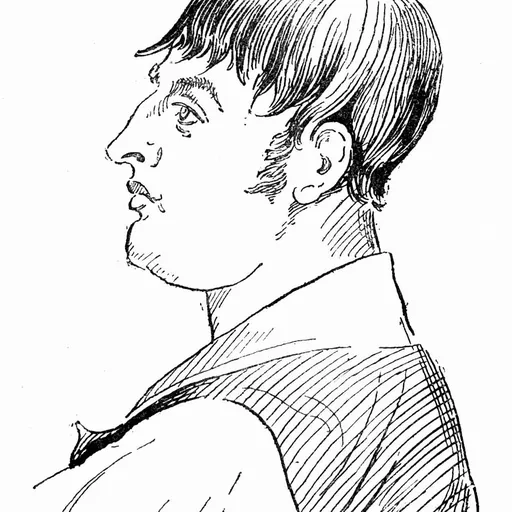
About Paddington Tom Jones
Lived 1766 – 1833 (aged 66). Paddington Tom Jones was a British boxer.
Early life Jones was born in Paddington, London 'about the year 1766', from whence came his ringname, Tom «Paddington» Jones.
In his early boxing career he came under the eye of boxer Tom Johnson, who recognized his early talent and helped develop his boxing skills.
Throughout his boxing career, Jones acted as Master of Ceremonies at London's Fives and Tennis Courts, frequent boxing exhibition venues, where he hosted and helped plan the bills.
Bare-knuckle boxing career In a period before the introduction of formal weight-based categories Jones was informally considered a lightweight (although in modern parlance would be considered a welterweight, a designation which did not exist at the time Jones fought). He was tall for his weight, with a hard, slim appearance, and had a narrow face with a long aquiline nose. He is credited with having fought more bouts and seconded more pugilists than any boxer of his day. He fought several notable bare-knuckle boxers of his day, including Caleb Baldwin, and Jem Belcher.
Boxing highlights 1785-86 The noted early boxing Pierce Egan notes that the early 'trifling skirmishes of [Tom Jones] are too numerous to be noted'. Jones' first significant fight (i.e fought for stakes) was against Ned Holmes in 1785, at Paddington Fields, for a mere half a crown, which Jones lost. Jones was but an inexperienced youth, and Holmes a full grown man, and Jones could not pull out a victory.
He fought three battles against the one-eyed Sailor in February 1786 for 10, 5, and 7 guineas at London's Hyde Park.
Jones fought Ned Holmes for a second time on 19 December 1786 for stakes of a guinea and a half. This time Jones Jones vanquished the older man in an easy victory.
Boxing highlights 1787-92 Sometime in 1786 or 1787, Jones fought a boxer named Aldridge, for a stakes of 2 guineas on one side against a watch on the other. Aldridge was a Life-guardsman, a member of the British army who traditionally guarded the Monarch. Showing greater stamina than his opponent, Jones won the 60 round match at Marylebone, on 19 December 1787. Aldridge had bragged of his skills at Tom Johnson's house, and had the boxer Joe Ward match him with Paddington. Ward acted as second, and some of the best boxing talent in London witnessed the intrepid Jones pull off a victory that brought him considerable attention in boxing circles.
Match with Caleb Baldwin
On 14 May 1792 he fought Caleb Baldwin for a purse of £20 at Smitham Bottom (a remote location about 13 miles south of London in the area now known as Coulsdon on the outskirts of Greater London). The battle was fought on the same constructed stage on which the great Daniel Mendoza had earlier fought Bill Warr for the English Championship. After the Jones-Baldwin fight ended after 30 minutes a dispute arose as Baldwin believed he had won the match, but the onlookers believed it was correctly to be considered a draw.
Boxing highlights 1794-1799 Jones fought the Jewish boxer Keely Lyons on 10 May 1794 at Blackheath, for 20 guineas. Former champion Tom Johnson served as Jones' second. The contemporary report states that 'it was a well-contested battle, in which much science and bottom were displayed on both sides; but in the event Jones proved the conqueror'. The two boxers fought again on 22 June 1795 at Hounslow. On this occasion Jones won again, in 9 rounds, 16 minutes.
In August 1795 Jones fought Harris the Spaniard in a match at Lansdowne, Bristol on 12 August 1795. After 20 minutes, Harris bolted with the purse, ending the fight and 'leaving Jones and Co, lamenting'.
Bout against Jem Belcher, 1799
On 12 April 1799, Jones lost to the future English champion Jem Belcher in seventeen rounds (lasting thirty-three minutes). The fight was for a purse of £50 and was held at Old Oak Common Wormwood Scrubbs, then some distance west of London. Jones had as his seconds Joe Ward and Dick Hall. It was Belcher's first fight in a London ring. Belcher was only 19 and Jones was a more experienced 30. However, Belcher outweighed Jones by about 2 stone (174lb vs 145lb). The contemporary report of the fight in Boxiana reads as follows:
[In] the first round considerable science was displayed on both sides - the experience and skill of Jones were well portrayed: and the dexterity and new mode of fighting, so exclusively Belcher's own, was soon exhibited, but on the termination of the round Belcher was knocked down. The advantages in the second and third round were perfectly reciprocal; but in the fourth and fifth Jones was levelled. In the sixth and seventh rounds Jones showed off in most excellent style - and the amateurs [i.e. spectators] experienced some of the finest displays of the art. [...] It was a clean fight throughout [...] and it might be deemed a model for pugilists in general to follow. [...] The eight and ninth were spiritedly contested, but in the tenth round Belcher put in some tremendous hits, with the rapidity of lightning. This immediately altered the appearance of things [...] Yet Jones nobly contested for victory for the space of thirty-three minutes before he gave in. Bitton was apparently a much larger man than Jones. Jem Belcher, by this time English champion, served as Jones' second in this bout.
In March 1802 Jones fought George Nicholls for stakes of 20 guineas a side at Norwood (currently in South London, but at the time a rather remote rural location). Nicholls had previously refused to fight Jones in 1798, stating that Jones was too tall. Boxiana records the 1802 encounter as follows:
Three rounds were well contested, and considerable science was displayed, but in the fourth Nicholls ran furiously in, and getting his head between Jones's legs, and catching fast hold of both his ankles, threw Tom with considerable violence - this was deemed an infringement upon the articles and completely deviated from the rules of pugilism
Jones fought Simpson for 10 guineas a side, in a well-fought fight lasting 10 rounds, at Edgware Road, near London in June 1804. Simpson had been a pupil of Jones's mentor Tom Johnson.
Late career as boxing attendant Puglistica noted that 'No man appeared oftener in the character of a second than Tom Jones, and few understood that duty better than himself'.
Jones style of boxing The contemporary source Boxiana described Jones as a highly skilled and courageous boxer who trained several successful students. He possessed a strong, protective defensive stance, keeping his left arm extended to block incoming attacks while remaining ready to counter quickly with his right. He struck with significant power, demonstrated ambidexterity, maintained solid footwork, and showed resilience against opponents. His fighting stances were visually disciplined and highly effective for delivering impactful blows. supplemented by additional data from Boxiana (1830) and Pugilisitica (1906). Sources are sometimes contradictory, so some details show two different possibilities.
Loss Ned Holmes 1785 Paddington Fields, London Unknown Half a crown Win George Stringer 1785 or 1786? Paddington Fields Unknown 5 guineas a side Win Jem Smith 1785 or 1786? Lissom Green, Paddington Unknown 12 guineas Win One-eyed Sailor Feb 1786 Hyde Park, London Unknown First fight, 10 guineas Win One-eyed Sailor Feb 1786 Hyde Park, London? Unknown Second fight, either 10 or 7 guineas Win One-eyed Sailor Feb 1786 Hyde Park, London? Unknown Third fight, 5 guineas Win Ned Holmes 19th Dec 1786 Harley Fields, nr Portland Place Unknown a guinea and a half Win Jack Aldridge, the Lifeguardsman 19 Dec 1787 Paddington Fields, Marylebone Fields or Harley Fields 60 rounds (or 15 minutes, sources differ) Fought for 2 guineas vs a watch (or 6 guineas a side, sources differ) Win Jack Blackwell 1788? Harley Fields Unknown 10 shillings Win Tom Burley 1788? Harley Fields Unknown 10 shillings
Caleb Baldwin* 14 May 1792 Smitham Bottom, Coulsdon 30 mins Purse of £20 Win Dick Horton soon after 14 May 1792 The Ring, Hyde Park Unknown 20 guineas Win Abraham Challice 5th Sept 1792 Bentley Green, Colchester 15 mins Subscription purse of 30 guineas Win Keeley Lyons 10 May 1794 Blackheath 10 mins 20 guineas Win Keeley Lyons 22 June 1795 Hounslow 9 rounds, 16 minutes 10 guineas
Spaniard Harris 12 Aug 1795 Lansdown Bristol 20 minutes Harris ran off with the purse Win The Chaffcutter 6th Apr 1797 Two Waters, Herts 22 rounds, 38 mins 4 guineas Loss Jem Belcher* 12 Apr 1799 Old Oak Common, Wormwood Scrubs 17 rounds, 33 mins 25 guineas a side Loss Isaac Bitton 31 July 1801 Wimbledon Common 4 rounds Lost purse of 40 guineas
George Nicholls March 1802 Norwood Common 4 rounds, ended in dispute 20 guineas a side Win Simpson June 1804 Putney Green or Edgware Road 10 rounds 10 guineas a side Win Lyons the Yokel Jew Aug 6th 1805 Hounslow or Blackheath Unknown 10 guineas a side
Honors Jones was elected to the International Boxing Hall of Fame in 2010.
Don’t just read it —
keep it.
Full-length biographies made to live with: read them, listen on the way to work, watch them tonight.
- E-book
- Audio
- Video
Instant download · yours to keep · every purchase keeps this site free
Important facts
People in Paddington Tom Jones's life
Named in this biography and alive at the same time


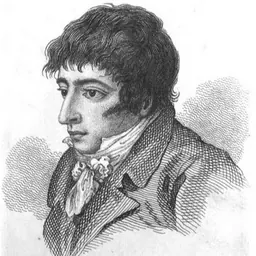


Related people
Same field, nearest in time


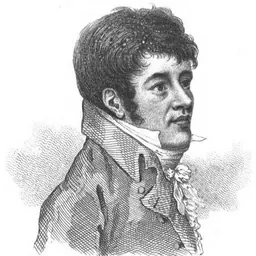
Contemporaries
People whose lives overlapped Paddington Tom Jones's





Frequently asked questions
Who was Paddington Tom Jones?
British boxer
When was Paddington Tom Jones born?
Paddington Tom Jones was born on 18 November 1766 in Paddington.
When did Paddington Tom Jones die?
Paddington Tom Jones died on 22 August 1833 in Paddington.
What was Paddington Tom Jones's occupation?
Paddington Tom Jones was a boxer.
What nationality was Paddington Tom Jones?
Paddington Tom Jones was British.
Sources & further reading
· Wikipedia: Paddington Tom Jones
· DBpedia: Paddington Tom Jones
Cite this page
APA: Biography.guide. (2026). Paddington Tom Jones. https://biography.guide/paddington-tom-jones/
MLA: "Paddington Tom Jones." Biography.guide, https://biography.guide/paddington-tom-jones/.
Chicago: "Paddington Tom Jones." Biography.guide. https://biography.guide/paddington-tom-jones/.
Data last updated: 2026-09-20 · Spot an error? Report a correction.
Portrait: Wikimedia Commons · author & licence
Page generated 2026-09-27 04:58 UTC