
Tom Gola
American basketball player and politician
About Tom Gola
Lived 1933 – 2014 (aged 81). Tom Gola was an American basketball player, basketball coach and politician.
Thomas Joseph Gola (January 13, 1933 – January 26, 2014) was an American basketball player and politician. Gola was inducted into the Naismith Memorial Basketball Hall of Fame in 1976 and the National Collegiate Basketball Hall of Fame in 2006. He is widely considered one of the greatest NCAA basketball players of all time, playing four years with the La Salle Explorers (1951 to 1955). Gola was a consensus first-team All-American for three consecutive years. He has held the record for the most total rebounds in NCAA history since 1955, and was the first college player to have over 2,000 points and 2,000 rebounds in a career. Gola was the Helms Foundations College Basketball Player of the Year in 1954, and the United Press Player of the Year in 1955, as well as being the highest vote recipient for the Associated Press' 1955 All-America Team. He was selected the most valuable player in the 1952 National Invitation Tournament and the 1954 NCAA basketball tournament.
Professionally, Gola spent his most productive seasons with the Philadelphia Warriors of the National Basketball Association (NBA), where he averaged a double-double three consecutive seasons and was an NBA All-Star three consecutive seasons; as well as being named to the second-team All-NBA. He was also named an All-Star twice more while playing for the New York Knicks.
Gola led his high school team to the Philadelphia Catholic League championship; his college team to the National Invitation Tournament championship and the NCAA championship; and was on the 1956 Philadelphia Warriors championship team, all in the space of six years. He is one of only two players to win NIT, NCAA, and NBA championships.
Gola was also involved in politics. In 1966, he was elected to Pennsylvania's House of Representatives and was re-elected in 1968. Before finishing his second term, in 1969 Gola won election as the City Controller of Philadelphia. He was unsuccessful in his 1973 re-election effort for that office. In 1980, he was the Philadelphia chair of Ronald Reagan's presidential campaign, and in 1981 he was appointed as regional administrator of the U.S. Department of Housing and Urban Development. He lost in the 1983 Republican primary for Mayor of Philadelphia.
Early life Thomas Joseph Gola was born on January 13, 1933, in Philadelphia, Pennsylvania, the third of seven children born to Ike and Helen Gola. Gola's father was a Philadelphia policeman of Polish descent who had changed the family's surname from "Galinsky". Gola was praised as a great all-around player as a high school student at La Salle College High School, part of the Philadelphia Catholic League, where he was second-team All-Catholic League in 1949, and first-team in 1950 and 1951. He led the Explorers to a Philadelphia Catholic League Championship in 1950. He also won the Markward Award as the Catholic League's top player (future basketball Hall of Fame coach John Chaney won the Philadelphia Public League Award the same year). Arizin, ironically, had been cut from the La Salle high school team.
College career Gola was one of the most talented collegiate athletes in Philadelphia sports history, He came to national attention while playing for his hometown La Salle University Explorers men's basketball team (1951 to 1955). When Gola received the Helms Foundation Player of the Year Award in 1954, it was written that Gola was "regarded by many basketball experts as the finest all-around player ever developed in the college ranks".
Gola has been reported at 6 ft 6 in (1.98 m) 205 lb (92.98 kg) or 6 ft 7 in (2.01 m) 207 lb (93.89 kg) as a college player. He would typically defend the opposing team's best offensive player, He led La Salle to the 1952 National Invitation Tournament (NIT) championship, played in Madison Square Garden.
Gola had 30 points in La Salle's upset of Seton Hall in the tournament's first round. Gola then had a low-scoring game against a St. John's team that was focused on stopping him, but La Salle won because St. John's committed 42 personal fouls during the game. La Salle upset Duquesne in a similar manner where the defense collapsed on Gola holding him to 10 points, but leaving other players open to score. Gola led La Salle with 22 points in winning the championship game over Dayton, 75–64.
After the end of the NCAA season, in April 1952 Gola was selected as the first college alternate on the 1952 U.S. men's Olympic basketball team. Grekin was also named as an college alternate.
As a sophomore (1952–53), Gola led the Explorers with 18.5 points and 15.5 rebounds per game. He was a consensus first-team All American. La Salle was 23–5 that season, beginning the season ranked No. 1 by the Associated Press (AP) and ending ranked No. 6. La Salle lost to St. John's in the first game of the 1953 NIT Tournament, 75–74, at Madison Square Garden. Gola went into the game with an injured ankle and played only 3½ minutes in the first half. Gola played full out in the second half. He scored 17 points in the game in helping La Salle come back from a 13-point deficit to tie the game at 74–74 with less than one minute to play; before losing by one point.
Gola had an extraordinary junior season. He averaged a double-double of over 20 points and 20 rebounds per game (23 points per game and 21.7 rebounds per game). He led the NCAA in total rebounds (652). The 652 total rebounds set a new collegiate record. The AP, United Press, Newspaper Enterprise Association (NEA), and International News Service (INS) also selected Gola as a first-team All-American. He was a consensus first-team All-American for the second consecutive season. La Salle then defeated North Carolina State at the Palestra in Philadelphia, 88–81. Gola had 26 points, 26 rebounds, and six assists. La Salle played Navy the next night, winning 64–48. Gola had 22 points, 24 rebounds, and four assists. La Salle met Penn State in the Final Four, winning 69–54. Gola had 19 points and 17 rebounds.
Gola had 19 points and 19 rebounds in the 1954 NCAA title game against Bradley, with La Salle winning that national championship game, 92–76. This was the first NCAA championship game to be nationally televised. Gola was selected as the tournament's Most Valuable Player and was the only unanimous choice for the All-Tournament Team. Gola averaged 22.8 points per game in the tournament and over 20 rebounds per game. In addition to his scoring, the Associated Press praised Gola's "needle–threading passes, rebounding and quarter-backing".
Before the tournament, the AP had never ranked La Salle higher than sixth nationally that year. After winning the NCAA championship, the AP ranked La Salle No. 2 at the end of the season, behind the undefeated University of Kentucky Wildcats who had been ranked first or second the entire year. Kentucky had withdrawn from playing in the 1954 NCAA tournament because its three best players were graduate students who would have been forbidden from playing in the tournament.
As a senior (1954–55), Gola averaged 24.2 points and 19.9 rebounds per game, and typically was assigned to defend an opposing team's star offensive player. For the second consecutive season he led the NCAA in total rebounds (618). The United Press named Gola the College Basketball Player of the Year, In announcing Gola as player of the year, the United Press called Gola "basketball's master craftsman who has been lauded by many as the outstanding college star of all time". 24 points and 24 rebounds in the 73–46 win over Princeton, 30 points, 25 rebounds, and five assists in the 99–64 win over Canisius, and 23 points and 13 rebounds in La Salle's 76–73 win over Iowa. La Salle lost to the Bill Russell, K. C. Jones, and the University of San Francisco in the 1955 NCAA championship game, 77–63. Gola had 16 points and 18 rebounds, while Russell had 23 points and 25 rebounds. This was the only one of Gola's ten NCAA tournament games he would lose.
Russell's 118 point total in the 1955 tournament broke the 114 point record Gola set a year earlier. Russell was the 1955 tournament's Most Valuable Player, and he and Gola were the only two unanimous selections for the 1955 NCAA All-Tournament Team, which also included Jones. La Salle finished the season ranked No. 3 by the Associated Press.
In his two years of NCAA tournament play, Gola scored 229 points in ten games. In his four years at La Salle, over 118 games, he scored 2,461 points, and averaged 20.9 points and 18.7 rebounds per game, with a .407 shooting percentage and .745 free throw percentage. Gola is the NCAA all-time rebounding leader with 2,201 career rebounds (through 2025–26). His 2,461 career points was a La Salle record for over 20 years, and is now third best in school history (through 2025–26). He holds the La Salle records for free throw attempts (267) and free throws made (202) in a single season (1954–55), and for total rebounds (652) and rebounding average (21.7 rebounds per game) in a single season (1953–54). Gola's 26 rebounds against North Carolina State during the 1954 NCAA tournament remains a school single game record. He was the first college player to score over 2,000 points and have over 2,000 rebounds. His La Salle teams were 102–19. He gained praise for concentrating on defense, passing and rebounding and allowing the other two to be the chief scorers during his time playing with them. It was Gola's job to defend against the other team's best guard, and to be a playmaker on offense for his teammates. As a rookie, Gola averaged 34.5 minutes, 10.8 points, 9.1 rebounds, and 5.9 assists per game. He was seventh in the voting for the NBA's Most Valuable Player.
In April 1956 Gola was called up as a draftee to serve in the United States Army. There was some thought at the time he might receive a deferral because of his height but this was not the case. He served from 1956 to 1958, and he did not play in the 1956–57 NBA season. Gola played in 59 games during the 1957–58 season. He averaged 13.8 points, 10.8 rebounds, and 5.5 assists per game. In 1958–59, he played in 64 games, averaging 36.5 minutes, 14.1 points, 11.1 rebounds, and 4.2 assists per game. Gola led the Warriors in assists in the 1957–58 and 1958–59 seasons, and was second-team All-NBA in 1957–58.
Johnston retired after playing only 29 games in the 1958–59 season, due to a knee injury. The Warriors drafted seven-foot future Hall of Fame superstar center Wilt Chamberlain in the 1959 draft. Chamberlain was the NBA Rookie of the Year and Most Valuable Player in the 1959–60 NBA season, averaging 37.6 points and 27 rebounds per game. Gola averaged a double-double for the third consecutive season, 15 points and 10.4 rebounds per game, as well as 5.5 assists per game. During the 1959–60 season, Gola became the first Warrior to have three straight games with a triple-double (the only other being Draymond Green, 2016). On January 10, 1960, Gola recorded 18 points, 19 rebounds and 11 assists in a 116–103 win over the New York Knicks.
The Warriors had a 49–26 record. The Warriors lost the 1960 Eastern Division finals to the Boston Celtics in six games. Gola averaged 13.2 points, 8.3 rebounds, and 5.2 assists per game in that series.
The following season (1960–61), Gola was again named an All-Star. He averaged 14.2 points, 9.4 rebounds, and 3.9 assists for the Warriors, who had a 46–33 record. Syracuse beat the Warriors in three games in the 1961 NBA playoffs, with Gola averaging 9.7 points, 12.3 rebounds, and five assists per game. Gola was an All-Star again in the 1961–62 season (though he could not play in the 1962 NBA All-Star Game due to injury). During the regular season, Gola averaged 13.7 points, 9.8 rebounds, and 4.9 assists per game.
The Warriors lost the 1962 Eastern Division playoff finals to the Celtics in seven games. Gola suffered from both a back injury and ankle injury during the series, missing three of those games completely. It was doubtful he would play again after suffering the ankle injury in Game 4, but he came back in Game 7, playing 38 minutes in the Warriors' 109–107 loss; with 16 points and eight rebounds.
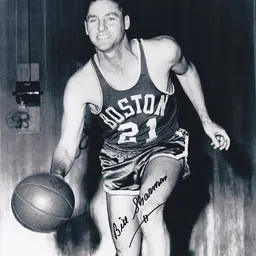
Gola played in 471 regular season games for the Warriors, averaging 37.2 minutes, 13.6 points, 9.9 rebounds, and 4.9 assists per game. He played in 39 playoff games for the Warriors, averaging a double-double (11.1 points and 10 rebounds per game), along with 4.6 assists per game. They could not beat the Boston Celtics in the NBA Eastern Division finals in 1960 and 1962, however, even with Chamberlain. Those Celtics teams included Hall of Fame players Bill Russell, Tom Heinsohn, Bob Cousy, Bill Sharman, Frank Ramsay, Sam Jones, K. C. Jones, and Tom "Satch" Sanders.
New York Knicks (1962 to1966) The Warriors moved to San Francisco before the start of the 1962–63 season. In early December, the Warriors traded Gola to the last-place New York Knicks for Willie Nauls and Ken Sears. At the time, the Knicks were struggling in all aspects and believed Gola could help improve the Knicks in a variety of areas. Gola was also a fan-favorite in New York because of his successes as a college player in Madison Square Garden. Gola was later selected to the Madison Square Garden Hall of Fame and All-Time Team. He played in 52 games for the Knicks in 1962–63, averaged 12 points, 7.1 rebounds, and 4.3 assists per game, and was named to the All-Star team for the fourth consecutive season.
Gola played three more seasons with the Knicks (1963 to 1966). Gola still made his home in Philadelphia, and the trade brought him closer to his family. In the 1963–64 season, Gola was named an All-Star for the fifth consecutive season. He averaged 29.1 minutes per game and led the Knicks in total assists that year. In his final NBA season (1965–66), Gola played in 74 games, averaging 15.2 minutes per game as a reserve.
During his NBA playing career, Gola averaged a double-double for three consecutive seasons (1957 to 1960), and was named an All-Star five times. Over his career, Gola averaged 32.3 minutes, 11.3 points, eight rebounds and 4.2 assists per game.
Honors Gola was enshrined in the Naismith Memorial Basketball Hall of Fame on April 26, 1976. Gola was inducted into the La Salle Hall of Athletes in 1961 and the Big 5 Hall of Fame in 1986. In 1977, Tom Gola was inducted into the National Polish American Sports Hall of Fame. He was in the inaugural class of Atlantic Ten Legends. 1953, 1954, 1955 ). In 1955, he was the only unanimous selection on the Associated Press' Pennsylvania All-State college team.
Tom Gola Plaza
Tom Gola Plaza, located outside of TruMark Financial Center, features a statue honoring Tom Gola surrounded by a brick walkway with names of donors to the men's basketball team, lights, benches, a small garden, and a historical marker. The Plaza was opened on September 26, 2024, to continue the legacy of Gola after his name was no longer connected to the home of the Explorers.
Tom Gola Way The driveway in front of TruMark Financial Center was renamed Tom Gola Way in 2024 to honor his legacy.
Political career In 1966, Gola was elected to the Pennsylvania State House of Representatives as a Republican, representing the newly created Northeast Philadelphia-based 170th District. He won re-election in 1968, even though Democrats prevailed in taking the majority of Pennsylvania House seats that year. A change to the State Constitution made earlier that year had reorganized House seats into legislative districts, replacing the old system of allotting seats on an at-large, county-wide basis. This made Gola the first person to represent the newly created district.
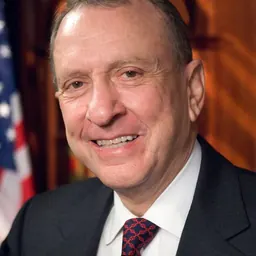
Ultimately, Gola would not finish-out his second term in the House, opting instead to seek the office of Philadelphia City Controller in 1969, and winning that office. Gola was defeated, however, in his bid for a second term in 1973 by Democrat William Klenk. His defeat was part of a broader setback for Republicans in the city that year, as Arlen Specter lost his bid for a third term as District Attorney of Philadelphia.
Gola was the Philadelphia chair of Ronald Reagan's 1980 presidential campaign, and was appointed by Reagan to be regional administrator of the United States Department of Housing and Urban Development in 1981.
Personal life Gola was married to Caroline Norris in June 1955, and they had one son, Thomas Christopher. Gola died on January 26, 2014, thirteen days after his 81st birthday, in Meadowbrook, Pennsylvania.
NBA career statistics
Regular season
Playoffs
Head coaching record
‡ Ineligible for any postseason tournaments
Don’t just read it —
keep it.
Full-length biographies made to live with: read them, listen on the way to work, watch them tonight.
- E-book
- Audio
- Video
Instant download · yours to keep · every purchase keeps this site free
Important facts
People in Tom Gola's life
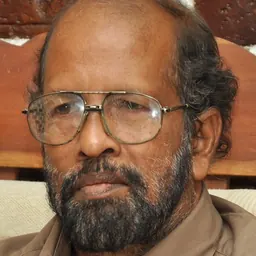
Named in this biography and alive at the same time




Related people
Same field, nearest in time

Contemporaries
People whose lives overlapped Tom Gola's




Frequently asked questions
Who was Tom Gola?
American basketball player and politician (1933-2014)
When was Tom Gola born?
Tom Gola was born on 13 January 1933 in Philadelphia.
When did Tom Gola die?
Tom Gola died on 26 January 2014 in Philadelphia.
What was Tom Gola's occupation?
Tom Gola was a basketball player, basketball coach and politician.
What nationality was Tom Gola?
Tom Gola was American.
Sources & further reading
Cite this page
APA: Biography.guide. (2026). Tom Gola. https://biography.guide/tom-gola/
MLA: "Tom Gola." Biography.guide, https://biography.guide/tom-gola/.
Chicago: "Tom Gola." Biography.guide. https://biography.guide/tom-gola/.
Data last updated: 2026-09-27 · Spot an error? Report a correction.
Page generated 2026-09-27 05:16 UTC