
About Tom Cole
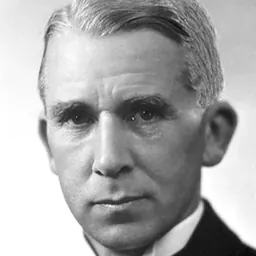
Lived 1922 – 1953 (aged 31). Tom Cole was a British and American racing automobile driver.
Tom Cole and navigator Mario Vandelli, in Cole's Ferrari 340 MM at the 1953 Mille Miglia.
Thomas Lionel Howard Cole Jr. (11 June 1922 – 14 June 1953), also known as Tom Cole or Tommy Cole, was a British-American racing driver and co-creator of the Cadillac-Allard sports car. Afflicted by childhood polio, he served in non-combat roles in World War II, and then took up rallying, hillclimbing, and sports car racing full-time after the war. He died, aged 31, in a crash while driving in the 1953 24 Hours of Le Mans.
Early life Cole was born in Llandaff, in South Glamorgan, Wales, U.K. on 11 June 1922. He contracted polio in childhood, and largely recovered, but the illness left him with minor disabilities, for the rest of his life. His family emigrated to America when he was seventeen arriving in New York City on 28 August 1939. He attended Harvard University for a year, served in the U.S. Merchant Marine and then drove an ambulance for the American Field Service. Following this, he tuned his litre Jaguar SS100 for hillclimbs and sportscar races. In July, he raced the car at Gransden Lodge Airfield but it blew up on the first lap. In September, he drove it to second in class in the Brighton Speed Trials and made his first appearance in the Prescott Speed Hill Climb.
Cole returned to Prescott in June 1948 and recorded the fastest time in his class, a feat he would repeat at the July meeting. He placed second in class at the Boscombe Speed Trials in August before returning to Prescott in September for a third class victory, this time in very wet conditions.
Cole then brought his Jaguar and an HRG 1500 to the United States, racing first at the 1949 Bridgehampton Sports Car Races, held on June 11 of 1949. Bridgehampton founder Bruce Stevenson recalled that "Tommy Cole was well known to all as a gentleman... charmingly forgetful of his passport, his wallet, his helmet and the unimportant details of daily life. But in a thrilling exhibition of driving skill, he piloted the Jaguar to second place using only one hand on the controls—the other was occupied holding the battery in position!" He drove his HRG 1500 to fifth place in the 1500cc heat, then drove his Jaguar to second behind George Huntoon's Alfa Romeo 8C in the 100 mile event. In September, he raced the HRG at the Watkins Glen Grand Prix to fifth in the supporting Seneca Cup and fourth in the feature race, winning his class in both.
Cad-Allard years The Cadillac-Allard J2 in which Cole finished third at the 1950 24 Hours of Le Mans, photographed at the 2006 Monterey Historics, Laguna Seca. Cole's ability soon exceeded the potential of the Jaguar and he approached Bill Frick, of Frick-Tappet Racing, to see if the car could accommodate a Cadillac engine. It would not so he imported an Allard J2 from England through his father's shipping company and installed the engine into this car instead. The Cadillac-Allard J2, or Cad-Allard, fused a lightweight chassis and modern suspension system with a large powerplant, and would achieve considerable international success. Cole is credited with its creation. In May, he won the heat race for the Heart Trophy at Suffolk County Airport and led the feature, but suffered a cracked rear wheel and finished second behind Briggs Cunningham. He took his first major race victory at Bridgehampton Sports Car Races in June, leading flag to flag and setting the fastest lap. The same month, he raced a Cad-Allard at Le Mans with marque founder Sydney Allard, placing third overall despite only having top gear for most of the race. The car was permitted to race as a prototype given that few units had been sold at the time. In July, he competed in the Leinster Trophy but retired. In September, he returned to the Watkins Glen Grand Prix; he slid off track from pole but Erwin Goldschmidt won in a Cad-Allard. Cole partnered with Goldschmidt for the inaugural Sebring 6 Hours in December; the latter wrote to Motor Sport hailing the Cad-Allard as one of the greatest sportscars of 1950, even above the Jaguar XK120 that had been so successful on the Continent.
Cole damaged his Cad-Allard in a crash. His friend and racing patron, John Perona, offered him a Chrysler Hemi powered Allard for the 1951 Buenos Aires Grand Prix. Due to the engine's massive torque, the car suffered from transmission problems during practice and the race. John Fitch won, ironically driving Cole's Cad-Allard which he had borrowed and repaired. His adventure in Argentina did not end there, as shown in a letter he wrote to his friend Vic Franzese (owner of the Glen Motor Inn in Watkins Glen, New York north of Elmira): "He was in a light plane that had crashed in the jungle. The pilot had a .45 handgun and a knife. They survived eating snakes. It took them two weeks to find civilization in Brazil. They were found by the natives." He returned with Sydney Allard to Le Mans in a Cad-Allard, retiring with clutch problems around the 12-hour mark. He won the sportscar class in a Chrysler-Allard at the Leinster Trophy and set a sportscar lap record at the event, lapping the Wicklow Circuit at an average speed of . He travelled to the Targa Florio but did not compete, and did not get back in time to take up his entry for the Tourist Trophy at Dundrod.
European racing campaign Cole (left), standing next to the Ferrari 225 S owned by his co-driver "Pagnibon" at the 1952 24 Hours of Le Mans. In March 1952, Cole took second place in the Vero Beach 12 Hour Endurance Road Race. He was surrounded by Ferrari drivers on the podium. That summer he launched his European racing campaign at Le Mans, with a Ferrari 225 S, serial number 0152EL, belonging to his co-driver "Pagnibon" but entered by Scuderia Ferrari. They ran as high as 15th before retiring with ignition issues. Shortly after, he purchased his own Vignale bodied 225 S, serial number 0194ET. and the Dolomites Gold Cup Race (15th overall). August saw Cole return to Britain with his Ferrari. He took part in the Daily Mail International Festival at the Boreham Circuit, finishing fifth in the S+2.0 race despite fading brakes. A fortnight later, he partnered Graham Whitehead in the inaugural Goodwood Nine Hours, finishing second in a race of high attrition despite again suffering fading brakes. His Ferrari was photographed during this race and featured on the cover of Motor Sport in September 1952. Cole followed this up with second place at the Bari Grand Prix.
Cole leaves the Ferrari factory in Modena in his Ferrari 340 MM, restyled in North American racing colours, 20 May 1953. In 1953, Cole returned to Europe and purchased a 340 MM Vignale; the car's serial number was 0284AM. He sold the 225 S to Ecurie Francorchamps. He drove to second place in the sportscar race supporting the BRDC International Trophy in early May.
The same year, Cole began a foray into single-seater racing with the Atlantic Stable team. He made his debut in March in the Syracuse Grand Prix driving a Cooper T23, only for a burst tyre to cause his car to crash and burst into fire. At the International Trophy, he entered the main Formula Two race in addition to the sportscar race, driving a Ferrari 500. In Heat 1, he collided with Joe Kelly and later ran out of power in a separate incident, but finished the heat in 15th. He did not feature in the final, presumably unable to fix the issue with his car. Cole focused on single-seaters for the rest of May. Back in a T23, he was a reserve entry for the Ulster Trophy and Coronation Trophy but did not compete, and reached his first and only single-seater finish at the Grand Prix d'Albi, coming home 7th despite a broken gear-change forcing him to coast into most corners in neutral.
Cole returned to sportscars for June. Staying in France, he partnered with Peter Whitehead to a victory in the rainy French International in Whitehead's Jaguar C-Type. However, the event was marred by the fatal accident of his Le Mans co-driver "Pagnibon".
Death at Le Mans
On 13 June 1953, Cole started his fourth Le Mans in his 340 MM, this time co-driven by Luigi Chinetti. The race started well, with the car running as high as third during the first three hours, but it had fallen to sixth by the fourteenth hour as morning broke in fog. Cole began a charge, unusual for this phase of the race and for the conditions, and was catching the fifth-placed car of Peter Whitehead by 10 to 20 seconds per lap. At 6:14 a.m., Cole lost control passing a slower car at Maison Blanche. The Ferrari hit a bank and demolished a wooden hut. Cole was ejected from the car and died instantly from his injuries.
Cole had previously expressed his wish that, if he were killed during a motor race, he should be buried near the venue. He was interred at the Le Mans West Cemetery in accordance with this wish. and his Ferrari at the 1952 Targa Florio was painted in North American racing colours (the FIA required cars to be painted in their drivers' national colours).
Legacy Since 2016, the VSCC has hosted an annual race for 1950s sportscars known as the Tom Cole Trophy.
Racing record
Career highlights
Season Series Position Team Car 1949 Bridgehampton 100 Mile 2nd Tom Cole Jaguar SS100 1950 Bridgehampton Sports Car Races 1st Allard-Cadillac J2 Heart Trophy 2nd T. L. H. Cole Allard-Cadillac J2 24 Heures du Mans 3rd S. H. Allard Allard-Cadillac J2 1951 Bridgehampton Sports Car Races 1st John Perona Allard-Chrysler J2 Bridgehampton 100 Mile 1st John Perona Allard-Chrysler J2 1952 Second Annual Florida Handicap Vero Beach Endurance Road Race 2nd John Perona Allard-Cadillac J2, the Cole-owned car that won both Bridgehampton in 1950 and the Argentine Sports Car Grand Prix in 1951, driven by John Fitch. The car had been modified for endurance racing by noted race mechanic Jim McGee and had been entered in both the 1952 Vero Beach and Sebring events. Transmission damage suffered at Vero Beach resulted in a DNS at Sebring. Goodwood Nine Hours 2nd Tom Cole Ferrari 225 S Gran Premio di Bari [S+1.1] 2nd Tom Cole Ferrari 225 S 1953 12 heures d'Hyères 1st P. N. Whitehead Jaguar C-Type Silverstone International 2nd Atlantic Stable Ferrari 340 MM Spyder Vignale
Complete 24 Hours of Le Mans results Year Team Co-Drivers Car Class Laps 1950 S. H. Allard Sydney Allard Allard-Cadillac J2 S8.0 251 3rd 1st 1951 S. H. Allard Sydney Allard Allard-Cadillac J2 S8.0 134DNF(Gearbox) 1952 Scuderia Ferrari "Pagnibon" Ferrari 225 S Berlinetta Vignale S3.0 DNF(Electrics) 1953 Luigi Chinetti Luigi Chinetti Ferrari 340 MM Spyder Vignale S5.0 175DNF(Fatal accident - Cole)
Complete 12 Hours of Sebring results
Complete Mille Miglia results Year Team Co-Drivers Car Class 1953 Mario Vandelli Ferrari 340 MM Spyder Vignale S+2.04th
Complete 12 Hours of Hyères results Year Team Co-Drivers Car Class Laps 1953 P. N. Whitehead Peter Whitehead Jaguar C-Type S+3.0 204 1st 1st
Don’t just read it —
keep it.
Full-length biographies made to live with: read them, listen on the way to work, watch them tonight.
- E-book
- Audio
- Video
Instant download · yours to keep · every purchase keeps this site free
Important facts
People in Tom Cole's life
Named in this biography and alive at the same time


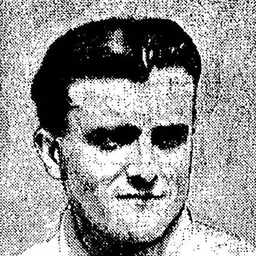
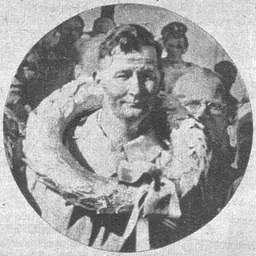

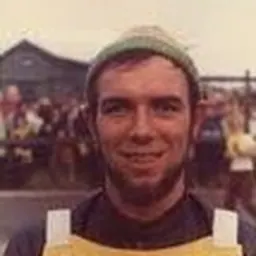

Related people
Same field, nearest in time

Contemporaries
People whose lives overlapped Tom Cole's

Frequently asked questions
Who was Tom Cole?
British racecar driver (1922-1953)
When was Tom Cole born?
Tom Cole was born on 11 June 1922 in Landaff.
When did Tom Cole die?
Tom Cole died on 14 June 1953 in Le Mans.
What was Tom Cole's occupation?
Tom Cole was a racing automobile driver.
What nationality was Tom Cole?
Tom Cole was British and American.
Sources & further reading
· DBpedia: Tom Cole (racing driver)
Cite this page
APA: Biography.guide. (2026). Tom Cole. https://biography.guide/tom-cole/
MLA: "Tom Cole." Biography.guide, https://biography.guide/tom-cole/.
Chicago: "Tom Cole." Biography.guide. https://biography.guide/tom-cole/.
Data last updated: 2026-09-20 · Spot an error? Report a correction.
Page generated 2026-09-27 05:10 UTC