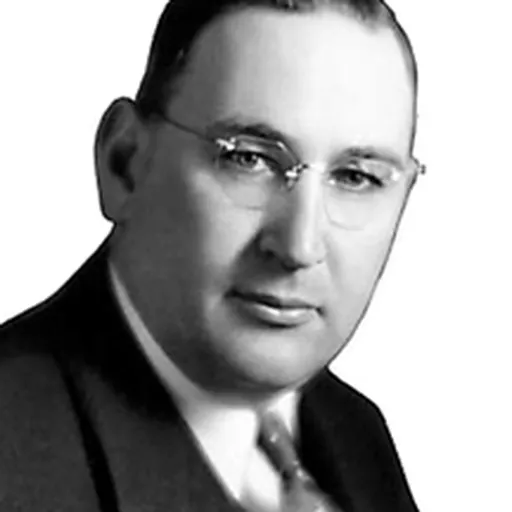
About Tom Brown
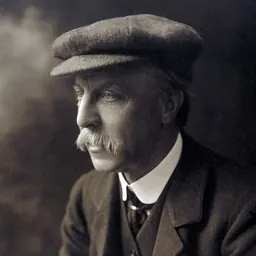
Lived 1889 – 1959 (aged 69). Tom Brown was an American police officer.
Thomas Archibald Brown (February 7, 1889 – January 5, 1959), also known as Big Tom, was an American law enforcement official who served as chief of the Saint Paul Police Department (SPPD) during the Great Depression and became notorious for flagrant police corruption.
Brown's predecessor, John O'Connor, had developed the so-called "O'Connor system" in which fugitives from other jurisdictions were immune to arrest and extradition in Saint Paul, Minnesota, so long as they kept a low profile and committed no violent crimes within the SPPD's jurisdiction. Upon taking over the department in June 1930, Brown refused to obey or enforce the traditional ban on unnecessary violence, and allied himself with the Dillinger and Barker-Karpis Gangs. The violent crimes resulting from this alliance inadvertently aided in the rise of the Federal Bureau of Investigation and its director, J. Edgar Hoover.
Through the FBI's influence, Brown's many felonies were publicly exposed during a Civil Service Board hearing, leading to his dismissal from the SPPD. He was never indicted or prosecuted, however, and died a free man in Ely, Minnesota, in 1959.
Early career Thomas Archibald Brown was born in a coal mining region of West Virginia, into a Baptist family of mixed German- and Scotch Irish descent. At Brown was too tall to work in the mines, so he worked as conductor for the Great Northern Railroad before settling in Saint Paul, Minnesota, in 1910. He worked at various jobs before joining the Saint Paul Police Department (SPPD) as a traffic patrolman in 1914.
Brown quickly learned how to use his authority as a police officer to engage in corrupt activities, committing extortion and many other crimes. Although he was careful to never to accept a bribe in front of eyewitnesses, in conversations with his brother-in-law, George Rafferty, he boasted that seeking bribes for a Saint Paul cop was easy: "Go into taverns with your hand out." The same year he was suspended for thirty days after a federal judge ordered him extradited to Ohio to face charges of conspiracy and liquor smuggling. To the public, Brown depicted himself as a racket-buster and a fearless crimefighter, declaring war on Chicago organized crime figures who were allegedly investing in Minnesota's bootlegging and slot machine rackets.
When Gleckman was kidnapped by rival racketeer Jack Peifer, Brown worked hard for his release. The ransom was paid, but one of the kidnappers was later found shot dead by an unknown assailant. Brown took the ransom from the man's safe; he later claimed that he stored it at police headquarters, but it was never located.
Brown's tenure as chief came to an end when he became involved with the Barker-Karpis Gang, who had come to Saint Paul at Peifer's invitation. The gang committed a series of robberies in the city until a neighbor recognized them from pictures in True Detective magazine. Brown delayed responding to the information, and he or one of his associates tipped off the gang. Believing that Ma Barker's lover Arthur Dunlop had informed on them, the gang shot Dunlop and dumped his naked body before fleeing. The Dunlop murder sealed Brown's fate as chief, as the publicity led to questions about how the gang had gotten away. He was demoted by the new mayor, who was elected on an anti-corruption ticket, from Chief of Police to head of the SPPD's Anti-Kidnapping Squad.
Head of the Anti-Kidnapping Squad After his demotion, Brown ran for election as sheriff of Ramsey County. According to FBI informants, members of the Dillinger's Gang, particularly Van Meter, donated $1,500 into Brown's ultimately unsuccessful campaign. Meanwhile, with the end of Prohibition, Brown, acting through Peifer and Harry Sawyer, suggested that the Barker-Karpis Gang should move onto other crimes.
The Hamm kidnapping They kidnapped wealthy businessman William Hamm. Brown informed them of plans by police to trap them. The ransom money was successfully collected, and a cut given to Brown.
With the assistance of mobbed up Captain "Tubbo" Gilbert of the Chicago Police Department, the Chicago Outfit succeeded in tricking the FBI into believing that the Outfit's mortal enemy, Irish mob boss Roger Touhy, had masterminded the Hamm kidnapping and many other crimes just like it in States all over the Midwest. Despite the Bureau's best efforts, however, a Federal jury in St. Paul acquitted Touhy and his enforcers of all charges.
Armed robbery and murder in South St. Paul According to Paul Maccabee, "No crime illustrated how far the O'Connor System had eroded" than the Barker Gang's next robbery, which was carried out at the South St. Paul post office on August 30, 1933 by Charles Fitzgerald, Alvin Karpis, Fred Barker, and Chicago Outfit gangsters Byron Bolton and Fred Goetz.
After the Great Western Railroad delivered a $33,000 Swift and Company payroll from the Federal Reserve Bank of Minneapolis to the local post office, South St. Paul Police Officer John Yeaman and rookie Patrolman Leo Pavlak were assigned as escorts. At 9:45 AM, as both officers walked down the post office steps, the Barker-Karpis Gang drove up in a black sedan. Doc Barker stepped out, wielding a saw-off shotgun, and shouted, "Stick 'em up!" After Officer Pavlak surrendered his sidearm and obeyed, Doc Barker screamed, "You dirty rat, son of a bitch", and shot Pavlak in the head. The Barker Gang then seized the payroll, but, went on a shooting spree before fleeing the scene of the robbery. According to a report by the Minnesota Bureau of Criminal Apprehension, "The bandits put on a Jesse James exhibition by shooting up and down Concord St., shooting about a dozen shots into the Postal Building and across the street. These bandits used a Thompson submachine gun and a sawed-off shotgun with which they did their shooting, and it is a miracle that no one else was shot and wounded. They appeared to be cool and reckless, not giving a damn who they shot."
In an interview with Paul Maccabee, Robert Pavlak recalled about the day of his father's death, "I ran home... That's all I remember. My mother was dying of cancer at the time -- we had so much grief then." While talking to the FBI, disgraced former St Paul Inspector of Detectives James Crumley alleged, "Truman Alcorn, former Chief of Police of South St. Paul, is very close to Tom Brown and... there is no question but Brown and Alcorn were in on the payroll robbery in South St. Paul." The officers later claimed Van Meter ignored their command to stop and fled into a nearby alley, where he fired twice on the officers with a .45 caliber pistol. He was 27 years old. The body was found to be armed with a .45-caliber Colt automatic pistol. The number and severity of Van Meter's wounds were attributed to the use of the Thompson submachine gun.
Due to the influence of equally mobbed up County Attorney Michael Kinkead, however, a Ramsey County grand jury heard the evidence against the disgraced police chief, but declined to return an indictment.
Personal life He married Mary Rafferty, and the couple had four daughters and one son. The Brown family lived in a two story white stucco house 759 East Maryland Avenue in St. Paul.
In an interview with Paul Maccabee, Brown's daughter, Vera Peters, recalled her father as a strict disciplinarian, "of the old German feeling that kids should be seen and not heard."
Brown then moved away to Ely, Minnesota and opened another liquor store. In January 1947, he was indicted by a Federal grand jury for nine counts of violating Federal liquor laws. In a plea bargain negotiated by lawyer, Brown pled guilty to one count of evading Federal liquor tax and failure to register as an alcohol dealer. In return, all the other eight charges were dropped. Brown paid a $3,500 fine and received a suspended sentence of one year imprisonment. Brown's attorney alleged that his client was "a sick man", who was, "out of the liquor business and intended to stay out."
After paying his fine, however, Brown returned to Ely, where he opened a brand new liquor store named, "Tom Brown's Bottle Shop". Brown died of a sudden heart attack while crossing an Ely street in January 1959. He was 69 years old.
Don’t just read it —
keep it.
Full-length biographies made to live with: read them, listen on the way to work, watch them tonight.
- E-book
- Audio
- Video
Instant download · yours to keep · every purchase keeps this site free
Important facts
People in Tom Brown's life
Named in this biography and alive at the same time






Related people
Same field, nearest in time


Contemporaries
People whose lives overlapped Tom Brown's

Frequently asked questions
Who was Tom Brown?
corrupt American police chief (1889–1959)
When was Tom Brown born?
Tom Brown was born on 7 February 1889 in West Virginia.
When did Tom Brown die?
Tom Brown died on 5 January 1959 in Ely, Minnesota.
What was Tom Brown's occupation?
Tom Brown was a police officer.
What nationality was Tom Brown?
Tom Brown was American.
Sources & further reading
· DBpedia: Tom Brown (police officer)
Cite this page
APA: Biography.guide. (2026). Tom Brown. https://biography.guide/tom-brown-police-officer/
MLA: "Tom Brown." Biography.guide, https://biography.guide/tom-brown-police-officer/.
Chicago: "Tom Brown." Biography.guide. https://biography.guide/tom-brown-police-officer/.
Data last updated: 2026-09-23 · Spot an error? Report a correction.
Portrait: Wikimedia Commons · author & licence
Page generated 2026-09-27 05:07 UTC