
About Tom Boardman, Baron Boardman
Lived 1919 – 2003 (aged 84). Tom Boardman, Baron Boardman was a British politician, banker and lawyer.
Thomas Gray Boardman, Baron Boardman, (12 January 1919 – 10 March 2003) was a British Army tank commander, Conservative politician, cabinet minister and chairman of National Westminster Bank Plc.
Early life Thomas Gray Boardman was born in Daventry on 12 January 1919, just after the end of the First World War. He was educated at Bromsgrove School in Worcestershire (and later in life he became the "President of the School" from 1983 to 1994). His father was a landowner and Lord Mayor of Daventry, who farmed 500 acres in Northamptonshire. He was promoted through the ranks to Lieutenant-Colonel and commanded the 1st Battalion Northamptonshire Yeomanry during the North West Europe campaign.
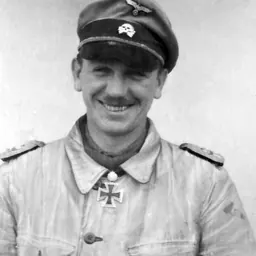
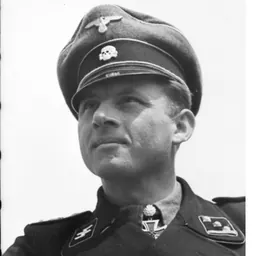
On 8 August 1944, Kurt Meyer, of the SS Hitlerjugend Division, ordered elements of his command to counterattack and recapture the high ground taken by The Allies. Michael Wittmann 'The Black Baron' a notable German Waffen-SS tank commander, led a group of seven Tiger tanks, from the Heavy SS-Panzer Battalion 101, supported by additional tanks and infantry. Boardman, with A Squadron 1st Northamptonshire Yeomanry, ambushed the Tigers crossing open terrain towards the high ground from the tree line. It was Boardman's order to the gunner Joe Ekins, which killed Wittman. According to the historian Hart, Boardman's unit was positioned in a wood on the right flank of the advancing Tiger tanks. At approximately 12:47, they engaged them, halting the attack, and killing Wittmann. Boardman's squadron (of which he was second in command) beat off the heavy counter-attack and the citation for his Military Cross gives much of the credit for this, and the destruction of 12 German tanks, to him. His MC was gazetted on 21 December 1944.
Boardman was later the Commanding Officer of the Northamptonshire Yeomanry, when they became part of the Territorial Army. By then, his fellow Conservatives had already elected him to the executive of the 1922 Committee and he was chairman of the parliamentary panel of the Institute of Directors. Business commitments prevented him accepting the first government job offered to him, as Principal Private Secretary to Margaret Thatcher.
Boardman's skills had been rapidly recognised by the incoming Conservative government of Edward Heath in 1970. He quickly earned a reputation for speaking publicly only about subjects that he knew well, particularly in the realms of industry and commerce. In April 1972, he was made Minister for Industry at the Department of Trade and Industry, where he was seen by many as a powerful advocate of progress in industry.
Following the 1972 miners' strike, Boardman steered the Coal Industry Act through Parliament; it injected huge subsidies to keep the National Coal Board solvent. Having achieved a record pay award as part of that settlement, the miners were quiescent until the summer of 1973, when they demanded another 35 per cent.
Boardman showed his steel when he refused the gas workers a court of inquiry over their industrial dispute against Stage II of the prices and incomes policy: "There is nothing to inquire into," he told the Commons. He ran energy policy during the first great oil shock until Heath, against the wishes of both Lord Peter Walker and Boardman, decided that there should be a new energy ministry. but a long career on the front bench was denied him by the defeat of the Government in the February 1974 election and the loss of his own seat to the Labour Party's Jim Marshall in October 1974. Boardman had been a well-liked and respected Member of Parliament but, with his party back in opposition, his mainstream political career had come to an end.
In 1978, Boardman became chairman of the building materials group Steetley Industries (he had been a director since 1975), the construction materials group. and High Sheriff of Northamptonshire in 1979. He was awarded honorary doctorates by Nottingham and City universities. The younger son, Sir Nigel Patrick Gray Boardman, built a successful legal career with Slaughter and May in London. Nigel Boardman came to wider public attention in July 2021 as the compiler of a preliminary report commissioned by English leaders into aspects of the so-called Greensill scandal, involving David Cameron, Lex Greensill and others.
Tom Boardman's daughter Grania Janet Gray Boardman married Rupert Law, 9th Baron Ellenborough.
Don’t just read it —
keep it.
Full-length biographies made to live with: read them, listen on the way to work, watch them tonight.
- E-book
- Audio
- Video
Instant download · yours to keep · every purchase keeps this site free
Important facts
People in Tom Boardman, Baron Boardman's life
Named in this biography and alive at the same time

Related people
Same field, nearest in time






Contemporaries
People whose lives overlapped Tom Boardman, Baron Boardman's


Frequently asked questions
Who was Tom Boardman, Baron Boardman?
British politician (1919-2003)
When was Tom Boardman, Baron Boardman born?
Tom Boardman, Baron Boardman was born on 12 January 1919 in Daventry.
When did Tom Boardman, Baron Boardman die?
Tom Boardman, Baron Boardman died on 10 March 2003.
What was Tom Boardman, Baron Boardman's occupation?
Tom Boardman, Baron Boardman was a politician, banker and lawyer.
What nationality was Tom Boardman, Baron Boardman?
Tom Boardman, Baron Boardman was British.
Sources & further reading
· Wikipedia: Tom Boardman, Baron Boardman
· DBpedia: Tom Boardman, Baron Boardman
Cite this page
APA: Biography.guide. (2026). Tom Boardman, Baron Boardman. https://biography.guide/tom-boardman-baron-boardman/
MLA: "Tom Boardman, Baron Boardman." Biography.guide, https://biography.guide/tom-boardman-baron-boardman/.
Chicago: "Tom Boardman, Baron Boardman." Biography.guide. https://biography.guide/tom-boardman-baron-boardman/.
Data last updated: 2026-09-20 · Spot an error? Report a correction.
Page generated 2026-09-27 05:14 UTC