
About Titewhai Harawira
Lived 1932 – 2023 (aged 90–91). Titewhai Harawira was a New Zealand activist and nurse.
Titewhai Te Hoia Hinewhare Harawira (Harawira's middle name is given in reliable sources as Te Hoia or Te Huia.) This article uses the former, used for example by The New Zealand Herald She was part of the iwi (tribes) of Ngāpuhi and Ngāti Wai, and descended from Ngāpuhi chiefs Eruera Maihi Patuone and Tāmati Wāka Nene. She was raised by her mother's parents, attended Whakapara Native School followed by the Queen Victoria School for Māori Girls, and trained as a nurse. In 1952 she married John Puriri Harawira, a Māori warden and taxi driver, and they had twelve children (three through whāngai adoption), including New Zealand politician Hone Harawira and activist Hinewhare Harawira. Shortly after their marriage they moved to Avondale in Auckland. and has said the petition led to the revitalisation of the Māori language through the Maori Language Act 1987, the development of Māori language immersion schools like kōhanga reo, kura kaupapa and wharekura, Māori Television and iwi radio stations, and wānanga (Māori tertiary education providers).
In the 1974 local elections, she stood unsuccessfully for the Auckland City Council on a Labour Party ticket. In 1975 following the retirement of Hugh Watt, she was one of twenty-seven candidates who sought Labour Party selection for the Onehunga electorate, but lost to Frank Rogers.
In 1975 she was one of the organisers of the Māori land march, a hikoi (protest march) from Northland to Wellington to protest against the taking of Māori land. On arriving at Parliament she led an occupation of the Parliament grounds for two months, against the wishes of the public leader of the march, Whina Cooper. She also criticised then prime minister Robert Muldoon and his National party government for what she described as their "racist attitudes", particularly towards young Māori. In 1979 she was part of a small group which formed the Waitangi Action Committee to shut down Waitangi Day celebrations until the Treaty of Waitangi was honoured. Eva Rickard and Harawira led a hikoi at Waitangi in 1984.
In the late 1980s, she established the Whare Paia mental health unit for Māori at Carrington Hospital; Harawira claimed that the victim had sexually assaulted a staff member;
In 1990 Harawira went to the Netherlands to ask the Dutch government to take back the name "New Zealand" so that the original Māori name of "Aotearoa" could be used for the country instead.
Waitangi Day role For many years, Harawira undertook the informal role of welcoming and accompanying the New Zealand prime minister onto Te Tii marae at Waitangi during celebrations for Waitangi Day. Ngāti Hine leader Pita Tipene noted that although Harawira had strong political views and was often critical of the government, she was always respectful in this role and "differentiated between politics and people". Clark was shown on television in tears (later, she said that the tears were "not for myself but for the ruination, yet again, of an event which has so much potential for healing, reconciliation, and taking matters forward"). At the time, Clark observed that other women had spoken at the marae without issue, including then prime minister Jenny Shipley who had spoken the day before. She said she would not celebrate Waitangi Day at Waitangi in the future unless she was treated respectfully.
In 2000, after her election as prime minister, Clark attended Waitangi for the celebrations but did not visit Te Tii marae. In May that year, Harawira wrote to Clark apologising for the hurt caused, but noting that she would be "watching what your government does with guarded expectation". She also said that she and Clark had met to discuss the issue, although did not give details. In 2002, Clark returned to Te Tii marae and was escorted by Harawira; Clark agreed it was "time to move on" and that it was important to re-establish a relationship between the government and Ngāpuhi. Thereafter, female politicians were not permitted to speak on Te Tii marae until 2014. When the Māori Party was formed in 2004 she considered standing as a candidate for the Te Tai Tokerau electorate, but her son Hone Harawira stood instead.
In March 2007, together with other senior members of the Ngāpuhi iwi, she commissioned a report into the claims by Ngāpuhi at the Waitangi Tribunal, intended to stand alongside any decision by the Waitangi Tribunal. The report was published in 2012 and found that Ngāpuhi did not sign away its sovereignty and governance to the Crown. She was active in supporting Ngāpuhi's claims at the tribunal throughout its progress, and in January 2023 (shortly before her death) had worked to organise a meeting to discuss a recent tribunal report. Following the incident, the board of the Te Tii marae considered banning her from the marae for her behaviour, and a Ngāpuhi elder called her "a bully"; in response, she labelled him a "wimp", who "needs to grow a backbone". Hipkins also delivered a reflection written by Ardern: Each year as I arrived [at Te Tii marae] I hoped that what I had done for the past 12 months was good enough, because I knew if she didn't think so, I would soon be told.
Minister for Māori Development Willie Jackson also paid tribute, praising Harawira's commitment to change, as well as saying that she signified "the essence of the Māori renaissance period" and the period where activists began to promote the Māori language and the promises of the Treaty of Waitangi.
Don’t just read it —
keep it.
Full-length biographies made to live with: read them, listen on the way to work, watch them tonight.
- E-book
- Audio
- Video
Instant download · yours to keep · every purchase keeps this site free
Important facts
People in Titewhai Harawira's life
Named in this biography and alive at the same time




Related people
Same field, nearest in time
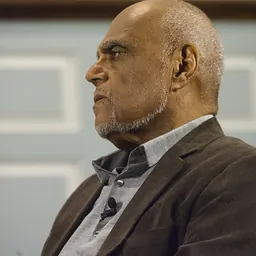


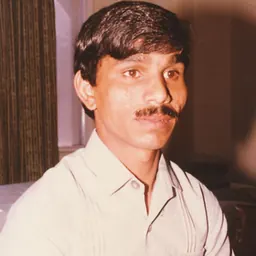


Contemporaries
People whose lives overlapped Titewhai Harawira's
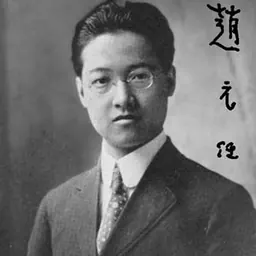


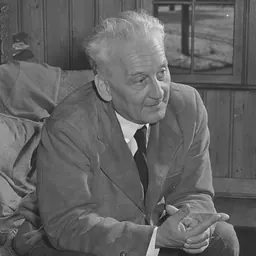
Frequently asked questions
Who was Titewhai Harawira?
New Zealand Māori activist (1932–2023)
When was Titewhai Harawira born?
Titewhai Harawira was born in 1932 in Whakapara.
When did Titewhai Harawira die?
Titewhai Harawira died on 24 January 2023 in Avondale.
What was Titewhai Harawira's occupation?
Titewhai Harawira was an activist and nurse.
What nationality was Titewhai Harawira?
Titewhai Harawira was New Zealand.
Sources & further reading
· Wikipedia: Titewhai Harawira
Cite this page
APA: Biography.guide. (2026). Titewhai Harawira. https://biography.guide/titewhai-harawira/
MLA: "Titewhai Harawira." Biography.guide, https://biography.guide/titewhai-harawira/.
Chicago: "Titewhai Harawira." Biography.guide. https://biography.guide/titewhai-harawira/.
Data last updated: 2026-09-20 · Spot an error? Report a correction.
Page generated 2026-09-27 05:32 UTC