
About Timothy Stoen
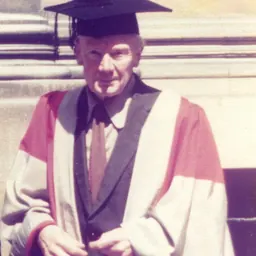
Born 1938. Timothy Stoen is an American lawyer, known for Peoples Temple.
Timothy Oliver Stoen (born January 16, 1938) is an American attorney best known for his central role as a member of the Peoples Temple, and as an opponent of the group during a multi-year custody battle over his six-year-old son, John. The custody battle triggered a chain of events which led to U.S. Representative Leo Ryan's investigation into the Temple's remote settlement of Jonestown in northern Guyana, which became internationally notorious in 1978 after 918 peopleincluding Stoen's sondied in the settlement and on a nearby airstrip. Stoen continued to work as a deputy district attorney in Mendocino County, California, where he was assigned to the District Attorney's Fort Bragg office. Stoen later joined the Mendocino County Public Defenders. He is now in the private practice of law.
Early life Timothy Stoen was born in Milwaukee, Wisconsin, the child of religious middle-class parents from Littleton, Colorado.
Stoen worked for a year in an Oakland real estate office before joining the Mendocino County District Attorney's Office in Ukiah as a deputy district attorney. In 1967, Stoen left this position with the intention of doing work for flower children and similar hippie groups in San Francisco's Haight-Ashbury district, Their son, John Victor Stoen, was born on January 25, 1972.
Temple beginnings
Introduction to Peoples Temple
Stoen first encountered the Peoples Temple when it was suggested that he ask the group to help renovate the Mendocino County legal aid offices. He became impressed with the purported character and good deeds of the Temple's leader, Reverend Jim Jones, especially when he saw Jones scrubbing toilets in the Temple's Ukiah headquarters.
In 1970, Stoen moved to the Temple's headquarters, where he worked as a deputy district attorney and head of Mendocino County's civil division. He began providing legal aid for the Temple and politically converted to the Temple's socialist ideology.
San Francisco Assistant District Attorney
Despite still referring to its Ukiah facility as its "mother church", the Peoples Temple moved its headquarters to San Francisco around 1972. Following the 1975 mayoral election, former San Francisco District Attorney Joseph Freitas named Stoen to lead a special unit to investigate election fraud charges. Shortly thereafter, Freitas hired Stoen as an assistant district attorney in the consumer frauds division.
Stoen found no evidence of election fraud, but Temple members later alleged that the Temple arranged for "busloads" of members to be transported from Redwood Valley to San Francisco to vote in that election under threats of physical violence. When asked how Jones could know for whom they voted, one member responded, "You don't understand, we wanted to do what he told us to." The single-page document eventually became the most important piece of paper in the Temple's history. Stoen's affidavit not only seemed to contradict his putative paternity, but also "bound the child to Jones and the church for life." Grace and Temple member Walter "Smitty" Jones (no relation to Jim Jones) agreed to leave together. In July 1976, Grace and Smitty fled to Lake Tahoe. Fearing that possible legal action against Stoen would make the custody dispute public, Jones sent him to Jonestown. However, distrustful Temple members were secretly spying on Stoen and examining the contents of his briefcase. Within a year, Stoen also left the Temple, returned to San Francisco, and joined Grace's custody battle. Stoen subsequently became the chief antagonist to Jones, who encouraged Jonestown residents to write detailed, humiliating fantasies about murdering Stoen. on the same night that an editor at New West magazine read Jones a pending article, written by Marshall Kilduff, detailing allegations of abuse by former Temple members. Two months later, a Georgetown court ordered the Temple to show cause why a final order should not be issued compelling the return of John to his mother. A few days later, the same court issued a second order for Jones' arrest.
In fear of being held in contempt of the court orders, and in an attempt to further manipulate his followers, Jones staged a false sniper attack on himself and began a series of "White Night" rallies, called the "Six Day Siege", where he told Temple members about attacks from outsiders and had members surround Jonestown with guns and machetes. Angela Davis and Huey Newton communicated via radio-telephone to the Jonestown crowd, urging them to hold strong against the "conspiracy." Jones made radio broadcasts stating "we will die unless we are granted freedom from harassment and asylum." Guyanese Deputy Prime Minister Ptolemy Reid finally assured Jones' wife Marceline that Guyana Defence Force would not invade Jonestown. A court clerk refused to sign the arrest warrant for Jones, and there was talk of interference in the legal process by the Guyanese government.
After this initial round of the Stoen custody dispute, Jones directed Temple members to write to over a dozen foreign governments inquiring about their immigration policies in the event that they had to flee Guyana. He also wrote the U.S. State Department inquiring about North Korea and Albania. Calling themselves the "Concerned Relatives", The court order meant that Jones could not return to the U.S. without facing contempt proceedings for failing to turn over the child; it also meant Jones could never let the child leave Jonestown. A Guyanese judge recused himself from the case because his life had been threatened, and the new judge had to restart the process from the beginning. While at the airport, three Temple members surrounded Stoen and threatened his life unless he dropped his legal action. The Temple, likewise, sent members to visit eight of the nine Congressman in order to discredit Stoen. The white paper claimed that any action by the Guyanese military to retrieve the child could result in harm to John or others, and insisted that members of Congress write Guyanese Prime Minister Forbes Burnham to take action. Several other congressmen also wrote to Burnham about Stoen's concerns. Reiterman's story about the Stoen custody battle, appearing in the Examiners February 18 preview edition of that Sunday's paper, as well as the 1972 affidavit which named Jones as the father of Stoen's son. Columnist Herb Caen, a supporter of the Temple, reprinted the affidavit in the San Francisco Chronicle. The Temple had assisted Milk's 1976 election race to become a California State assembly member, and Milk had visited and spoken at Temple rallies. In the letter to President Carter, Milk wrote "Rev. Jones is widely known in the minority communities and elsewhere as a man of the highest character... stating that "radical Trotskyite elements which defected from our organization when we refused to follow their violent course have been orchestrating a campaign against us." The accusations chronicled mistreatment in Jonestown, which it portrayed as an armed encampment, and described hard labor, passport confiscation and statements about Jones' speeches speaking of suicide and conspiracies against the Temple. It further portrayed the group as lying and attempting to "destroy us." Stoen and other Concerned Relatives had monitored the Temple's shortwave radio broadcasts, and Stoen filed complaints with the FCC in the autumn of 1977 citing the Temple for breaching regulations. In later affidavits and lawsuits filed in 1978, Stoen cited communications the group had intercepted through their monitoring. On July 10, 1978, the Temple sued Stoen for $150 million, charging that Stoen violated his attorney-client relationship by using privileged information in his suits against the Temple. The suit alleged that Stoen was attempting to "harass and oppress" his former client and sought to enjoin Stoen from soliciting former members as clients in suits against the Temple. On October 3, Stoen told the State Department that he would retrieve his son John from Jonestown by force if necessary. Three days later he sent a telegram reiterating the threat and warning of the danger of mass suicide at the settlement. On November 15, 1978, both Grace and Tim Stoen traveled with the Ryan delegation to Georgetown. However, they were not permitted to accompany the delegation on its trip to Jonestown on November 17. While the Stoens remained in Georgetown, the Ryan delegation was attacked on November 18 at an airstrip in Port Kaituma, near Jonestown. Ryan and four others were killed by Temple members wielding rifles and shotguns, while several others were injured. As they spoke, 909 inhabitants of Jonestown, 276 of them children, died of apparent cyanide poisoning, mostly in and around the settlement's central pavilion. An audio recording of Jones, speaking to his followers during the massacre, mentions Stoen:
Jones also discussed whether the Temple should include Stoen among the names of those committing "revolutionary suicide", The mass murder-suicide was the greatest single loss of American civilian life in a non-natural disaster until September 11, 2001.
Career after Jonestown From 1980 to 1984, Stoen was corporate counsel for Pacific Energy & Minerals, Ltd. On his political philosophy page, he stated:
Later, Stoen returned to work for the district attorney's offices in Humboldt and Mendocino counties.
Don’t just read it —
keep it.
Full-length biographies made to live with: read them, listen on the way to work, watch them tonight.
- E-book
- Audio
- Video
Instant download · yours to keep · every purchase keeps this site free
Important facts
People in Timothy Stoen's life
Named in this biography and alive at the same time




Related people
Same field, nearest in time

Contemporaries
People whose lives overlapped Timothy Stoen's



Frequently asked questions
Who is Timothy Stoen?
American lawyer
When was Timothy Stoen born?
Timothy Stoen was born on 16 January 1938 in Milwaukee.
What is Timothy Stoen's occupation?
Timothy Stoen is a lawyer.
What is Timothy Stoen known for?
Timothy Stoen is known for Peoples Temple.
What nationality is Timothy Stoen?
Timothy Stoen is American.
Sources & further reading
Cite this page
APA: Biography.guide. (2026). Timothy Stoen. https://biography.guide/timothy-stoen/
MLA: "Timothy Stoen." Biography.guide, https://biography.guide/timothy-stoen/.
Chicago: "Timothy Stoen." Biography.guide. https://biography.guide/timothy-stoen/.
Data last updated: 2026-09-22 · Spot an error? Report a correction.
Page generated 2026-09-27 05:10 UTC