
About Forbes Burnham
Lived 1923 – 1985 (aged 62). Forbes Burnham was a Guyanese politician.
1961 general election
In the 1961 election, Burnham's PNC party won 11 seats in the Legislative Assembly with 41% of the vote. Despite only winning 1.64% more of the vote than the PNC, the PPP won 20 seats, nearly double the number of seats won by the PNC. This led to mass demonstrations, racial tensions and a general strike. The Governor declared a state of emergency and British troops were deployed. the mass action would culminate 16 February 1962, later called "Black Friday". 56 businesses were destroyed, 87 damaged by fire and 66 were looted. One Police Superintendent was killed and 39 injured, while four looters were fatally shot and 41 injured. The rioters also attacked the Electricity Plant, the Water Works, Parliament, and Jagan's residence.
International intervention in British Guiana According to declassified documents, in the early 1960s The United States Government led by John F. Kennedy became increasingly convinced that Jagan's PPP government had communist ideals. Due to the radical views of Cheddi Jagan (who leaned towards communism) and Jagan's alliances with the Soviet Union and Cuba, Burnham was supported by Western nations. In May 1962 Kennedy held direct talks with British prime minister Harold Macmillan, and Burnham visited Washington. Senior officials in the United States decided that Burnham's proposed socialism was preferable to Jagan's ideology, but also concluded that Jagan would become Head of Government of an independent Guyana without US intervention. Burnham readily agreed to US action against Jagan. In 1962, Kennedy approved intervention against Jagan's government. Independence was delayed by British officials, allowing time for a covert operation by the Central Intelligence Agency. Both Peter D'Aguiar (leader of the third largest party, The United Force) and Burnham pledged to support the notion of proportional representation (opposed by Jagan), and Burnham began to receive financial aid from the CIA.
Burnham was appointed President of the Guyana Labour Union in 1963. In one incident in August 1964, Jagan, Burnham, and d'Aguiar were conferring about reducing the spate of violence when the headquarters of the PPP were bombed just down the street. Burnham would remain as Head of Government of Guyana for the next 21 years.
In 1965, Burnham along with Errol Barrow of Barbados were the founders of the Caribbean Free Trade Association (CARIFTA), which came into operation on 1 May 1968. CARIFTA was in 1973 superseded by CARICOM.
On 26 May 1966, British Guiana became an independent country and was renamed "Guyana". Under the post-independence Constitution, Queen Elizabeth II, now styled Queen of Guyana, was retained as titular head of state, represented in Guyana by the Governor-General, who served in a largely ceremonial capacity, with Forbes, now Prime Minister, as head of government, appointed by a majority in the National Assembly. However, the Constitution also made provision for a change to republican status to be made by a resolution of a majority of members of the Assembly at least 42 months after the date of independence, subject to a further three months before it was passed, a compromise between Burnham, who favoured a republic, and D'Aguiar, who favoured retaining the monarchy.
1966–1980: Prime Minister of Guyana In one of Burnham's first acts upon independence, he passed a sweeping "National Security Act", permitting unrestricted search-and-seizure powers and the ability to detain individuals for up to 90 days without trial. and would likely support Jagan's PPP, making a fair election nearly impossible to win for Burnham. In 1967, Burnham stated that "overseas vote figures could be manipulated pretty much as he wished". Burnham later stated that he would "identify and register all Guyanese of African ancestry in the United Kingdom, Canada, and the United States in order to get their absentee votes in the next election", and suggested that Indo-Guyanese living abroad may have trouble getting registered or receiving ballots.
1968 general election
The PNC attained a majority government in the general elections of 1968 through electoral fraud, using an inflated "overseas vote" to skew the results in their favour. The PNC won 93.7% of the 36,745 overseas ballots, allowing Burnham to claim an absolute majority. An independent review by the Opinion Research Centre of London was only able to verify 15% of the entries on the overseas list. The Agriculture Minister declared that the inhabitants' land ownership certifications would no longer be recognized and the zone would be occupied by the Afro-Guyanese population. A provisional secessionist government was declared and attacks on Lethem began. The uprising was ultimately quelled by the Guyana Defence Force (GDF).
In 1969, following the establishment of Camp Tigri by Surinamese authorities, the Guyana Defence Force would take Camp Tigri and assert authority over the Tigri Area. Guyana continues to hold the camp despite a 1970 agreement to withdraw military forces.
Establishment of the Co-Operative Republic of Guyana Before 1970, Burnham mostly pursued moderate political policies. and the Soviet Union (17 December 1970) and a strong relationship with North Korea. In 1969, as noted by one study, Burnham “declared his dissatisfaction with the free enterprise system and his willingness to embrace Marxism/Leninism.” On 23 February 1970, he declared Guyana a "co-operative republic".
Port of Spain Protocol On 18 June 1970 Burnham signed the Port of Spain Protocol with Venezuela. The protocol, in place for 12 years, promoted co-operation between the two countries on the Border Dispute in Guayana Esequiba. The protocol was not renewed after 12 years.
Membership of the Non-Aligned movement Burnham, after attending the 1970 summit of the Non-Aligned Movement in Lusaka, Zambia, paid official visits to several African countries—Zambia, Uganda, Kenya, Tanzania and Ethiopia—over the period 12–30 September 1970. The Guyanese government remained fully involved in the African liberation movement throughout the 1970s. In 2014 Joseph Hamilton, a former House of Israel priest, testified that the House of Israel committed "oppressive and terrorizing acts on behalf of the PNC."
1973 general election
In the 1973 general election, Burnham received 70% of the vote and 37 of the 53 seats in the National Assembly. It is generally accepted that Burnham had significant untoward influence on the results of the elections, making them fraudulent.
Declaration of Sophia
On 14 December 1974, Burnham issued the Declaration of Sophia, stating that "the Party should assume unapologetically its paramountcy over the Government which is merely one of its executive arms." The Declaration also called for a transition to a socialist state, and a nationalisation of its economy. The declaration also led to the founding of the Guyana National Service, a paramilitary organisation under the control of the party.
1978 referendum
The PNC government's five-year term was due to end in 1978, forcing a new election. On 1 April 1978, Burnham announced a referendum to allow the constitution to be changed by a 2/3 majority in parliament (which the PNC had) rather than a referendum. The opposition presented a united front against the referendum. During the campaign, the PNC terminated the contract of critical newspaper "the Catholic Standard" with a state-owned printing company, hampering their ability to distribute critical material. Advertisements for opposition parties were banned in state media, and violence was used to break up opposition meetings and gatherings. Public employees were forced to sign blank proxy forms allowing others to vote on their behalf. It was also noted that there were over 10% (65,000) more people on the electoral role than the United Nations estimate of the number of eligible voters. The opposition groups eventually urged the Guyanese population to boycott the referendum.
Burnham won the 1978 referendum. There are anecdotal claims from hundreds of Indo-Guyanese (and Afro-Guyanese who were PPP supporters) that PNC enforcers aggressively, often violently, denied PPP supporters the opportunity to vote. Official figures showed the referendum passing with an implausible 97.9 percent of the vote.
Involvement in Jonestown
On 18 November 1978, a total of 909 people of the Peoples Temple died in a mass suicide in Jonestown. Burnham had previously allowed the group, led by Jim Jones, to move to Guyana from San Francisco, US, for the deaths.
There are suggestions that Burnham's government participated in a cover-up of the affair. Burnham's wife Viola and his deputy prime minister Ptolemy Reid were among the first to the scene, and may have returned from the massacre site with nearly US$1 million in cash, gold and jewellery. One of Burnham's secretaries may also have visited Jonestown only hours before it occurred, a visit that was never explained.
1979 Fire, and murder of Bernard Darke
In 1979, a fire destroyed many of the official government records, including official communications with the Peoples Temple. There is some speculation that the fire was started deliberately by Burnham's government, and there are reports that men in Guyana Defence Force uniforms were seen running from the fire.
During civil unrest after the fire and arrest, Jesuit priest Bernard Darke was stabbed to death by members of the House of Israel. Darke was associated with the Catholic Standard, a newspaper described as being "extremely critical" of the PNC.
1980–1985: President of the Co-Operative Republic of Guyana Heads of state at the 1981 Cancun Summit. Burnham is fifth from the left in the back row.
In 1980 the constitution was changed to make the presidency an executive post; until this time the post had been held by Arthur Chung in a ceremonial head-of-state role. Burnham won election as president that year, winning 76% of the vote to 20% for Jagan in the official results. International Observers protested that Indo-Guyanese voters were prevented from voting in several polling locations, and there were widespread accusations of electoral fraud.
Burnham introduced mass games to Guyana. They were first held in February 1980 to commemorate the founding of the Co-operative Republic of Guyana.
Assassination of Walter Rodney
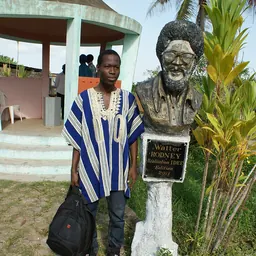
Walter Rodney died on 13 June 1980 in Georgetown at the age of 38 in a car bomb explosion. His brother Donald, who was injured in the explosion, said that a sergeant in the Guyana Defence Force and a member of the House of Israel, named Gregory Smith, had given Rodney the bomb that killed him.
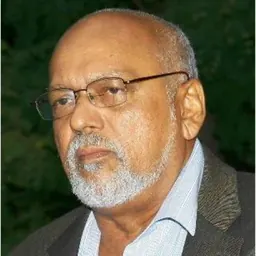
In 2014, Donald Ramotar launched an inquiry into the murder of Rodney despite resistance from the PNC. In 2016, the Commission of Inquiry released findings that state that President Forbes Burnham, aided by the Guyana Defence Force and Guyana Police Force, was part of the conspiracy to assassinate Rodney, the leader of the Working People's Alliance (WPA), a group which posed a threat to Burnham. Rodney's WPA believed that different ethnic groups (including Afro-Guyanese and Indo-Guyanese) historically disenfranchised by colonialism should all have a part in the governance of Guyana, a position that challenged Burnham's hold on power.
In Burnham's state-controlled economy, Afro-Guyanese held most jobs and the news media were controlled by the government. Jagan claimed that there was also economic suppression, as people remained politically inactive due to fear of losing their jobs.
Rodney referred to Burnham's political philosophy as "pseudo-socialism". ) and in the Commonwealth of Nations. Burnham also advocated regionalism.
Burnham was accused of corruption during his premiership by opposition parties.
Afrocentrist policies and accusations of racism Burnham's administration has been accused of afrocentrist policies Burnham's administration was mostly Afro-Guyanese. and under the state-controlled economy Afro-Guyanese took up the majority of jobs Kissoon went on to criticise Burnham for his authoritarian policies regardless of intention, stating that "The reign of Forbes Burnham was frightening and demoralizing" and also stating that during Burnham's tenure "almost 99 percent of Indian Guyanese felt that Guyana had no place for them, and that its president and his party were treating them as second-class citizens," and that Indo-Guyanese "lived in fear of Burnham".
Walter Rodney wrote in an essay that a pamphlet by Jessie Burnham
Burnham's first marriage was to Trinidadian Sheila Bernice Lataste-Burnham, having met her in London when they were both students. Lataste was born in Woodbrook. They married in Tranquility Methodist Church, Port of Spain
In February 1967 who also became involved in politics, serving as Vice President of Guyana under Desmond Hoyte. Viola died in 2003 at the age of 72. Burnham had two daughters with Viola, Melanie and Ulele, and adopted a son, Kamana.
Burnham was a Methodist by religion. His hobbies included swimming and horse-riding, and he also played chess, billiards, patience,
Personality After a meeting in 1962, Thomas J. Dodd described Burnham as "an intelligent, well-educated gentleman". Arthur M. Schlesinger Jr., also in 1962, said that Burnham was regarded as "an unprincipled opportunist, racist and demagogue, only interested in personal power." Jessie Burnham described her brother as ambitious and manipulative. it was suggested he may have had a polyp,
Legacy
Burnham is considered a controversial figure. Indira Gandhi named Burnham as one of the twentieth century's outstanding figures. In a review of Burnham's rise to power published in 2020, John Prados characterised Burnham as "corrupt, arbitrary, and self-dealing", and referred to him as "a dictatorial figure". Support for the two parties continues to follow the racial divide between Afro-Guyanese and Indo-Guyanese.
Guyana obtained massive debts during Burnham's tenure, and experienced relatively high inflation of around 10% per year in the same period.
Following Burnham's death, Desmond Hoyte became president. The 1985 Guyanese general election was also considered to be fraudulent; the next "free and fair" election would come in 1992, the first fair election since 1964, where Cheddi Jagan was elected president.
Awards Order of Excellence of Guyana (1973) Order of José Martí: Cuba (1975) Grand Cordon of the Order of the Nile: Egypt Ordem Nacional do Cruzeiro do Sul: Brazil (1983) Order of the Companions of O. R. Tambo: South Africa (2013) Order of the National Flag First Class: Democratic People's Republic of Korea
Don’t just read it —
keep it.
Full-length biographies made to live with: read them, listen on the way to work, watch them tonight.
- E-book
- Audio
- Video
Instant download · yours to keep · every purchase keeps this site free
Important facts
Family & relationships
People in Forbes Burnham's life
Named in this biography and alive at the same time


Related people
Same field, nearest in time






Contemporaries
People whose lives overlapped Forbes Burnham's
Frequently asked questions
Who was Forbes Burnham?
Guyanese politician (1923-1985)
When was Forbes Burnham born?
Forbes Burnham was born on 20 February 1923 in Georgetown.
When did Forbes Burnham die?
Forbes Burnham died on 6 August 1985 in Georgetown.
What was Forbes Burnham's occupation?
Forbes Burnham was a politician.
What nationality was Forbes Burnham?
Forbes Burnham was Guyanese.
Sources & further reading
Cite this page
APA: Biography.guide. (2026). Forbes Burnham. https://biography.guide/forbes-burnham/
MLA: "Forbes Burnham." Biography.guide, https://biography.guide/forbes-burnham/.
Chicago: "Forbes Burnham." Biography.guide. https://biography.guide/forbes-burnham/.
Data last updated: 2026-09-20 · Spot an error? Report a correction.
Page generated 2026-09-27 05:30 UTC