
About Timothy Hackworth
Lived 1786 – 1850 (aged 63). Timothy Hackworth was a British engineer and railway engineer.
Timothy Hackworth (22 December 1786 – 7 July 1850) was an English steam locomotive engineer who lived in Shildon, County Durham, England and was the first locomotive superintendent of the Stockton and Darlington Railway.
Youth and early work Timothy Hackworth was born in Wylam in 1786, five years after his fellow railway pioneer George Stephenson had been born in the same village. Hackworth This resulted in the Royal George of 1827, an early 0-6-0 locomotive that among many new features incorporated a correctly aligned steam blastpipe. Hackworth is usually acknowledged as the inventor of this concept.
From 1830 onwards the blastpipe was employed by the Stephensons for their updated Rocket and all subsequent new locomotives. Recent letters acquired by the National Railway Museum would appear to confirm Hackworth as the inventor of the device. Since Trevithick's time, it had been common to direct exhaust steam from the cylinders through the chimney using "eductor pipes" for convenience and noise reduction, and its effect on the fire was noted. Regardless, Hackworth was likely the first engineer to fully account for the blast's role in automatically realising the "perfect equilibrium between steam production and usage" in a firetube boiler and consider the blastpipe a distinct device, focusing on its proportions, nozzle size, positioning and precise alignment.
Sans Pareil and the Rainhill trials In 1829 the Liverpool and Manchester Railway, the world's first "Inter-City" railway, was under construction. There was a large potential for both passenger and goods traffic. However all locomotives built to date, including those for the Stockton and Darlington, had been intended for slow freight, with any passenger service handled by single horse-drawn coaches. It was clear that any future locomotives would have to be more versatile. Matters were further complicated by the news of the problems encountered on the S&D, which led to considerable debate over the ideal motive power. George Stephenson, the line's civil engineer, was firmly in favour of steam traction and asked for a report from Hackworth, who confirmed the locomotives' difficulties while working to resolve them. To settle the debate the directors set up a competition to be held at Rainhill, resulting in three serious contestants. Hackworth, with his very limited resources, entered the 0-4-0 locomotive Sans Pareil. It was officially deemed overweight, but was ultimately allowed to compete. A faulty cylinder casting led to steam leaks and premature withdrawal.
Stephenson's Rocket was the winner as the only locomotive that stayed the course whilst fully complying with the rules. In the event, none of the contestants fully answered the railway's requirements. Hackworth stayed on after the event, repairing Sans Pareil and showed that it was a capable machine. After this the L&M management purchased the locomotive, subsequently reselling it at a loss to the Bolton and Leigh Railway where it worked until 1844. As Ahrons notes, the vertical cylinders would have given considerable hammer blow at speed and made it unsuited for passenger service on the track in the long term. Nevertheless it performed very capably, largely due to the carefully designed and tuned blastpipe.
Later productions In addition to working on the Stockton and Darlington, Hackworth set up his own business in which his son, John Wesley Hackworth, fully participated. This business produced a variety of machinery; notably, he built the first locomotive to run in Russia for the Tsarskoye Selo Railway at Shildon in 1836, of which his son was responsible for the safe delivery and preliminary trials. In 1838, the Samson was built for the Albion Mines Railway in Nova Scotia and was one of the first engines to run in Canada.
One of his 1833 apprentices, Daniel Adamson, would further developed his boiler designs and become a successful manufacturer, influencing the inception of the Manchester Ship Canal.
Hackworth's last new locomotive design was the 2-2-2 Sans Pareil II, a "demonstrator" of 1849. This locomotive was a development of the Jenny Lind type with driving wheels, of heating surface and a partially-welded boiler. It performed very well in terms of fuel efficiency and load-hauling performance. Hackworth was so satisfied that he issued a public challenge to Robert Stephenson to test it against his latest York, Newcastle and Berwick Railway locomotive, No. 190. Nothing resulted from this and Hackworth died the following year.
Family Hackworth had three sons and six daughters. His eldest son, John Wesley Hackworth (1820–1891), carried on the business after the death of his father. J. W. Hackworth patented the Hackworth valve gear in 1859.
Legacy Today he has a school named after him in his hometown of Shildon where the pupils annually learn of Timothy Hackworth and his work. His home was also turned into a museum, which has since been renovated and an annexe of the National Railway Museum has been built nearby. The 1839 Hackworth locomotive Samson is preserved in Canada at the Nova Scotia Museum of Industry in Stellarton, Nova Scotia. Hackworth Park in Shildon was named in his honour as was Timothy Hackworth Drive in Darlington. Hackworth Close (a street in Newthorpe, Nottinghamshire) was also named in his honour.
Don’t just read it —
keep it.
Full-length biographies made to live with: read them, listen on the way to work, watch them tonight.
- E-book
- Audio
- Video
Instant download · yours to keep · every purchase keeps this site free
Important facts
People in Timothy Hackworth's life
Named in this biography and alive at the same time

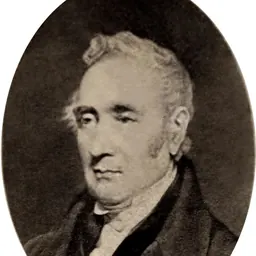

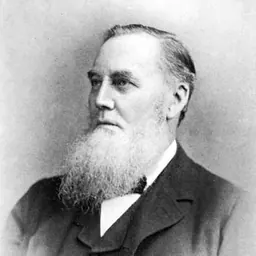
Related people
Same field, nearest in time
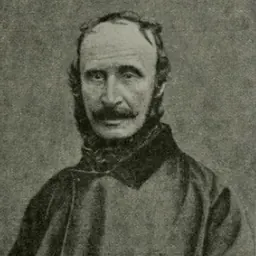
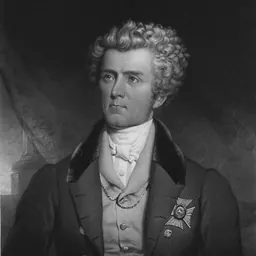
Contemporaries
People whose lives overlapped Timothy Hackworth's


Frequently asked questions
Who was Timothy Hackworth?
British steam locomotive engineer (1786-1850)
When was Timothy Hackworth born?
Timothy Hackworth was born on 22 December 1786 in Wylam.
When did Timothy Hackworth die?
Timothy Hackworth died on 7 July 1850.
What was Timothy Hackworth's occupation?
Timothy Hackworth was an engineer and railway engineer.
What nationality was Timothy Hackworth?
Timothy Hackworth was British.
Sources & further reading
· Wikipedia: Timothy Hackworth
Cite this page
APA: Biography.guide. (2026). Timothy Hackworth. https://biography.guide/timothy-hackworth/
MLA: "Timothy Hackworth." Biography.guide, https://biography.guide/timothy-hackworth/.
Chicago: "Timothy Hackworth." Biography.guide. https://biography.guide/timothy-hackworth/.
Data last updated: 2026-09-20 · Spot an error? Report a correction.
Page generated 2026-09-27 05:34 UTC