
About Tibor Baranski
Lived 1922 – 2019 (aged 96). Tibor Baranski was a Hungarian and American theologian and lecturer.
Tibor Baranski (June 11, 1922 – January 20, 2019) was a Hungarian-American man credited with saving more than 3,000 Hungarian Jewish women, men and children
When he was 22, he was forced by the advancing Soviets to leave his seminary studies and return to Budapest. He talked his way into the residence of Papal Nuncio Monsignor Angelo Rotta, the Vatican's representative in Budapest. He persuaded Rotta to give him papers that would allow a Jewish family, friends of his aunt, to escape Hungary. Rotta was so impressed by his boldness, he recruited Baranski to help save other Jews. Over nine weeks, before the Soviets surrounded Budapest, Baranski orchestrated the rescue of over 3,000 Jews.
Baranski was arrested by the Soviets on December 30, 1944, and sent on a 16-day, forced march towards a Soviet prison, during which he ate only four times. He was saved by a sympathetic guard and made his way back to Budapest. After he was hospitalized and released, he was arrested again in 1948 for "clerical reaction" and in a show trial was sentenced to nine years in prison. He was released after Stalin's death in 1953. He left Hungary during the 1956 revolution and settled with his wife in upstate New York, where both became US citizens and educators, and raised a family.
On January 11, 1979, Baranski was recognized as one of the Righteous Among the Nations by Yad Vashem. He was a member of the U.S. Holocaust Memorial Council. He was educated in Hungarian Gymnasia and became aware of rising antisemitism by 1938. He studied for the priesthood in Veszprém in 1940 and in Kassa (Košice) in 1943. He learned of the Nazi government's extermination camps through church channels. As the Soviet army drew near Košice, Baránszki was forced to leave for Budapest, sometimes only a few miles from the front lines, and arrived there on October 20, 1944.
Background
Starting in 1938, Regent Miklós Horthy led the government to pass a series of anti-Jewish measures, emulating Germany's Nuremberg Laws. The First Jewish Law passed on May 29, 1938, defined as Jewish anyone who had converted or were born to Jewish parents after 1919. It restricted the number of Jews in many professions to twenty percent. About 5,000 Jews converted to Christianity after the passing of the First Jewish Law.
As a result of the laws and cultural oppression, the Sterneder and Szekeres families became even closer. The Third Jewish Law passed in 1941 prohibited sexual relationships between Jews and non-Jews and classified another 58,320 people as Jewish who did not profess Judaism. The census question about Jewish grandparents was added late in 1941 after some census forms had already been printed, contributing to an inaccurate count.
Germans occupy Hungary
Jewish people stand in line to receive protective passports in front of the Glass House.
In early 1944, Hungarian prime minister Miklós Kállay was secretly attempting to negotiate a separate peace with the Allies. To prevent Hungary from leaving the Axis, on March 19, 1944, launched Operation Margarethe, ordering German troops into the country. Arrow Cross Party was legalized and assumed power on 15 October 1944. Led by Ferenc Szálasi, they formed the Government of National Unity.
Jews sent to death camps
Hungarian Jews walk towards the gas chambers and crematoria at Auschwitz in Birkenau, Poland on 27 May 1944. Mass deportations of Jews to German death camps in occupied Poland began. SS-Obersturmbannführer Adolf Eichmann went to Hungary to oversee the large-scale deportations. Between 15 May and 9 July, Hungarian authorities deported 437,402 Jews. All but 15,000 of these Jews were sent to Auschwitz-Birkenau, Sterneder became active in an underground movement that helped Jews find hiding places and obtain false emigration documents. The Szekeres family fled into hiding, leaving their sick infant son Gabor Szekeres with the Sterneder family.
Fascists take over
In October 1944, Horthy attempted to secretly negotiate a cease-fire with the Soviets and ordered Hungarian troops to lay down their arms. In response, Nazi Germany launched Operation Panzerfaust. Troops led by Otto Skorzeny kidnapped Horthy's son and sent him to the Mauthausen concentration camp. The Germans forced Horthy to abdicate in favour of Szálasi, after which Horthy was taken into "protective custody" in Germany. Szálasi, leader of the Arrow Cross Party, was declared "Leader of the Nation" and prime minister of a "Government of National Unity". Szálasi organised the International Ghetto and over the next few months Arrow Cross members conducted frequent raids during which groups of Jews were taken to the banks of the Danube and executed.
Baranski leaves seminary
In 1944, Baranski was studying at a Catholic seminary near Kassa, Košice (present-day Slovakia) to become a priest. He learned of Nazi extermination plans through church channels. He was forced to return to Budapest at age 22 on October 20, 1944, as the Russian army drew near. Dressed in his priest's cassock, he later said, "I was not discouraged. Nonchalantly I pushed my way through the line and said that I was on official business." Germans and Hungarians believed that a "family could not be divided. So, if there was one Catholic spouse, for example, only one baptismal certificate was necessary. However, to cover the entire family, individual protection passes were needed, stipulating that the family was under papal protection." Encouraged by his success, Baranski returned to Rotta a few days later to ask for another set of letters, this time for another Jewish family.
During his work with the Papal Nuncio, he saw two handwritten letters from Pope Pius XII encouraging the work to save the Jews. Baranski personally escorted individuals and families to hiding places, sometimes in secret rooms hidden within factories, and in the homes of other Catholics.
Rotta sent Baranski to Hegyeshalom with blank letters of protection. He freed hundreds of Jews, bringing them back to Budapest on a train. Baranski helped those whose protection letters were no longer valid to hide in old houses and caves used as wine cellars. Using these methods, he said, "We were able to protect between 8,000 and 12,000 Jews," he said. Baránszki was arrested by the Soviets on December 30.
Baranski was hospitalized and after the war ended, eventually made his way back to Budapest. He finished his studies and became a vicar in Drégelypalánk in Northern Hungary. When the Soviets took control of the government, Baránszki liked them no more than the Nazis.
His only reward for the risks he took, he said, would come from God "if" he was deserving. "I only did what God demanded of me. I'm only a useless servant." They started a school and camp for refugees, living in a refugee camp near Rome, Italy, for close to a year. In 1958 they obtained visas to Canada. They lived in Toronto before moving in 1961 to Buffalo, New York, where they raised their family. Baránszki adopted Katalin's son Peter Forgach, who became an eye surgeon, from her prior marriage. Their son Tibor Baranski Jr. learned Chinese as a teenager and became an international lawyer in Beijing, and their daughter Kati is Director of Communications at the Diocese of Buffalo.
Legacy and honors
Wallenberg vanished while in the custody of Soviet forces. Before he died, Baranski was one of the last witnesses to the efforts to protect the Jews from the Nazis in Budapest. and on July 16, 1997, Yad Vashem recognized Monsignor Angelo Rotta as Righteous Among the Nations.
Gabor Szekeres, the first person Baránszki saved, survived the war and married. His wife Agnes, whose parents were both murdered in the Holocaust, said of Baránszki, "He fought, and he was willing to sacrifice his life, for what he thought was right." The two families remain close to the present day.
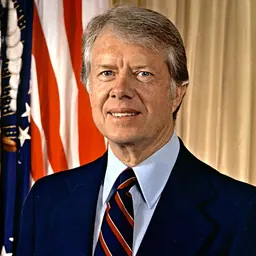
In 1980, Baranski was appointed by President Jimmy Carter to the U.S. Holocaust Memorial Council where he helped guide the formation of the memorial. His son Tibor Baranski Jr., an international transactions lawyer based in China and Japan, initiated contact with Swedish diplomats in China. This led to over five years of negotiations that resulted in contact with the Raoul Wallenberg family. In August 2017, Baranski Sr. joined by his two sons was invited by relatives of Wallenberg to be an honored guest for the annual Raoul Wallenberg Day events in Stockholm. While in Stockholm, several meetings were held with Nina Lagergren, the sister of Raoul Wallenberg, and also with the Swedish Minister of Foreign Affairs, and with the embassies of the United States, the Republic of Hungary, and the State of Israel. As the Vatican representative for the Jewish Protection Movement in Hungary at the end of WWII, under diplomatic protocol before the end of WWII, Baranski presided over meetings coordinating the activities held by the representatives of the five countries who were engaged in protecting Hungarian Jews, including Raoul Wallenberg representing Sweden, Switzerland, Portugal, Spain, with Baranski representing the Vatican. The Israeli Postal Authority issued a stamp to honor Baranski in April 2017.
Baranski's adopted son Peter Forgach said people used to ask Baranski how he could believe in God after all he witnessed. "These things happened, and there has to be a God to bring justice," Baranski responded.
Don’t just read it —
keep it.
Full-length biographies made to live with: read them, listen on the way to work, watch them tonight.
- E-book
- Audio
- Video
Instant download · yours to keep · every purchase keeps this site free
Important facts
People in Tibor Baranski's life
Named in this biography and alive at the same time




Related people
Same field, nearest in time


Contemporaries
People whose lives overlapped Tibor Baranski's
Frequently asked questions
Who was Tibor Baranski?
American theologian
When was Tibor Baranski born?
Tibor Baranski was born on 11 June 1922 in Budapest.
When did Tibor Baranski die?
Tibor Baranski died on 20 January 2019 in Buffalo.
What was Tibor Baranski's occupation?
Tibor Baranski was a theologian and lecturer.
What nationality was Tibor Baranski?
Tibor Baranski was Hungarian and American.
Sources & further reading
Cite this page
APA: Biography.guide. (2026). Tibor Baranski. https://biography.guide/tibor-baranski/
MLA: "Tibor Baranski." Biography.guide, https://biography.guide/tibor-baranski/.
Chicago: "Tibor Baranski." Biography.guide. https://biography.guide/tibor-baranski/.
Data last updated: 2026-09-22 · Spot an error? Report a correction.
Page generated 2026-09-27 05:20 UTC